

196
17 Medical Response
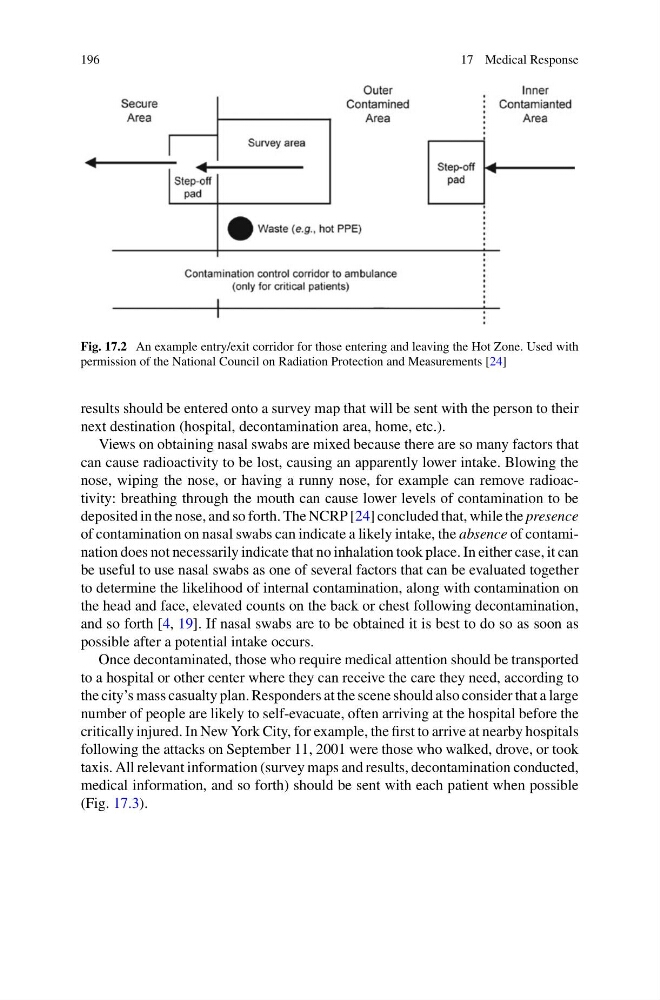
Fig. 17.2 An example entry/exit corridor for those entering and leaving the Hot Zone. Used with
permission of the National Council on Radiation Protection and Measurements [24]
results should be entered onto a survey map that will be sent with the person to their
next destination (hospital, decontamination area, home, etc.).
Views on obtaining nasal swabs are mixed because there are so many factors that
can cause radioactivity to be lost, causing an apparently lower intake. Blowing the
nose, wiping the nose, or having a runny nose, for example can remove radioactivity: breathing through the mouth can cause lower levels of contamination to be
deposited in the nose, and so forth. The NCRP [24] concluded that, while the presence
of contamination on nasal swabs can indicate a likely intake, the absence of contamination does not necessarily indicate that no inhalation took place. In either case, it can
be useful to use nasal swabs as one of several factors that can be evaluated together
to determine the likelihood of internal contamination, along with contamination on
the head and face, elevated counts on the back or chest following decontamination,
and so forth [4, 19]. If nasal swabs are to be obtained it is best to do so as soon as
possible after a potential intake occurs.
Once decontaminated, those who require medical attention should be transported
to a hospital or other center where they can receive the care they need, according to
the city’s mass casualty plan. Responders at the scene should also consider that a large
number of people are likely to self-evacuate, often arriving at the hospital before the
critically injured. In New York City, for example, the first to arrive at nearby hospitals
following the attacks on September 11, 2001 were those who walked, drove, or took
taxis. All relevant information (survey maps and results, decontamination conducted,
medical information, and so forth) should be sent with each patient when possible
(Fig. 17.3).
17 Medical Response
Fig. 17.2 An example entry/exit corridor for those entering and leaving the Hot Zone. Used with
permission of the National Council on Radiation Protection and Measurements [24]
results should be entered onto a survey map that will be sent with the person to their
next destination (hospital, decontamination area, home, etc.).
Views on obtaining nasal swabs are mixed because there are so many factors that
can cause radioactivity to be lost, causing an apparently lower intake. Blowing the
nose, wiping the nose, or having a runny nose, for example can remove radioactivity: breathing through the mouth can cause lower levels of contamination to be
deposited in the nose, and so forth. The NCRP [24] concluded that, while the presence
of contamination on nasal swabs can indicate a likely intake, the absence of contamination does not necessarily indicate that no inhalation took place. In either case, it can
be useful to use nasal swabs as one of several factors that can be evaluated together
to determine the likelihood of internal contamination, along with contamination on
the head and face, elevated counts on the back or chest following decontamination,
and so forth [4, 19]. If nasal swabs are to be obtained it is best to do so as soon as
possible after a potential intake occurs.
Once decontaminated, those who require medical attention should be transported
to a hospital or other center where they can receive the care they need, according to
the city’s mass casualty plan. Responders at the scene should also consider that a large
number of people are likely to self-evacuate, often arriving at the hospital before the
critically injured. In New York City, for example, the first to arrive at nearby hospitals
following the attacks on September 11, 2001 were those who walked, drove, or took
taxis. All relevant information (survey maps and results, decontamination conducted,
medical information, and so forth) should be sent with each patient when possible
(Fig. 17.3).