

12.1 Public Health
117
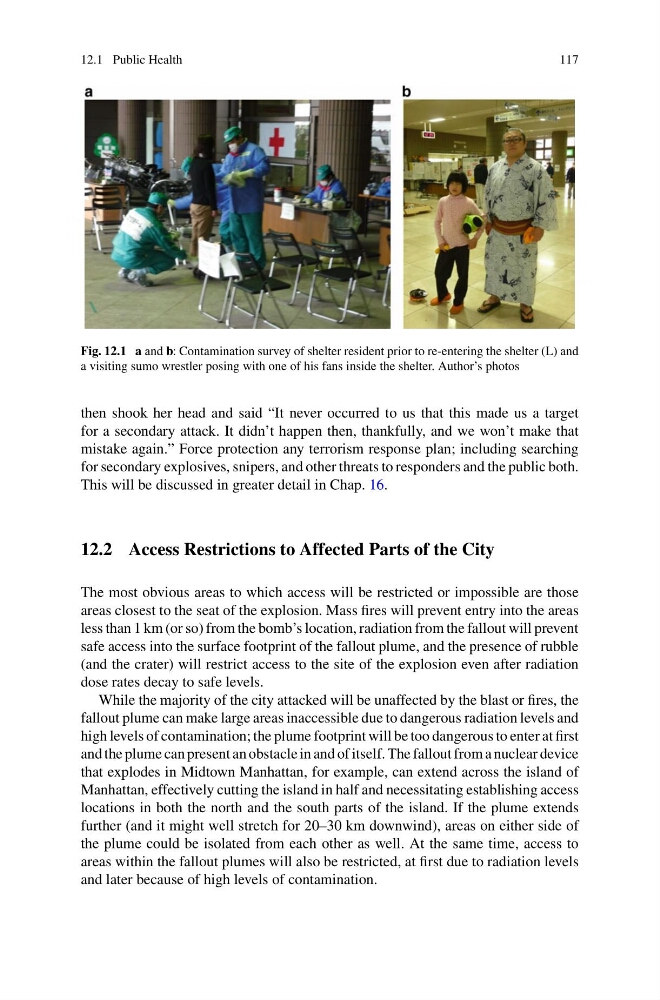
Fig. 12.1 a and b: Contamination survey of shelter resident prior to re-entering the shelter (L) and
a visiting sumo wrestler posing with one of his fans inside the shelter. Author’s photos
then shook her head and said “It never occurred to us that this made us a target
for a secondary attack. It didn’t happen then, thankfully, and we won’t make that
mistake again.” Force protection any terrorism response plan; including searching
for secondary explosives, snipers, and other threats to responders and the public both.
This will be discussed in greater detail in Chap. 16.
12.2 Access Restrictions to Affected Parts of the City
The most obvious areas to which access will be restricted or impossible are those
areas closest to the seat of the explosion. Mass fires will prevent entry into the areas
less than 1 km (or so) from the bomb’s location, radiation from the fallout will prevent
safe access into the surface footprint of the fallout plume, and the presence of rubble
(and the crater) will restrict access to the site of the explosion even after radiation
dose rates decay to safe levels.
While the majority of the city attacked will be unaffected by the blast or fires, the
fallout plume can make large areas inaccessible due to dangerous radiation levels and
high levels of contamination; the plume footprint will be too dangerous to enter at first
and the plume can present an obstacle in and of itself. The fallout from a nuclear device
that explodes in Midtown Manhattan, for example, can extend across the island of
Manhattan, effectively cutting the island in half and necessitating establishing access
locations in both the north and the south parts of the island. If the plume extends
further (and it might well stretch for 20–30 km downwind), areas on either side of
the plume could be isolated from each other as well. At the same time, access to
areas within the fallout plumes will also be restricted, at first due to radiation levels
and later because of high levels of contamination.
117
Fig. 12.1 a and b: Contamination survey of shelter resident prior to re-entering the shelter (L) and
a visiting sumo wrestler posing with one of his fans inside the shelter. Author’s photos
then shook her head and said “It never occurred to us that this made us a target
for a secondary attack. It didn’t happen then, thankfully, and we won’t make that
mistake again.” Force protection any terrorism response plan; including searching
for secondary explosives, snipers, and other threats to responders and the public both.
This will be discussed in greater detail in Chap. 16.
12.2 Access Restrictions to Affected Parts of the City
The most obvious areas to which access will be restricted or impossible are those
areas closest to the seat of the explosion. Mass fires will prevent entry into the areas
less than 1 km (or so) from the bomb’s location, radiation from the fallout will prevent
safe access into the surface footprint of the fallout plume, and the presence of rubble
(and the crater) will restrict access to the site of the explosion even after radiation
dose rates decay to safe levels.
While the majority of the city attacked will be unaffected by the blast or fires, the
fallout plume can make large areas inaccessible due to dangerous radiation levels and
high levels of contamination; the plume footprint will be too dangerous to enter at first
and the plume can present an obstacle in and of itself. The fallout from a nuclear device
that explodes in Midtown Manhattan, for example, can extend across the island of
Manhattan, effectively cutting the island in half and necessitating establishing access
locations in both the north and the south parts of the island. If the plume extends
further (and it might well stretch for 20–30 km downwind), areas on either side of
the plume could be isolated from each other as well. At the same time, access to
areas within the fallout plumes will also be restricted, at first due to radiation levels
and later because of high levels of contamination.