

11.4 Non-radiological Risks in the Vicinity of the Detonation
107
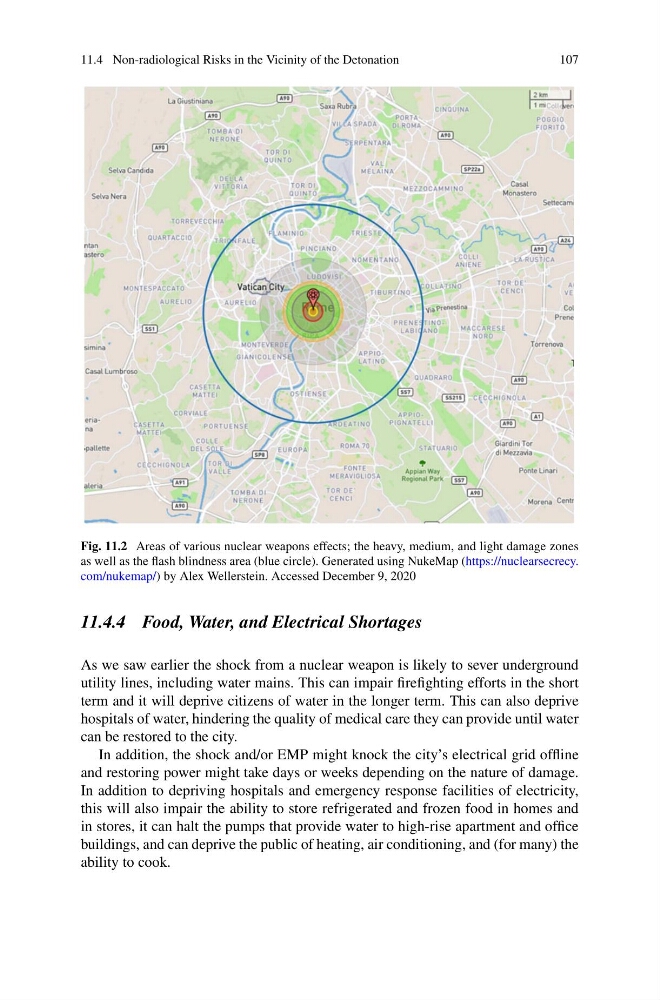
Fig. 11.2 Areas of various nuclear weapons effects; the heavy, medium, and light damage zones
as well as the flash blindness area (blue circle). Generated using NukeMap (https://nuclearsecrecy.
com/nukemap/) by Alex Wellerstein. Accessed December 9, 2020
11.4.4 Food, Water, and Electrical Shortages
As we saw earlier the shock from a nuclear weapon is likely to sever underground
utility lines, including water mains. This can impair firefighting efforts in the short
term and it will deprive citizens of water in the longer term. This can also deprive
hospitals of water, hindering the quality of medical care they can provide until water
can be restored to the city.
In addition, the shock and/or EMP might knock the city’s electrical grid offline
and restoring power might take days or weeks depending on the nature of damage.
In addition to depriving hospitals and emergency response facilities of electricity,
this will also impair the ability to store refrigerated and frozen food in homes and
in stores, it can halt the pumps that provide water to high-rise apartment and office
buildings, and can deprive the public of heating, air conditioning, and (for many) the
ability to cook.
107
Fig. 11.2 Areas of various nuclear weapons effects; the heavy, medium, and light damage zones
as well as the flash blindness area (blue circle). Generated using NukeMap (https://nuclearsecrecy.
com/nukemap/) by Alex Wellerstein. Accessed December 9, 2020
11.4.4 Food, Water, and Electrical Shortages
As we saw earlier the shock from a nuclear weapon is likely to sever underground
utility lines, including water mains. This can impair firefighting efforts in the short
term and it will deprive citizens of water in the longer term. This can also deprive
hospitals of water, hindering the quality of medical care they can provide until water
can be restored to the city.
In addition, the shock and/or EMP might knock the city’s electrical grid offline
and restoring power might take days or weeks depending on the nature of damage.
In addition to depriving hospitals and emergency response facilities of electricity,
this will also impair the ability to store refrigerated and frozen food in homes and
in stores, it can halt the pumps that provide water to high-rise apartment and office
buildings, and can deprive the public of heating, air conditioning, and (for many) the
ability to cook.