

106
11 Health Effects of Nuclear Weapons
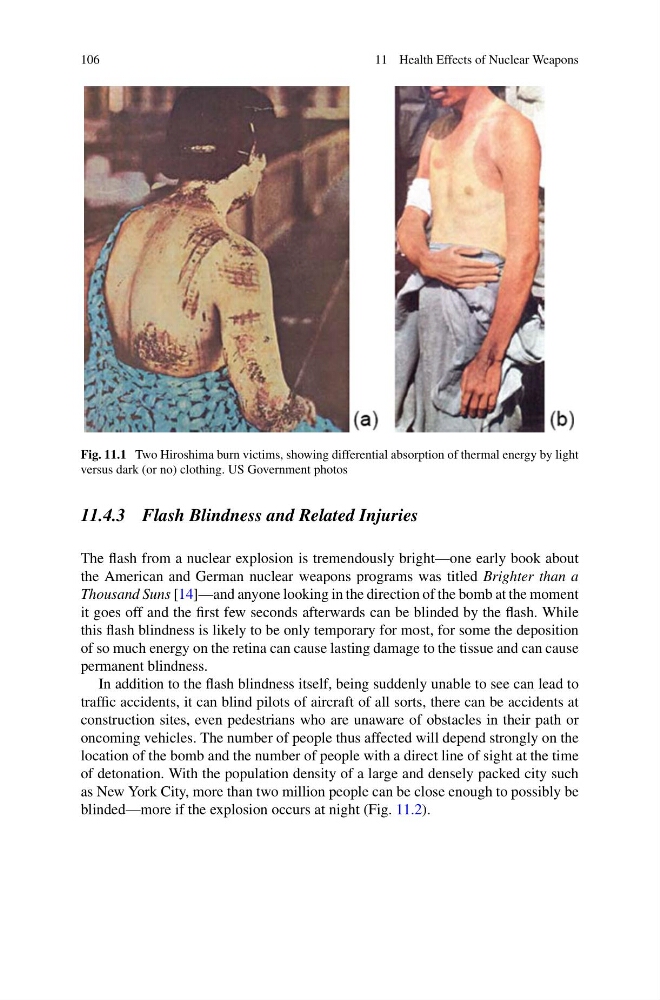
Fig. 11.1 Two Hiroshima burn victims, showing differential absorption of thermal energy by light
versus dark (or no) clothing. US Government photos
11.4.3 Flash Blindness and Related Injuries
The flash from a nuclear explosion is tremendously bright—one early book about
the American and German nuclear weapons programs was titled Brighter than a
Thousand Suns [14]—and anyone looking in the direction of the bomb at the moment
it goes off and the first few seconds afterwards can be blinded by the flash. While
this flash blindness is likely to be only temporary for most, for some the deposition
of so much energy on the retina can cause lasting damage to the tissue and can cause
permanent blindness.
In addition to the flash blindness itself, being suddenly unable to see can lead to
traffic accidents, it can blind pilots of aircraft of all sorts, there can be accidents at
construction sites, even pedestrians who are unaware of obstacles in their path or
oncoming vehicles. The number of people thus affected will depend strongly on the
location of the bomb and the number of people with a direct line of sight at the time
of detonation. With the population density of a large and densely packed city such
as New York City, more than two million people can be close enough to possibly be
blinded—more if the explosion occurs at night (Fig. 11.2).
11 Health Effects of Nuclear Weapons
Fig. 11.1 Two Hiroshima burn victims, showing differential absorption of thermal energy by light
versus dark (or no) clothing. US Government photos
11.4.3 Flash Blindness and Related Injuries
The flash from a nuclear explosion is tremendously bright—one early book about
the American and German nuclear weapons programs was titled Brighter than a
Thousand Suns [14]—and anyone looking in the direction of the bomb at the moment
it goes off and the first few seconds afterwards can be blinded by the flash. While
this flash blindness is likely to be only temporary for most, for some the deposition
of so much energy on the retina can cause lasting damage to the tissue and can cause
permanent blindness.
In addition to the flash blindness itself, being suddenly unable to see can lead to
traffic accidents, it can blind pilots of aircraft of all sorts, there can be accidents at
construction sites, even pedestrians who are unaware of obstacles in their path or
oncoming vehicles. The number of people thus affected will depend strongly on the
location of the bomb and the number of people with a direct line of sight at the time
of detonation. With the population density of a large and densely packed city such
as New York City, more than two million people can be close enough to possibly be
blinded—more if the explosion occurs at night (Fig. 11.2).