

3.5 Theoretical Analyses Based on Experimental Observations for Yeast F 1 -ATPase
51
AMP-PNP
AMP-PNP
Pi
AMP-PNP
AMP-PNP
Dissociation of Pi
16° rotation
Pi
Subcomplex I: β E •Pi, α E , α TP , and γ.
Subcomplex II: β TP , α TP , α DP , and γ.
Subcomplex III: β DP , α DP , α E , and γ.
Subcomplex I: β E , Pi, α E , α TP , and γ.
Subcomplex II: β TP , α TP , α DP , and γ.
Subcomplex III: β DP , α DP , α E , and γ.
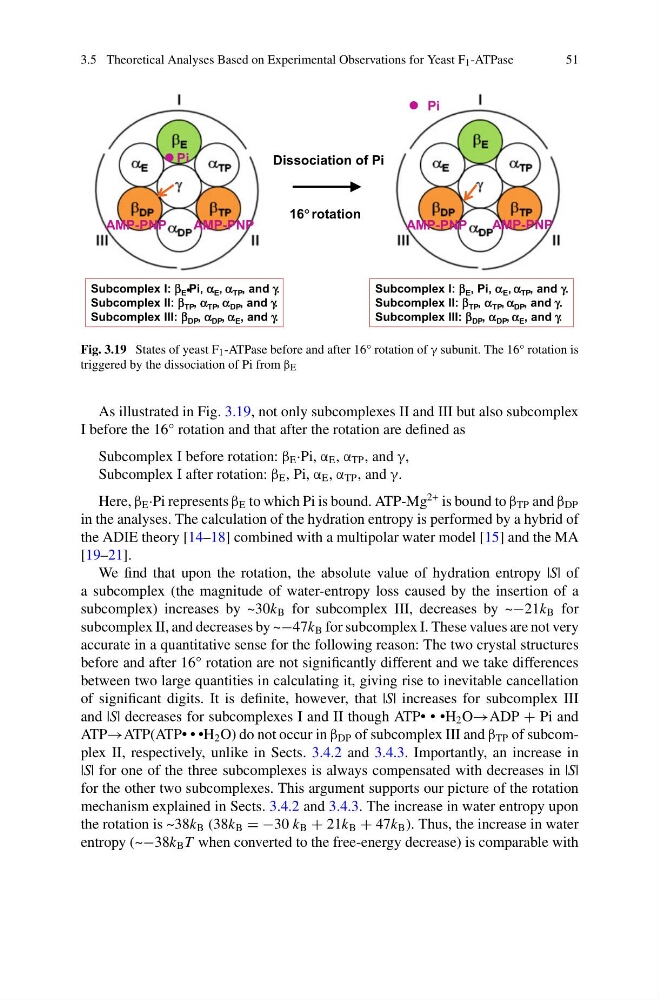
Fig. 3.19 States of yeast F 1 -ATPase before and after 16° rotation of γ subunit. The 16° rotation is
triggered by the dissociation of Pi from β E
As illustrated in Fig. 3.19, not only subcomplexes II and III but also subcomplex
I before the 16° rotation and that after the rotation are defined as
Subcomplex I before rotation: β E ·Pi, α E , α TP , and γ,
Subcomplex I after rotation: β E , Pi, α E , α TP , and γ.
Here, β E ·Pi represents β E to which Pi is bound. ATP-Mg
2+ is bound to β TP and β DP
in the analyses. The calculation of the hydration entropy is performed by a hybrid of
the ADIE theory [14–18] combined with a multipolar water model [15] and the MA
[19–21].
We find that upon the rotation, the absolute value of hydration entropy |S| of
a subcomplex (the magnitude of water-entropy loss caused by the insertion of a
subcomplex) increases by ~30k B for subcomplex III, decreases by ~−21k B for
subcomplex II, and decreases by ~−47k B for subcomplex I. These values are not very
accurate in a quantitative sense for the following reason: The two crystal structures
before and after 16° rotation are not significantly different and we take differences
between two large quantities in calculating it, giving rise to inevitable cancellation
of significant digits. It is definite, however, that |S| increases for subcomplex III
and |S| decreases for subcomplexes I and II though ATP• • •H 2 O→ADP + Pi and
ATP→ATP(ATP• • •H 2 O) do not occur in β DP of subcomplex III and β TP of subcomplex II, respectively, unlike in Sects. 3.4.2 and 3.4.3. Importantly, an increase in
|S| for one of the three subcomplexes is always compensated with decreases in |S|
for the other two subcomplexes. This argument supports our picture of the rotation
mechanism explained in Sects. 3.4.2 and 3.4.3. The increase in water entropy upon
the rotation is ~38k B (38k B = −30 k B + 21k B + 47k B ). Thus, the increase in water
entropy (~−38k B T when converted to the free-energy decrease) is comparable with
51
AMP-PNP
AMP-PNP
Pi
AMP-PNP
AMP-PNP
Dissociation of Pi
16° rotation
Pi
Subcomplex I: β E •Pi, α E , α TP , and γ.
Subcomplex II: β TP , α TP , α DP , and γ.
Subcomplex III: β DP , α DP , α E , and γ.
Subcomplex I: β E , Pi, α E , α TP , and γ.
Subcomplex II: β TP , α TP , α DP , and γ.
Subcomplex III: β DP , α DP , α E , and γ.
Fig. 3.19 States of yeast F 1 -ATPase before and after 16° rotation of γ subunit. The 16° rotation is
triggered by the dissociation of Pi from β E
As illustrated in Fig. 3.19, not only subcomplexes II and III but also subcomplex
I before the 16° rotation and that after the rotation are defined as
Subcomplex I before rotation: β E ·Pi, α E , α TP , and γ,
Subcomplex I after rotation: β E , Pi, α E , α TP , and γ.
Here, β E ·Pi represents β E to which Pi is bound. ATP-Mg
2+ is bound to β TP and β DP
in the analyses. The calculation of the hydration entropy is performed by a hybrid of
the ADIE theory [14–18] combined with a multipolar water model [15] and the MA
[19–21].
We find that upon the rotation, the absolute value of hydration entropy |S| of
a subcomplex (the magnitude of water-entropy loss caused by the insertion of a
subcomplex) increases by ~30k B for subcomplex III, decreases by ~−21k B for
subcomplex II, and decreases by ~−47k B for subcomplex I. These values are not very
accurate in a quantitative sense for the following reason: The two crystal structures
before and after 16° rotation are not significantly different and we take differences
between two large quantities in calculating it, giving rise to inevitable cancellation
of significant digits. It is definite, however, that |S| increases for subcomplex III
and |S| decreases for subcomplexes I and II though ATP• • •H 2 O→ADP + Pi and
ATP→ATP(ATP• • •H 2 O) do not occur in β DP of subcomplex III and β TP of subcomplex II, respectively, unlike in Sects. 3.4.2 and 3.4.3. Importantly, an increase in
|S| for one of the three subcomplexes is always compensated with decreases in |S|
for the other two subcomplexes. This argument supports our picture of the rotation
mechanism explained in Sects. 3.4.2 and 3.4.3. The increase in water entropy upon
the rotation is ~38k B (38k B = −30 k B + 21k B + 47k B ). Thus, the increase in water
entropy (~−38k B T when converted to the free-energy decrease) is comparable with