

17 Introduction to Evidence-Based Robust Optimisation
569
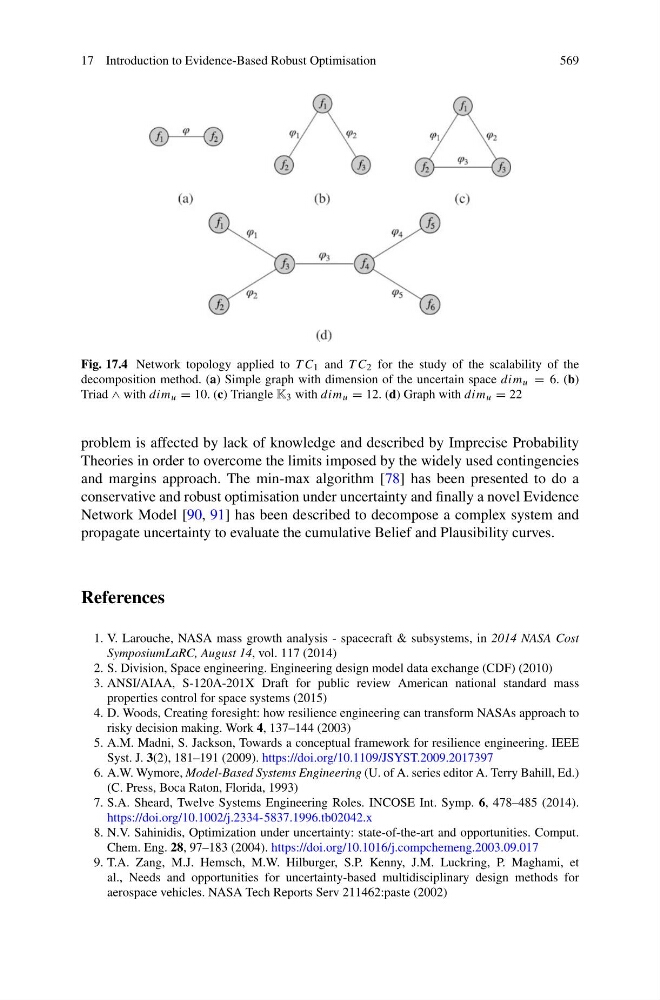
Fig. 17.4 Network topology applied to T C 1 and T C 2 for the study of the scalability of the
decomposition method. (a) Simple graph with dimension of the uncertain space dim u = 6. (b)
Triad ∧ with dim u = 10. (c) Triangle K 3 with dim u = 12. (d) Graph with dim u = 22
problem is affected by lack of knowledge and described by Imprecise Probability
Theories in order to overcome the limits imposed by the widely used contingencies
and margins approach. The min-max algorithm [78] has been presented to do a
conservative and robust optimisation under uncertainty and finally a novel Evidence
Network Model [90, 91] has been described to decompose a complex system and
propagate uncertainty to evaluate the cumulative Belief and Plausibility curves.
References
1. V. Larouche, NASA mass growth analysis - spacecraft & subsystems, in 2014 NASA Cost
SymposiumLaRC, August 14, vol. 117 (2014)
2. S. Division, Space engineering. Engineering design model data exchange (CDF) (2010)
3. ANSI/AIAA, S-120A-201X Draft for public review American national standard mass
properties control for space systems (2015)
4. D. Woods, Creating foresight: how resilience engineering can transform NASAs approach to
risky decision making. Work 4, 137–144 (2003)
5. A.M. Madni, S. Jackson, Towards a conceptual framework for resilience engineering. IEEE
Syst. J. 3(2), 181–191 (2009). https://doi.org/10.1109/JSYST.2009.2017397
6. A.W. Wymore, Model-Based Systems Engineering (U. of A. series editor A. Terry Bahill, Ed.)
(C. Press, Boca Raton, Florida, 1993)
7. S.A. Sheard, Twelve Systems Engineering Roles. INCOSE Int. Symp. 6, 478–485 (2014).
https://doi.org/10.1002/j.2334-5837.1996.tb02042.x
8. N.V. Sahinidis, Optimization under uncertainty: state-of-the-art and opportunities. Comput.
Chem. Eng. 28, 97–183 (2004). https://doi.org/10.1016/j.compchemeng.2003.09.017
9. T.A. Zang, M.J. Hemsch, M.W. Hilburger, S.P. Kenny, J.M. Luckring, P. Maghami, et
al., Needs and opportunities for uncertainty-based multidisciplinary design methods for
aerospace vehicles. NASA Tech Reports Serv 211462:paste (2002)