

16 Uncertainty Treatment Applications: High-Enthalpy Flow Ground Testing
517
E
Photon
Spontaneous emission
Photon
Induced emission
Photon
Photon
Absorption
Bound-bound processes
Free-bound or bound-free processes
Free-free processes
A
Photon
e -
A
Photon
e -
e -
-
Photoionization
Photodetachment
lower
E upper
A
e -
Photon
e -
e -
e -
AB + Photon
A B
+
AB + Photon
A B
+ + + e -
Photodissociation
Dissociative photoionization
E lower
E upper
E lower
E upper
e -
< <
Bremsstrahlung
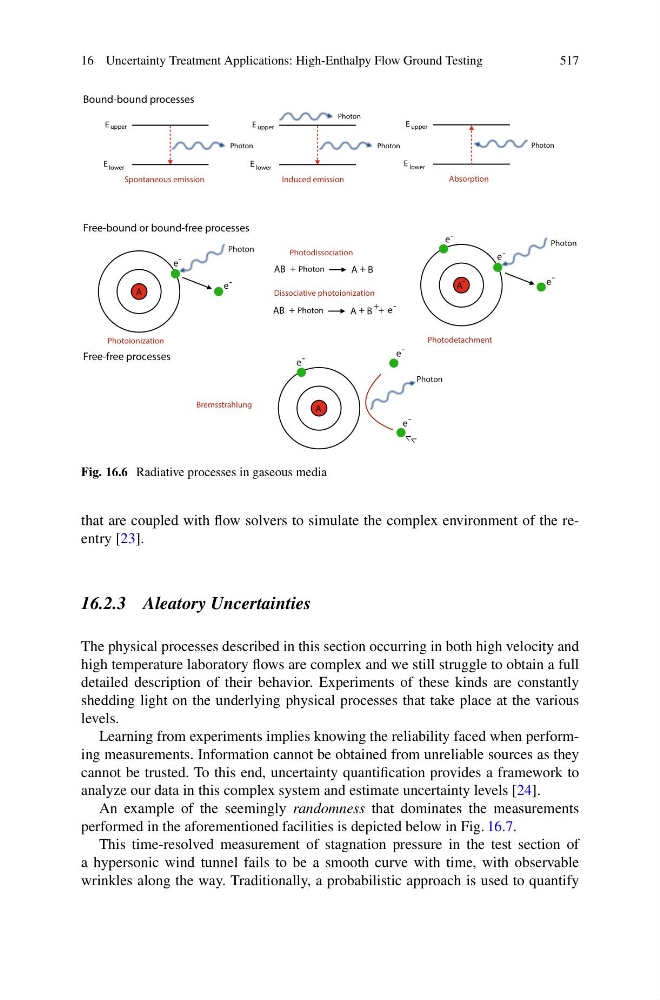
Fig. 16.6 Radiative processes in gaseous media
that are coupled with flow solvers to simulate the complex environment of the reentry [23].
16.2.3 Aleatory Uncertainties
The physical processes described in this section occurring in both high velocity and
high temperature laboratory flows are complex and we still struggle to obtain a full
detailed description of their behavior. Experiments of these kinds are constantly
shedding light on the underlying physical processes that take place at the various
levels.
Learning from experiments implies knowing the reliability faced when performing measurements. Information cannot be obtained from unreliable sources as they
cannot be trusted. To this end, uncertainty quantification provides a framework to
analyze our data in this complex system and estimate uncertainty levels [24].
An example of the seemingly randomness that dominates the measurements
performed in the aforementioned facilities is depicted below in Fig. 16.7.
This time-resolved measurement of stagnation pressure in the test section of
a hypersonic wind tunnel fails to be a smooth curve with time, with observable
wrinkles along the way. Traditionally, a probabilistic approach is used to quantify