

16 Uncertainty Treatment Applications: High-Enthalpy Flow Ground Testing
509
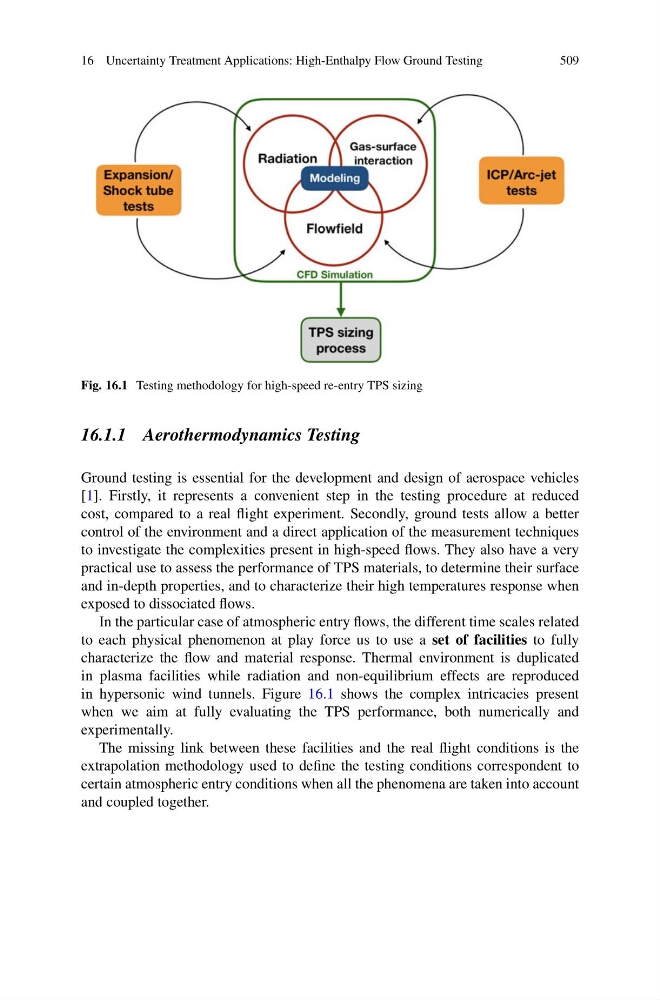
Fig. 16.1 Testing methodology for high-speed re-entry TPS sizing
16.1.1 Aerothermodynamics Testing
Ground testing is essential for the development and design of aerospace vehicles
[1]. Firstly, it represents a convenient step in the testing procedure at reduced
cost, compared to a real flight experiment. Secondly, ground tests allow a better
control of the environment and a direct application of the measurement techniques
to investigate the complexities present in high-speed flows. They also have a very
practical use to assess the performance of TPS materials, to determine their surface
and in-depth properties, and to characterize their high temperatures response when
exposed to dissociated flows.
In the particular case of atmospheric entry flows, the different time scales related
to each physical phenomenon at play force us to use a set of facilities to fully
characterize the flow and material response. Thermal environment is duplicated
in plasma facilities while radiation and non-equilibrium effects are reproduced
in hypersonic wind tunnels. Figure 16.1 shows the complex intricacies present
when we aim at fully evaluating the TPS performance, both numerically and
experimentally.
The missing link between these facilities and the real flight conditions is the
extrapolation methodology used to define the testing conditions correspondent to
certain atmospheric entry conditions when all the phenomena are taken into account
and coupled together.