

444
C. Sabater
OPTIMIZATION
SURROGATE BASED UNCERTAINTY QUANTIFICATION
,
( )
,
>
Evaluate StaƟsƟcs
on Kriging Model
Build Kriging
Model
Subplex
Select DoE
Sampling Points
CFD Process
Chain
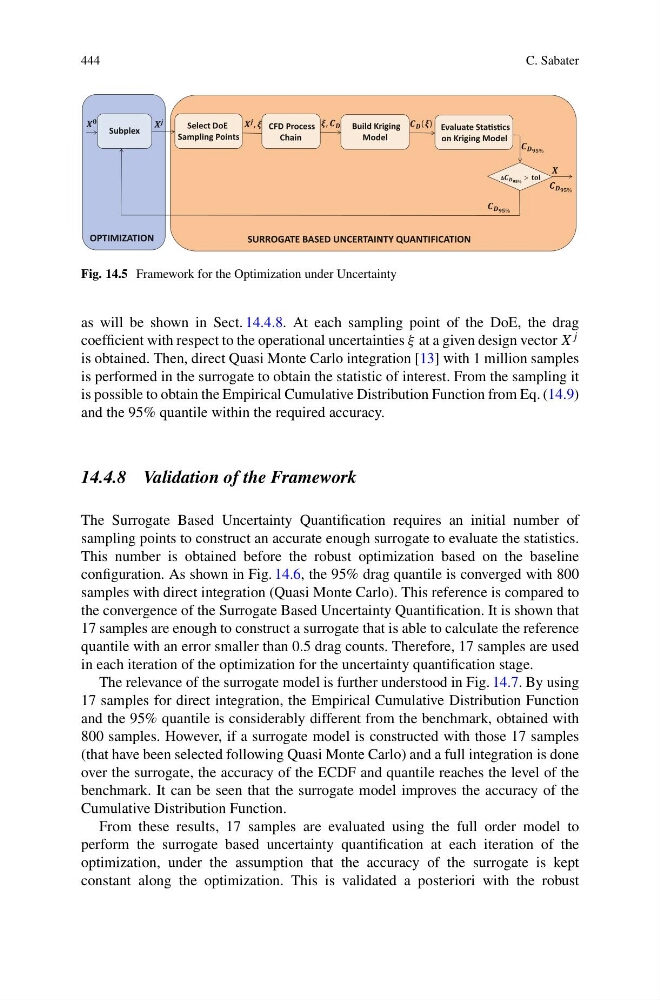
Fig. 14.5 Framework for the Optimization under Uncertainty
as will be shown in Sect. 14.4.8. At each sampling point of the DoE, the drag
coefficient with respect to the operational uncertainties ξ at a given design vector X j
is obtained. Then, direct Quasi Monte Carlo integration [13] with 1 million samples
is performed in the surrogate to obtain the statistic of interest. From the sampling it
is possible to obtain the Empirical Cumulative Distribution Function from Eq. (14.9)
and the 95% quantile within the required accuracy.
14.4.8 Validation of the Framework
The Surrogate Based Uncertainty Quantification requires an initial number of
sampling points to construct an accurate enough surrogate to evaluate the statistics.
This number is obtained before the robust optimization based on the baseline
configuration. As shown in Fig. 14.6, the 95% drag quantile is converged with 800
samples with direct integration (Quasi Monte Carlo). This reference is compared to
the convergence of the Surrogate Based Uncertainty Quantification. It is shown that
17 samples are enough to construct a surrogate that is able to calculate the reference
quantile with an error smaller than 0.5 drag counts. Therefore, 17 samples are used
in each iteration of the optimization for the uncertainty quantification stage.
The relevance of the surrogate model is further understood in Fig. 14.7. By using
17 samples for direct integration, the Empirical Cumulative Distribution Function
and the 95% quantile is considerably different from the benchmark, obtained with
800 samples. However, if a surrogate model is constructed with those 17 samples
(that have been selected following Quasi Monte Carlo) and a full integration is done
over the surrogate, the accuracy of the ECDF and quantile reaches the level of the
benchmark. It can be seen that the surrogate model improves the accuracy of the
Cumulative Distribution Function.
From these results, 17 samples are evaluated using the full order model to
perform the surrogate based uncertainty quantification at each iteration of the
optimization, under the assumption that the accuracy of the surrogate is kept
constant along the optimization. This is validated a posteriori with the robust
C. Sabater
OPTIMIZATION
SURROGATE BASED UNCERTAINTY QUANTIFICATION
,
( )
,
>
Evaluate StaƟsƟcs
on Kriging Model
Build Kriging
Model
Subplex
Select DoE
Sampling Points
CFD Process
Chain
Fig. 14.5 Framework for the Optimization under Uncertainty
as will be shown in Sect. 14.4.8. At each sampling point of the DoE, the drag
coefficient with respect to the operational uncertainties ξ at a given design vector X j
is obtained. Then, direct Quasi Monte Carlo integration [13] with 1 million samples
is performed in the surrogate to obtain the statistic of interest. From the sampling it
is possible to obtain the Empirical Cumulative Distribution Function from Eq. (14.9)
and the 95% quantile within the required accuracy.
14.4.8 Validation of the Framework
The Surrogate Based Uncertainty Quantification requires an initial number of
sampling points to construct an accurate enough surrogate to evaluate the statistics.
This number is obtained before the robust optimization based on the baseline
configuration. As shown in Fig. 14.6, the 95% drag quantile is converged with 800
samples with direct integration (Quasi Monte Carlo). This reference is compared to
the convergence of the Surrogate Based Uncertainty Quantification. It is shown that
17 samples are enough to construct a surrogate that is able to calculate the reference
quantile with an error smaller than 0.5 drag counts. Therefore, 17 samples are used
in each iteration of the optimization for the uncertainty quantification stage.
The relevance of the surrogate model is further understood in Fig. 14.7. By using
17 samples for direct integration, the Empirical Cumulative Distribution Function
and the 95% quantile is considerably different from the benchmark, obtained with
800 samples. However, if a surrogate model is constructed with those 17 samples
(that have been selected following Quasi Monte Carlo) and a full integration is done
over the surrogate, the accuracy of the ECDF and quantile reaches the level of the
benchmark. It can be seen that the surrogate model improves the accuracy of the
Cumulative Distribution Function.
From these results, 17 samples are evaluated using the full order model to
perform the surrogate based uncertainty quantification at each iteration of the
optimization, under the assumption that the accuracy of the surrogate is kept
constant along the optimization. This is validated a posteriori with the robust