

41 Techno-economic Analysis on Renewable Energy via Hydrogen …
627
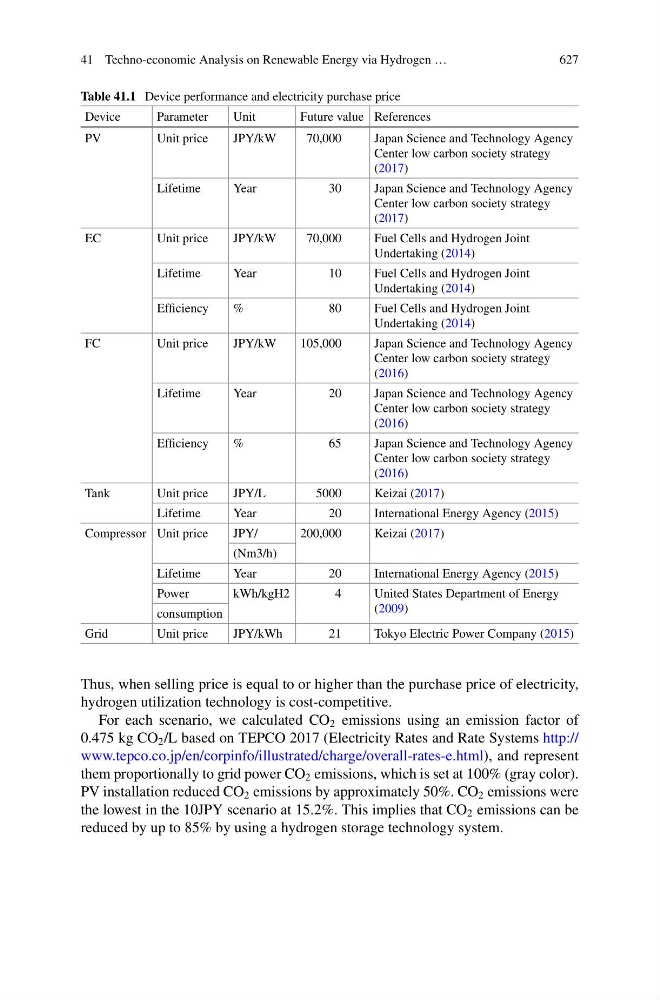
Table 41.1 Device performance and electricity purchase price
Device
Parameter
Unit
Future value References
PV
Unit price
JPY/kW
70,000
Japan Science and Technology Agency
Center low carbon society strategy
(2017)
Lifetime
Year
30
Japan Science and Technology Agency
Center low carbon society strategy
(2017)
EC
Unit price
JPY/kW
70,000
Fuel Cells and Hydrogen Joint
Undertaking (2014)
Lifetime
Year
10
Fuel Cells and Hydrogen Joint
Undertaking (2014)
Efficiency
%
80
Fuel Cells and Hydrogen Joint
Undertaking (2014)
FC
Unit price
JPY/kW
105,000
Japan Science and Technology Agency
Center low carbon society strategy
(2016)
Lifetime
Year
20
Japan Science and Technology Agency
Center low carbon society strategy
(2016)
Efficiency
%
65
Japan Science and Technology Agency
Center low carbon society strategy
(2016)
Tank
Unit price
JPY/L
5000
Keizai (2017)
Lifetime
Year
20
International Energy Agency (2015)
Compressor Unit price
JPY/
200,000
Keizai (2017)
(Nm3/h)
Lifetime
Year
20
International Energy Agency (2015)
Power
kWh/kgH2
4
United States Department of Energy
(2009)
consumption
Grid
Unit price
JPY/kWh
21
Tokyo Electric Power Company (2015)
Thus, when selling price is equal to or higher than the purchase price of electricity,
hydrogen utilization technology is cost-competitive.
For each scenario, we calculated CO 2 emissions using an emission factor of
0.475 kg CO 2 /L based on TEPCO 2017 (Electricity Rates and Rate Systems http://
www.tepco.co.jp/en/corpinfo/illustrated/charge/overall-rates-e.html), and represent
them proportionally to grid power CO 2 emissions, which is set at 100% (gray color).
PV installation reduced CO 2 emissions by approximately 50%. CO 2 emissions were
the lowest in the 10JPY scenario at 15.2%. This implies that CO 2 emissions can be
reduced by up to 85% by using a hydrogen storage technology system.