

608
M. Huda et al.
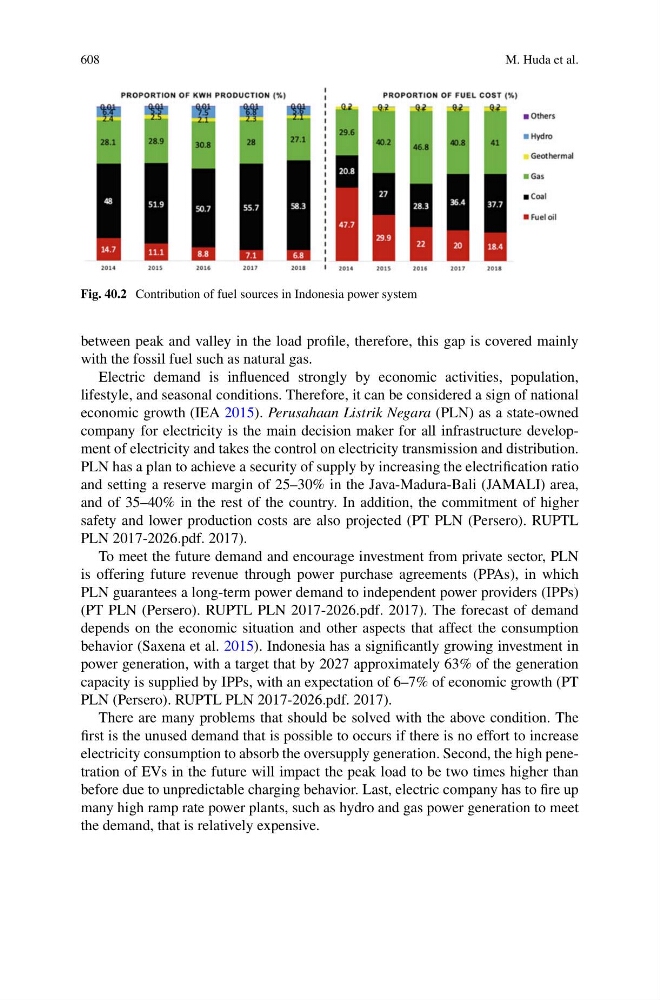
Fig. 40.2 Contribution of fuel sources in Indonesia power system
between peak and valley in the load profile, therefore, this gap is covered mainly
with the fossil fuel such as natural gas.
Electric demand is influenced strongly by economic activities, population,
lifestyle, and seasonal conditions. Therefore, it can be considered a sign of national
economic growth (IEA 2015). Perusahaan Listrik Negara (PLN) as a state-owned
company for electricity is the main decision maker for all infrastructure development of electricity and takes the control on electricity transmission and distribution.
PLN has a plan to achieve a security of supply by increasing the electrification ratio
and setting a reserve margin of 25–30% in the Java-Madura-Bali (JAMALI) area,
and of 35–40% in the rest of the country. In addition, the commitment of higher
safety and lower production costs are also projected (PT PLN (Persero). RUPTL
PLN 2017-2026.pdf. 2017).
To meet the future demand and encourage investment from private sector, PLN
is offering future revenue through power purchase agreements (PPAs), in which
PLN guarantees a long-term power demand to independent power providers (IPPs)
(PT PLN (Persero). RUPTL PLN 2017-2026.pdf. 2017). The forecast of demand
depends on the economic situation and other aspects that affect the consumption
behavior (Saxena et al. 2015). Indonesia has a significantly growing investment in
power generation, with a target that by 2027 approximately 63% of the generation
capacity is supplied by IPPs, with an expectation of 6–7% of economic growth (PT
PLN (Persero). RUPTL PLN 2017-2026.pdf. 2017).
There are many problems that should be solved with the above condition. The
first is the unused demand that is possible to occurs if there is no effort to increase
electricity consumption to absorb the oversupply generation. Second, the high penetration of EVs in the future will impact the peak load to be two times higher than
before due to unpredictable charging behavior. Last, electric company has to fire up
many high ramp rate power plants, such as hydro and gas power generation to meet
the demand, that is relatively expensive.