

594
E. Fernández et al.
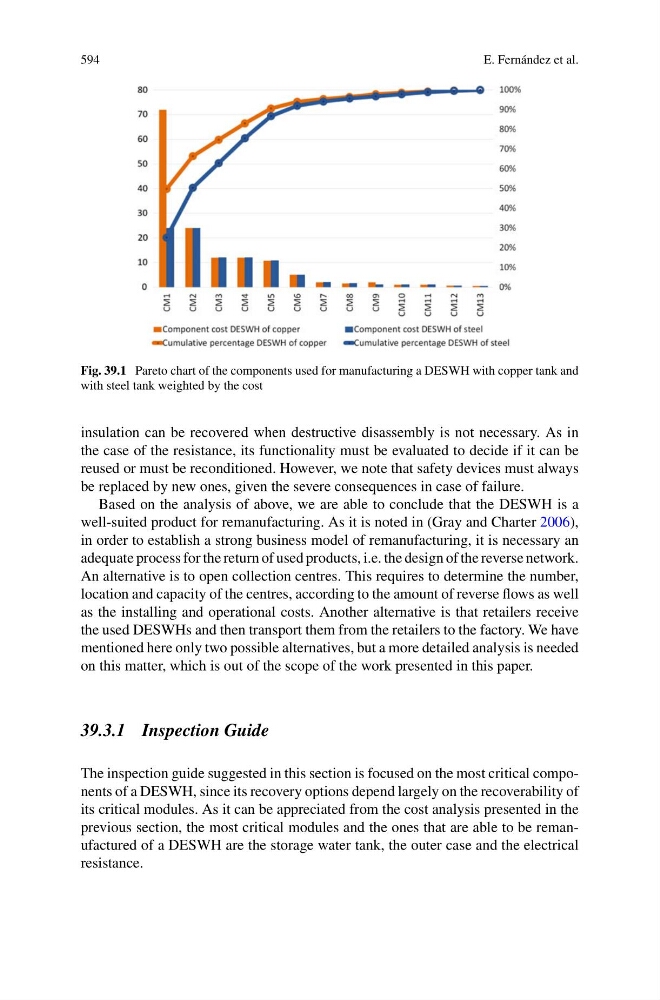
Fig. 39.1 Pareto chart of the components used for manufacturing a DESWH with copper tank and
with steel tank weighted by the cost
insulation can be recovered when destructive disassembly is not necessary. As in
the case of the resistance, its functionality must be evaluated to decide if it can be
reused or must be reconditioned. However, we note that safety devices must always
be replaced by new ones, given the severe consequences in case of failure.
Based on the analysis of above, we are able to conclude that the DESWH is a
well-suited product for remanufacturing. As it is noted in (Gray and Charter 2006),
in order to establish a strong business model of remanufacturing, it is necessary an
adequate process for the return of used products, i.e. the design of the reverse network.
An alternative is to open collection centres. This requires to determine the number,
location and capacity of the centres, according to the amount of reverse flows as well
as the installing and operational costs. Another alternative is that retailers receive
the used DESWHs and then transport them from the retailers to the factory. We have
mentioned here only two possible alternatives, but a more detailed analysis is needed
on this matter, which is out of the scope of the work presented in this paper.
39.3.1 Inspection Guide
The inspection guide suggested in this section is focused on the most critical components of a DESWH, since its recovery options depend largely on the recoverability of
its critical modules. As it can be appreciated from the cost analysis presented in the
previous section, the most critical modules and the ones that are able to be remanufactured of a DESWH are the storage water tank, the outer case and the electrical
resistance.