

37 Evaluation and Improvement Proposals for a Business Facility …
561
37.3 Actual Measured Evaluation and Analysis of Heat
Supply System
37.3.1 Performance Evaluation of a Solar Thermal Collector
In Fig. 37.4, we show the solar heat collection amount and the collection efficiency
by month. The formula to calculate heat collection efficiency is shown by Eq. 37.1.
The amount of solar heat collection depends on the amount of solar radiation, and
the collection efficiency is generally stable throughout the year. On the other hand,
we found that in the summer season when the heat collection amount reached its
maximum, the heat supply amount became excessive, and eight panels out of 16 had
to adjust the heat collection amount. From these data, it can be confirmed that there
is a gap between the heat demand and the supply amount.
η k =
Q k
Q s
(37.1)
η k : Heat collection Efficiency [%]
Q k : Solar heat Collection [MJ]
Q s : Solar radiation [MJ]
37.3.2 Performance Evaluation of Adsorption Type
Refrigerator
The formula used to calculate the energy utilization rate is shown in Eq. 37.2 and
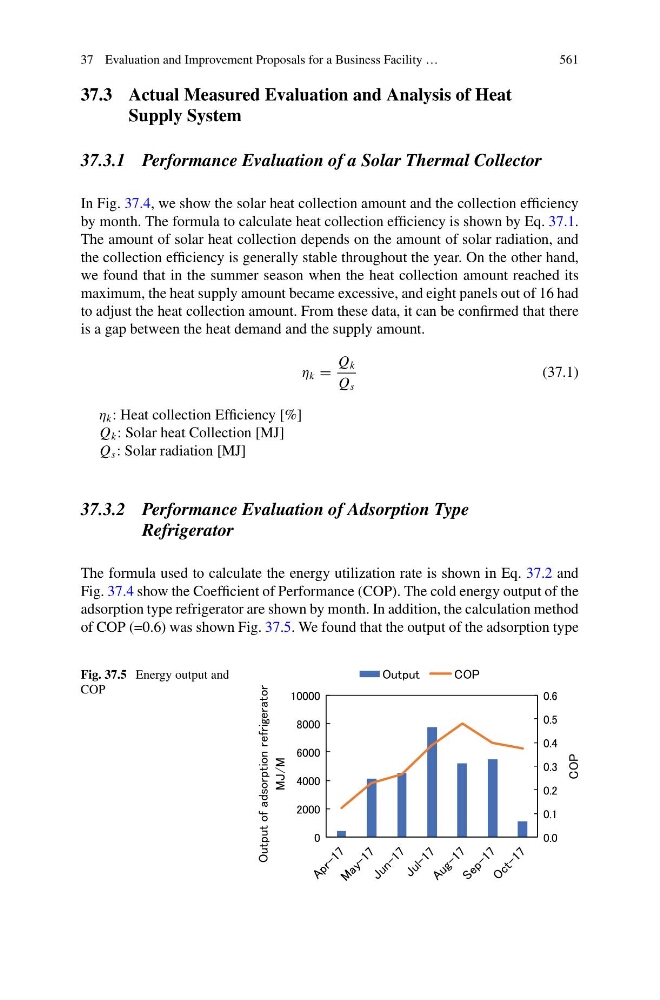
Fig. 37.4 show the Coefficient of Performance (COP). The cold energy output of the
adsorption type refrigerator are shown by month. In addition, the calculation method
of COP (=0.6) was shown Fig. 37.5. We found that the output of the adsorption type
Fig. 37.5 Energy output and
COP
561
37.3 Actual Measured Evaluation and Analysis of Heat
Supply System
37.3.1 Performance Evaluation of a Solar Thermal Collector
In Fig. 37.4, we show the solar heat collection amount and the collection efficiency
by month. The formula to calculate heat collection efficiency is shown by Eq. 37.1.
The amount of solar heat collection depends on the amount of solar radiation, and
the collection efficiency is generally stable throughout the year. On the other hand,
we found that in the summer season when the heat collection amount reached its
maximum, the heat supply amount became excessive, and eight panels out of 16 had
to adjust the heat collection amount. From these data, it can be confirmed that there
is a gap between the heat demand and the supply amount.
η k =
Q k
Q s
(37.1)
η k : Heat collection Efficiency [%]
Q k : Solar heat Collection [MJ]
Q s : Solar radiation [MJ]
37.3.2 Performance Evaluation of Adsorption Type
Refrigerator
The formula used to calculate the energy utilization rate is shown in Eq. 37.2 and
Fig. 37.4 show the Coefficient of Performance (COP). The cold energy output of the
adsorption type refrigerator are shown by month. In addition, the calculation method
of COP (=0.6) was shown Fig. 37.5. We found that the output of the adsorption type
Fig. 37.5 Energy output and
COP