

29 Influence of Thermal Conductivity and Subsurface Temperature …
451
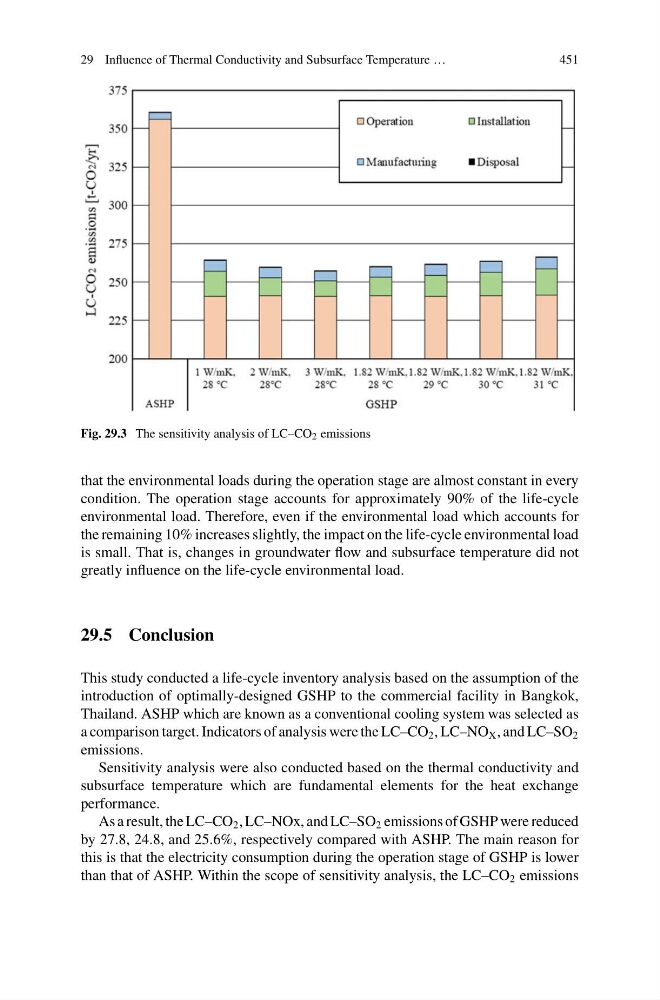
Fig. 29.3 The sensitivity analysis of LC–CO 2 emissions
that the environmental loads during the operation stage are almost constant in every
condition. The operation stage accounts for approximately 90% of the life-cycle
environmental load. Therefore, even if the environmental load which accounts for
the remaining 10% increases slightly, the impact on the life-cycle environmental load
is small. That is, changes in groundwater flow and subsurface temperature did not
greatly influence on the life-cycle environmental load.
29.5 Conclusion
This study conducted a life-cycle inventory analysis based on the assumption of the
introduction of optimally-designed GSHP to the commercial facility in Bangkok,
Thailand. ASHP which are known as a conventional cooling system was selected as
a comparison target. Indicators of analysis were the LC–CO 2 , LC–NO X , and LC–SO 2
emissions.
Sensitivity analysis were also conducted based on the thermal conductivity and
subsurface temperature which are fundamental elements for the heat exchange
performance.
As a result, the LC–CO 2 , LC–NOx, and LC–SO 2 emissions of GSHP were reduced
by 27.8, 24.8, and 25.6%, respectively compared with ASHP. The main reason for
this is that the electricity consumption during the operation stage of GSHP is lower
than that of ASHP. Within the scope of sensitivity analysis, the LC–CO 2 emissions
451
Fig. 29.3 The sensitivity analysis of LC–CO 2 emissions
that the environmental loads during the operation stage are almost constant in every
condition. The operation stage accounts for approximately 90% of the life-cycle
environmental load. Therefore, even if the environmental load which accounts for
the remaining 10% increases slightly, the impact on the life-cycle environmental load
is small. That is, changes in groundwater flow and subsurface temperature did not
greatly influence on the life-cycle environmental load.
29.5 Conclusion
This study conducted a life-cycle inventory analysis based on the assumption of the
introduction of optimally-designed GSHP to the commercial facility in Bangkok,
Thailand. ASHP which are known as a conventional cooling system was selected as
a comparison target. Indicators of analysis were the LC–CO 2 , LC–NO X , and LC–SO 2
emissions.
Sensitivity analysis were also conducted based on the thermal conductivity and
subsurface temperature which are fundamental elements for the heat exchange
performance.
As a result, the LC–CO 2 , LC–NOx, and LC–SO 2 emissions of GSHP were reduced
by 27.8, 24.8, and 25.6%, respectively compared with ASHP. The main reason for
this is that the electricity consumption during the operation stage of GSHP is lower
than that of ASHP. Within the scope of sensitivity analysis, the LC–CO 2 emissions