

426
T. Hishinuma et al.
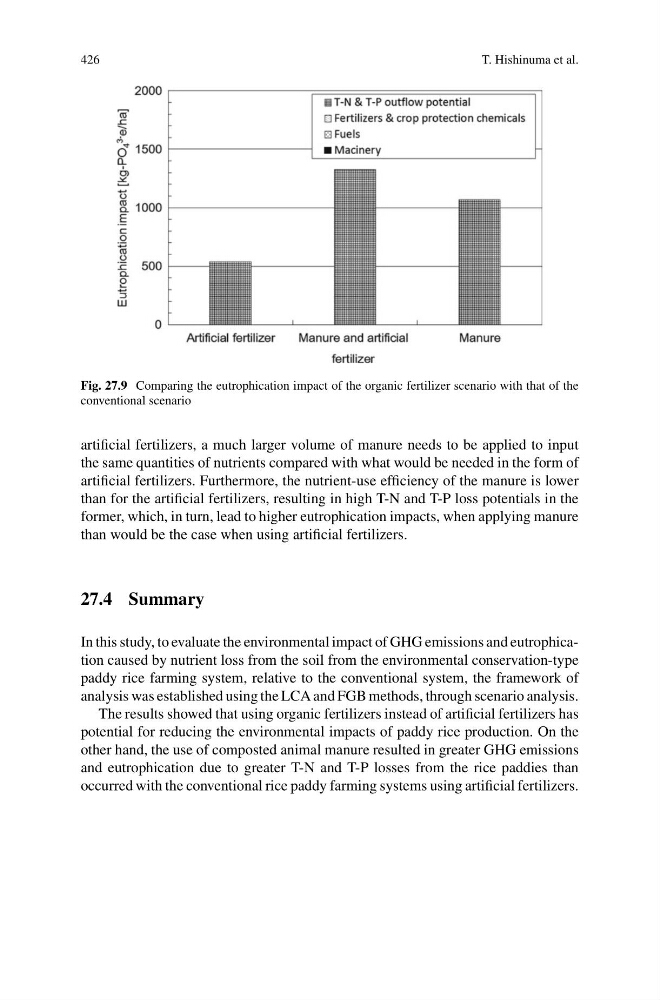
Fig. 27.9 Comparing the eutrophication impact of the organic fertilizer scenario with that of the
conventional scenario
artificial fertilizers, a much larger volume of manure needs to be applied to input
the same quantities of nutrients compared with what would be needed in the form of
artificial fertilizers. Furthermore, the nutrient-use efficiency of the manure is lower
than for the artificial fertilizers, resulting in high T-N and T-P loss potentials in the
former, which, in turn, lead to higher eutrophication impacts, when applying manure
than would be the case when using artificial fertilizers.
27.4 Summary
In this study, to evaluate the environmental impact of GHG emissions and eutrophication caused by nutrient loss from the soil from the environmental conservation-type
paddy rice farming system, relative to the conventional system, the framework of
analysis was established using the LCA and FGB methods, through scenario analysis.
The results showed that using organic fertilizers instead of artificial fertilizers has
potential for reducing the environmental impacts of paddy rice production. On the
other hand, the use of composted animal manure resulted in greater GHG emissions
and eutrophication due to greater T-N and T-P losses from the rice paddies than
occurred with the conventional rice paddy farming systems using artificial fertilizers.
T. Hishinuma et al.
Fig. 27.9 Comparing the eutrophication impact of the organic fertilizer scenario with that of the
conventional scenario
artificial fertilizers, a much larger volume of manure needs to be applied to input
the same quantities of nutrients compared with what would be needed in the form of
artificial fertilizers. Furthermore, the nutrient-use efficiency of the manure is lower
than for the artificial fertilizers, resulting in high T-N and T-P loss potentials in the
former, which, in turn, lead to higher eutrophication impacts, when applying manure
than would be the case when using artificial fertilizers.
27.4 Summary
In this study, to evaluate the environmental impact of GHG emissions and eutrophication caused by nutrient loss from the soil from the environmental conservation-type
paddy rice farming system, relative to the conventional system, the framework of
analysis was established using the LCA and FGB methods, through scenario analysis.
The results showed that using organic fertilizers instead of artificial fertilizers has
potential for reducing the environmental impacts of paddy rice production. On the
other hand, the use of composted animal manure resulted in greater GHG emissions
and eutrophication due to greater T-N and T-P losses from the rice paddies than
occurred with the conventional rice paddy farming systems using artificial fertilizers.