

382
S. Takeda et al.
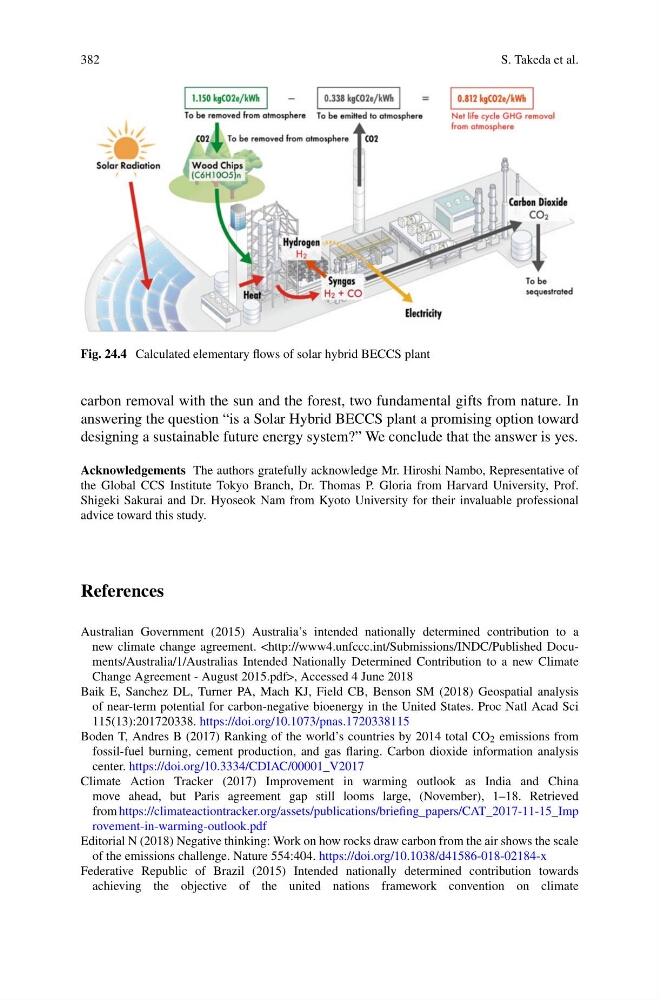
Fig. 24.4 Calculated elementary flows of solar hybrid BECCS plant
carbon removal with the sun and the forest, two fundamental gifts from nature. In
answering the question “is a Solar Hybrid BECCS plant a promising option toward
designing a sustainable future energy system?” We conclude that the answer is yes.
Acknowledgements The authors gratefully acknowledge Mr. Hiroshi Nambo, Representative of
the Global CCS Institute Tokyo Branch, Dr. Thomas P. Gloria from Harvard University, Prof.
Shigeki Sakurai and Dr. Hyoseok Nam from Kyoto University for their invaluable professional
advice toward this study.
References
Australian Government (2015) Australia’s intended nationally determined contribution to a
new climate change agreement.
Baik E, Sanchez DL, Turner PA, Mach KJ, Field CB, Benson SM (2018) Geospatial analysis
of near-term potential for carbon-negative bioenergy in the United States. Proc Natl Acad Sci
115(13):201720338. https://doi.org/10.1073/pnas.1720338115
Boden T, Andres B (2017) Ranking of the world’s countries by 2014 total CO 2 emissions from
fossil-fuel burning, cement production, and gas flaring. Carbon dioxide information analysis
center. https://doi.org/10.3334/CDIAC/00001_V2017
Climate Action Tracker (2017) Improvement in warming outlook as India and China
move ahead, but Paris agreement gap still looms large, (November), 1–18. Retrieved
from https://climateactiontracker.org/assets/publications/briefing_papers/CAT_2017-11-15_Imp
rovement-in-warming-outlook.pdf
Editorial N (2018) Negative thinking: Work on how rocks draw carbon from the air shows the scale
of the emissions challenge. Nature 554:404. https://doi.org/10.1038/d41586-018-02184-x
Federative Republic of Brazil (2015) Intended nationally determined contribution towards
achieving the objective of the united nations framework convention on climate
S. Takeda et al.
Fig. 24.4 Calculated elementary flows of solar hybrid BECCS plant
carbon removal with the sun and the forest, two fundamental gifts from nature. In
answering the question “is a Solar Hybrid BECCS plant a promising option toward
designing a sustainable future energy system?” We conclude that the answer is yes.
Acknowledgements The authors gratefully acknowledge Mr. Hiroshi Nambo, Representative of
the Global CCS Institute Tokyo Branch, Dr. Thomas P. Gloria from Harvard University, Prof.
Shigeki Sakurai and Dr. Hyoseok Nam from Kyoto University for their invaluable professional
advice toward this study.
References
Australian Government (2015) Australia’s intended nationally determined contribution to a
new climate change agreement.
Baik E, Sanchez DL, Turner PA, Mach KJ, Field CB, Benson SM (2018) Geospatial analysis
of near-term potential for carbon-negative bioenergy in the United States. Proc Natl Acad Sci
115(13):201720338. https://doi.org/10.1073/pnas.1720338115
Boden T, Andres B (2017) Ranking of the world’s countries by 2014 total CO 2 emissions from
fossil-fuel burning, cement production, and gas flaring. Carbon dioxide information analysis
center. https://doi.org/10.3334/CDIAC/00001_V2017
Climate Action Tracker (2017) Improvement in warming outlook as India and China
move ahead, but Paris agreement gap still looms large, (November), 1–18. Retrieved
from https://climateactiontracker.org/assets/publications/briefing_papers/CAT_2017-11-15_Imp
rovement-in-warming-outlook.pdf
Editorial N (2018) Negative thinking: Work on how rocks draw carbon from the air shows the scale
of the emissions challenge. Nature 554:404. https://doi.org/10.1038/d41586-018-02184-x
Federative Republic of Brazil (2015) Intended nationally determined contribution towards
achieving the objective of the united nations framework convention on climate