

368
P. Samaranayake et al.
3.64
16.01
23.59
27.00
32.46
26.65
39.00
24.71
25.94
20.32
28.21
43.49
37.04
18.18
25.19
32.22 31.49
35.25
32.69
37.61
42.11
24.13
21.34
16.75
53.58
-
10.00
20.00
30.00
40.00
50.00
60.00
Average Fruit (kg)/Day
HarvesƟng Date
Average Fruit (kg)/Day
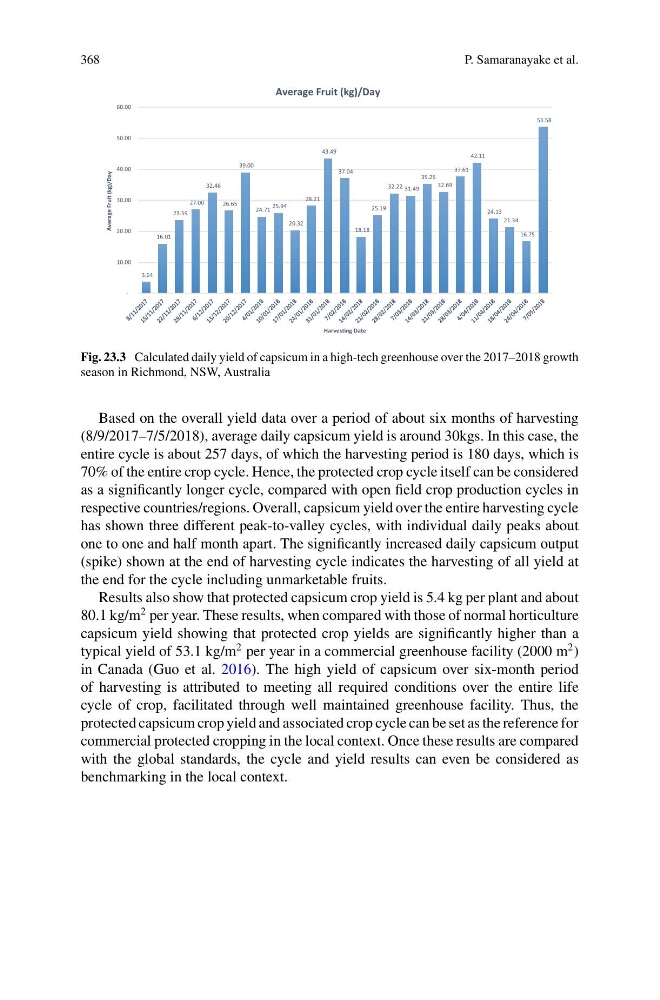
Fig. 23.3 Calculated daily yield of capsicum in a high-tech greenhouse over the 2017–2018 growth
season in Richmond, NSW, Australia
Based on the overall yield data over a period of about six months of harvesting
(8/9/2017–7/5/2018), average daily capsicum yield is around 30kgs. In this case, the
entire cycle is about 257 days, of which the harvesting period is 180 days, which is
70% of the entire crop cycle. Hence, the protected crop cycle itself can be considered
as a significantly longer cycle, compared with open field crop production cycles in
respective countries/regions. Overall, capsicum yield over the entire harvesting cycle
has shown three different peak-to-valley cycles, with individual daily peaks about
one to one and half month apart. The significantly increased daily capsicum output
(spike) shown at the end of harvesting cycle indicates the harvesting of all yield at
the end for the cycle including unmarketable fruits.
Results also show that protected capsicum crop yield is 5.4 kg per plant and about
80.1 kg/m
2 per year. These results, when compared with those of normal horticulture
capsicum yield showing that protected crop yields are significantly higher than a
typical yield of 53.1 kg/m
2 per year in a commercial greenhouse facility (2000 m
2 )
in Canada (Guo et al. 2016). The high yield of capsicum over six-month period
of harvesting is attributed to meeting all required conditions over the entire life
cycle of crop, facilitated through well maintained greenhouse facility. Thus, the
protected capsicum crop yield and associated crop cycle can be set as the reference for
commercial protected cropping in the local context. Once these results are compared
with the global standards, the cycle and yield results can even be considered as
benchmarking in the local context.
P. Samaranayake et al.
3.64
16.01
23.59
27.00
32.46
26.65
39.00
24.71
25.94
20.32
28.21
43.49
37.04
18.18
25.19
32.22 31.49
35.25
32.69
37.61
42.11
24.13
21.34
16.75
53.58
-
10.00
20.00
30.00
40.00
50.00
60.00
Average Fruit (kg)/Day
HarvesƟng Date
Average Fruit (kg)/Day
Fig. 23.3 Calculated daily yield of capsicum in a high-tech greenhouse over the 2017–2018 growth
season in Richmond, NSW, Australia
Based on the overall yield data over a period of about six months of harvesting
(8/9/2017–7/5/2018), average daily capsicum yield is around 30kgs. In this case, the
entire cycle is about 257 days, of which the harvesting period is 180 days, which is
70% of the entire crop cycle. Hence, the protected crop cycle itself can be considered
as a significantly longer cycle, compared with open field crop production cycles in
respective countries/regions. Overall, capsicum yield over the entire harvesting cycle
has shown three different peak-to-valley cycles, with individual daily peaks about
one to one and half month apart. The significantly increased daily capsicum output
(spike) shown at the end of harvesting cycle indicates the harvesting of all yield at
the end for the cycle including unmarketable fruits.
Results also show that protected capsicum crop yield is 5.4 kg per plant and about
80.1 kg/m
2 per year. These results, when compared with those of normal horticulture
capsicum yield showing that protected crop yields are significantly higher than a
typical yield of 53.1 kg/m
2 per year in a commercial greenhouse facility (2000 m
2 )
in Canada (Guo et al. 2016). The high yield of capsicum over six-month period
of harvesting is attributed to meeting all required conditions over the entire life
cycle of crop, facilitated through well maintained greenhouse facility. Thus, the
protected capsicum crop yield and associated crop cycle can be set as the reference for
commercial protected cropping in the local context. Once these results are compared
with the global standards, the cycle and yield results can even be considered as
benchmarking in the local context.