

21 Progress for Life Cycle Sustainability Assessment by Means …
339
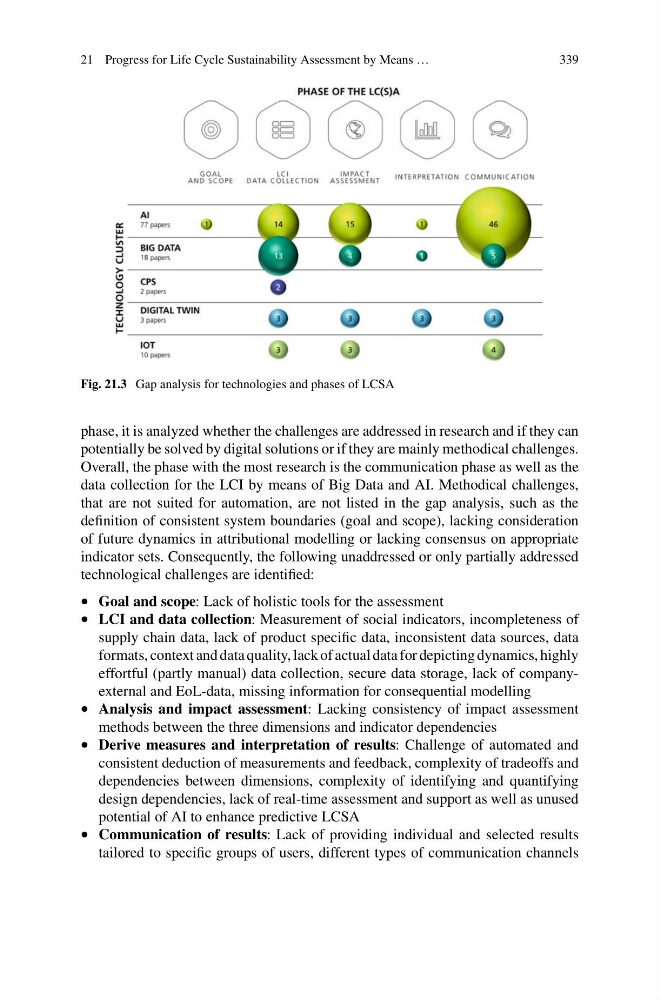
Fig. 21.3 Gap analysis for technologies and phases of LCSA
phase, it is analyzed whether the challenges are addressed in research and if they can
potentially be solved by digital solutions or if they are mainly methodical challenges.
Overall, the phase with the most research is the communication phase as well as the
data collection for the LCI by means of Big Data and AI. Methodical challenges,
that are not suited for automation, are not listed in the gap analysis, such as the
definition of consistent system boundaries (goal and scope), lacking consideration
of future dynamics in attributional modelling or lacking consensus on appropriate
indicator sets. Consequently, the following unaddressed or only partially addressed
technological challenges are identified:
• Goal and scope: Lack of holistic tools for the assessment
• LCI and data collection: Measurement of social indicators, incompleteness of
supply chain data, lack of product specific data, inconsistent data sources, data
formats, context and data quality, lack of actual data for depicting dynamics, highly
effortful (partly manual) data collection, secure data storage, lack of companyexternal and EoL-data, missing information for consequential modelling
• Analysis and impact assessment: Lacking consistency of impact assessment
methods between the three dimensions and indicator dependencies
• Derive measures and interpretation of results: Challenge of automated and
consistent deduction of measurements and feedback, complexity of tradeoffs and
dependencies between dimensions, complexity of identifying and quantifying
design dependencies, lack of real-time assessment and support as well as unused
potential of AI to enhance predictive LCSA
• Communication of results: Lack of providing individual and selected results
tailored to specific groups of users, different types of communication channels
339
Fig. 21.3 Gap analysis for technologies and phases of LCSA
phase, it is analyzed whether the challenges are addressed in research and if they can
potentially be solved by digital solutions or if they are mainly methodical challenges.
Overall, the phase with the most research is the communication phase as well as the
data collection for the LCI by means of Big Data and AI. Methodical challenges,
that are not suited for automation, are not listed in the gap analysis, such as the
definition of consistent system boundaries (goal and scope), lacking consideration
of future dynamics in attributional modelling or lacking consensus on appropriate
indicator sets. Consequently, the following unaddressed or only partially addressed
technological challenges are identified:
• Goal and scope: Lack of holistic tools for the assessment
• LCI and data collection: Measurement of social indicators, incompleteness of
supply chain data, lack of product specific data, inconsistent data sources, data
formats, context and data quality, lack of actual data for depicting dynamics, highly
effortful (partly manual) data collection, secure data storage, lack of companyexternal and EoL-data, missing information for consequential modelling
• Analysis and impact assessment: Lacking consistency of impact assessment
methods between the three dimensions and indicator dependencies
• Derive measures and interpretation of results: Challenge of automated and
consistent deduction of measurements and feedback, complexity of tradeoffs and
dependencies between dimensions, complexity of identifying and quantifying
design dependencies, lack of real-time assessment and support as well as unused
potential of AI to enhance predictive LCSA
• Communication of results: Lack of providing individual and selected results
tailored to specific groups of users, different types of communication channels