

314
S. Tajima et al.
conduct a public tour every day, providing guidance and commentary to the general
public, including other university students, construction engineers, and government
officials. This provides a great opportunity for hands-on learning about ingenuity in
energy efficiency and sustainability.
One of the aims of the competition is to raise social awareness about clean energy.
Therefore, emphasis is placed not only on energy conservation but also on the social
effects of education focused on energy efficiency and sustainability. Thus, one of
the 10 contests comprising the Solar Decathlon is called “Communication,” which
stipulates that participating teams conduct public relations activities for various age
groups before the tournament. Accordingly, approaches engaging elementary school
students have become common for many teams as a way of inspiring future careers
in sustainable industries.
20.2.2 Case Study of CUJ’s Visiting Lecture
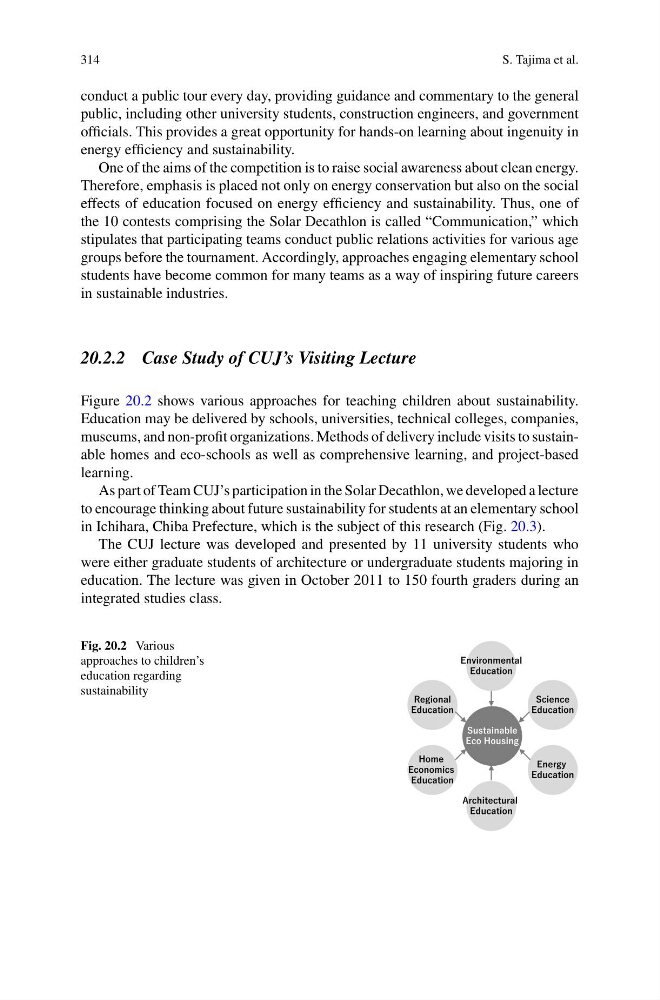
Figure 20.2 shows various approaches for teaching children about sustainability.
Education may be delivered by schools, universities, technical colleges, companies,
museums, and non-profit organizations. Methods of delivery include visits to sustainable homes and eco-schools as well as comprehensive learning, and project-based
learning.
As part of Team CUJ’s participation in the Solar Decathlon, we developed a lecture
to encourage thinking about future sustainability for students at an elementary school
in Ichihara, Chiba Prefecture, which is the subject of this research (Fig. 20.3).
The CUJ lecture was developed and presented by 11 university students who
were either graduate students of architecture or undergraduate students majoring in
education. The lecture was given in October 2011 to 150 fourth graders during an
integrated studies class.
Fig. 20.2 Various
approaches to children’s
education regarding
sustainability
S. Tajima et al.
conduct a public tour every day, providing guidance and commentary to the general
public, including other university students, construction engineers, and government
officials. This provides a great opportunity for hands-on learning about ingenuity in
energy efficiency and sustainability.
One of the aims of the competition is to raise social awareness about clean energy.
Therefore, emphasis is placed not only on energy conservation but also on the social
effects of education focused on energy efficiency and sustainability. Thus, one of
the 10 contests comprising the Solar Decathlon is called “Communication,” which
stipulates that participating teams conduct public relations activities for various age
groups before the tournament. Accordingly, approaches engaging elementary school
students have become common for many teams as a way of inspiring future careers
in sustainable industries.
20.2.2 Case Study of CUJ’s Visiting Lecture
Figure 20.2 shows various approaches for teaching children about sustainability.
Education may be delivered by schools, universities, technical colleges, companies,
museums, and non-profit organizations. Methods of delivery include visits to sustainable homes and eco-schools as well as comprehensive learning, and project-based
learning.
As part of Team CUJ’s participation in the Solar Decathlon, we developed a lecture
to encourage thinking about future sustainability for students at an elementary school
in Ichihara, Chiba Prefecture, which is the subject of this research (Fig. 20.3).
The CUJ lecture was developed and presented by 11 university students who
were either graduate students of architecture or undergraduate students majoring in
education. The lecture was given in October 2011 to 150 fourth graders during an
integrated studies class.
Fig. 20.2 Various
approaches to children’s
education regarding
sustainability