

224
L. Stobbe et al.
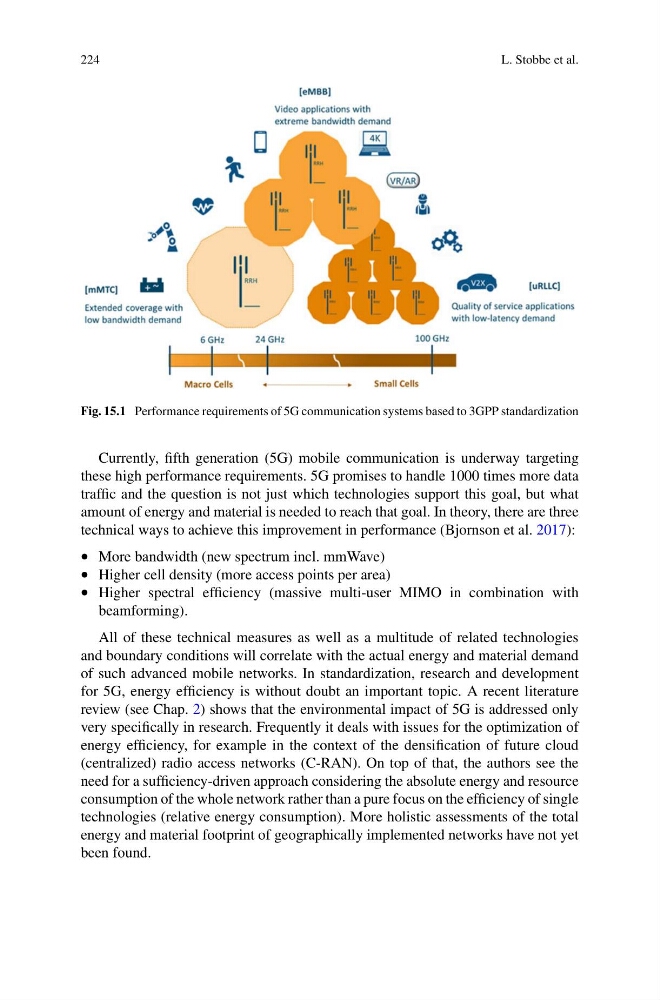
Fig. 15.1 Performance requirements of 5G communication systems based to 3GPP standardization
Currently, fifth generation (5G) mobile communication is underway targeting
these high performance requirements. 5G promises to handle 1000 times more data
traffic and the question is not just which technologies support this goal, but what
amount of energy and material is needed to reach that goal. In theory, there are three
technical ways to achieve this improvement in performance (Bjornson et al. 2017):
• More bandwidth (new spectrum incl. mmWave)
• Higher cell density (more access points per area)
• Higher spectral efficiency (massive multi-user MIMO in combination with
beamforming).
All of these technical measures as well as a multitude of related technologies
and boundary conditions will correlate with the actual energy and material demand
of such advanced mobile networks. In standardization, research and development
for 5G, energy efficiency is without doubt an important topic. A recent literature
review (see Chap. 2) shows that the environmental impact of 5G is addressed only
very specifically in research. Frequently it deals with issues for the optimization of
energy efficiency, for example in the context of the densification of future cloud
(centralized) radio access networks (C-RAN). On top of that, the authors see the
need for a sufficiency-driven approach considering the absolute energy and resource
consumption of the whole network rather than a pure focus on the efficiency of single
technologies (relative energy consumption). More holistic assessments of the total
energy and material footprint of geographically implemented networks have not yet
been found.
L. Stobbe et al.
Fig. 15.1 Performance requirements of 5G communication systems based to 3GPP standardization
Currently, fifth generation (5G) mobile communication is underway targeting
these high performance requirements. 5G promises to handle 1000 times more data
traffic and the question is not just which technologies support this goal, but what
amount of energy and material is needed to reach that goal. In theory, there are three
technical ways to achieve this improvement in performance (Bjornson et al. 2017):
• More bandwidth (new spectrum incl. mmWave)
• Higher cell density (more access points per area)
• Higher spectral efficiency (massive multi-user MIMO in combination with
beamforming).
All of these technical measures as well as a multitude of related technologies
and boundary conditions will correlate with the actual energy and material demand
of such advanced mobile networks. In standardization, research and development
for 5G, energy efficiency is without doubt an important topic. A recent literature
review (see Chap. 2) shows that the environmental impact of 5G is addressed only
very specifically in research. Frequently it deals with issues for the optimization of
energy efficiency, for example in the context of the densification of future cloud
(centralized) radio access networks (C-RAN). On top of that, the authors see the
need for a sufficiency-driven approach considering the absolute energy and resource
consumption of the whole network rather than a pure focus on the efficiency of single
technologies (relative energy consumption). More holistic assessments of the total
energy and material footprint of geographically implemented networks have not yet
been found.