

188
Y. A. Fatimah et al.
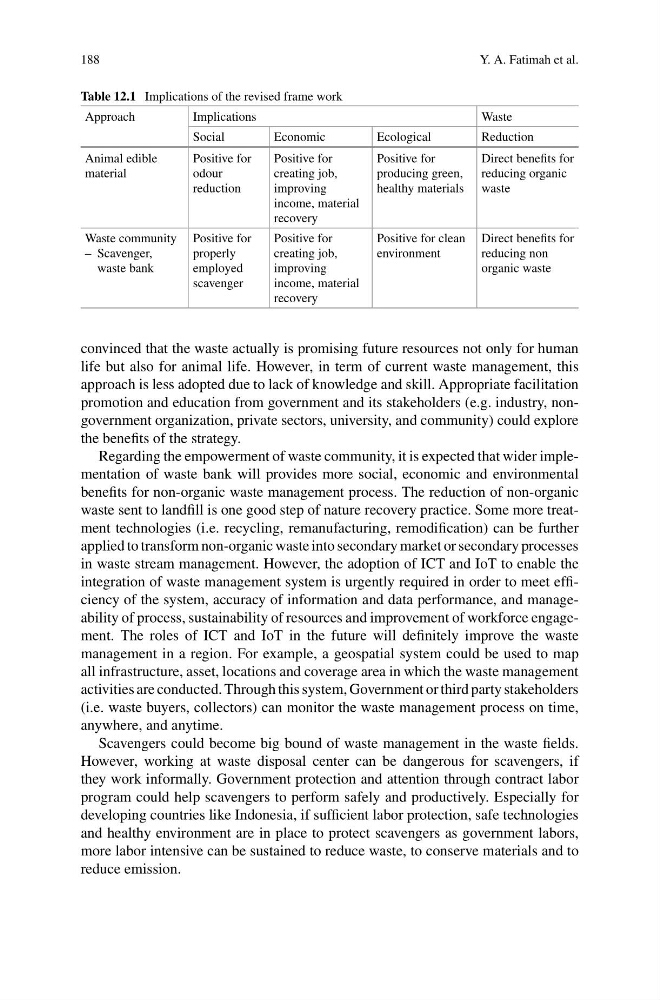
Table 12.1 Implications of the revised frame work
Approach
Implications
Waste
Social
Economic
Ecological
Reduction
Animal edible
material
Positive for
odour
reduction
Positive for
creating job,
improving
income, material
recovery
Positive for
producing green,
healthy materials
Direct benefits for
reducing organic
waste
Waste community
– Scavenger,
waste bank
Positive for
properly
employed
scavenger
Positive for
creating job,
improving
income, material
recovery
Positive for clean
environment
Direct benefits for
reducing non
organic waste
convinced that the waste actually is promising future resources not only for human
life but also for animal life. However, in term of current waste management, this
approach is less adopted due to lack of knowledge and skill. Appropriate facilitation
promotion and education from government and its stakeholders (e.g. industry, nongovernment organization, private sectors, university, and community) could explore
the benefits of the strategy.
Regarding the empowerment of waste community, it is expected that wider implementation of waste bank will provides more social, economic and environmental
benefits for non-organic waste management process. The reduction of non-organic
waste sent to landfill is one good step of nature recovery practice. Some more treatment technologies (i.e. recycling, remanufacturing, remodification) can be further
applied to transform non-organic waste into secondary market or secondary processes
in waste stream management. However, the adoption of ICT and IoT to enable the
integration of waste management system is urgently required in order to meet efficiency of the system, accuracy of information and data performance, and manageability of process, sustainability of resources and improvement of workforce engagement. The roles of ICT and IoT in the future will definitely improve the waste
management in a region. For example, a geospatial system could be used to map
all infrastructure, asset, locations and coverage area in which the waste management
activities are conducted. Through this system, Government or third party stakeholders
(i.e. waste buyers, collectors) can monitor the waste management process on time,
anywhere, and anytime.
Scavengers could become big bound of waste management in the waste fields.
However, working at waste disposal center can be dangerous for scavengers, if
they work informally. Government protection and attention through contract labor
program could help scavengers to perform safely and productively. Especially for
developing countries like Indonesia, if sufficient labor protection, safe technologies
and healthy environment are in place to protect scavengers as government labors,
more labor intensive can be sustained to reduce waste, to conserve materials and to
reduce emission.
Y. A. Fatimah et al.
Table 12.1 Implications of the revised frame work
Approach
Implications
Waste
Social
Economic
Ecological
Reduction
Animal edible
material
Positive for
odour
reduction
Positive for
creating job,
improving
income, material
recovery
Positive for
producing green,
healthy materials
Direct benefits for
reducing organic
waste
Waste community
– Scavenger,
waste bank
Positive for
properly
employed
scavenger
Positive for
creating job,
improving
income, material
recovery
Positive for clean
environment
Direct benefits for
reducing non
organic waste
convinced that the waste actually is promising future resources not only for human
life but also for animal life. However, in term of current waste management, this
approach is less adopted due to lack of knowledge and skill. Appropriate facilitation
promotion and education from government and its stakeholders (e.g. industry, nongovernment organization, private sectors, university, and community) could explore
the benefits of the strategy.
Regarding the empowerment of waste community, it is expected that wider implementation of waste bank will provides more social, economic and environmental
benefits for non-organic waste management process. The reduction of non-organic
waste sent to landfill is one good step of nature recovery practice. Some more treatment technologies (i.e. recycling, remanufacturing, remodification) can be further
applied to transform non-organic waste into secondary market or secondary processes
in waste stream management. However, the adoption of ICT and IoT to enable the
integration of waste management system is urgently required in order to meet efficiency of the system, accuracy of information and data performance, and manageability of process, sustainability of resources and improvement of workforce engagement. The roles of ICT and IoT in the future will definitely improve the waste
management in a region. For example, a geospatial system could be used to map
all infrastructure, asset, locations and coverage area in which the waste management
activities are conducted. Through this system, Government or third party stakeholders
(i.e. waste buyers, collectors) can monitor the waste management process on time,
anywhere, and anytime.
Scavengers could become big bound of waste management in the waste fields.
However, working at waste disposal center can be dangerous for scavengers, if
they work informally. Government protection and attention through contract labor
program could help scavengers to perform safely and productively. Especially for
developing countries like Indonesia, if sufficient labor protection, safe technologies
and healthy environment are in place to protect scavengers as government labors,
more labor intensive can be sustained to reduce waste, to conserve materials and to
reduce emission.