

9 Enhancing Role and Participation of Industry and Community …
143
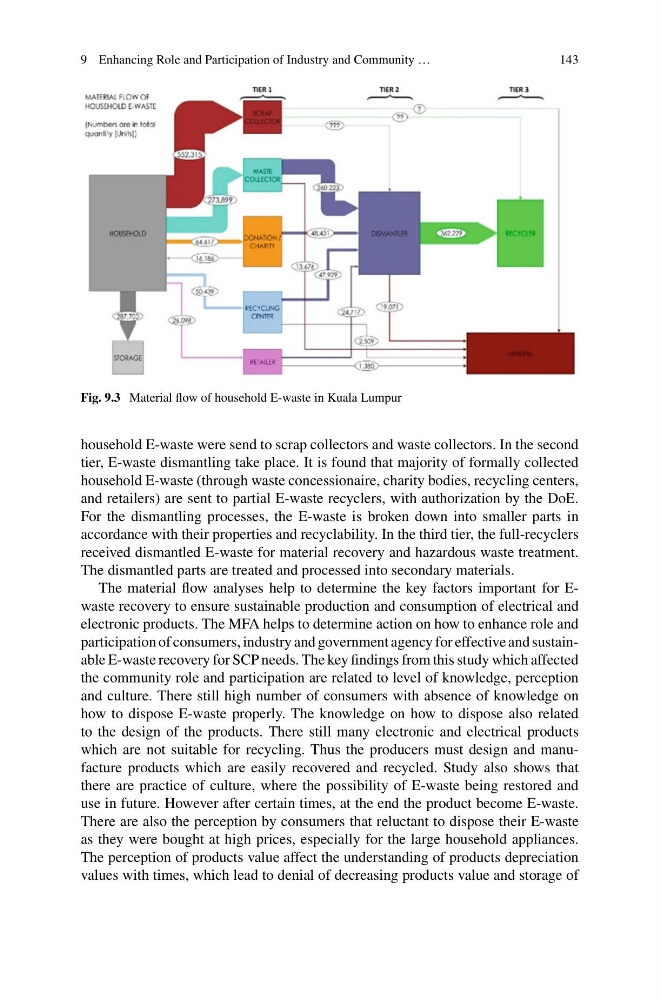
Fig. 9.3 Material flow of household E-waste in Kuala Lumpur
household E-waste were send to scrap collectors and waste collectors. In the second
tier, E-waste dismantling take place. It is found that majority of formally collected
household E-waste (through waste concessionaire, charity bodies, recycling centers,
and retailers) are sent to partial E-waste recyclers, with authorization by the DoE.
For the dismantling processes, the E-waste is broken down into smaller parts in
accordance with their properties and recyclability. In the third tier, the full-recyclers
received dismantled E-waste for material recovery and hazardous waste treatment.
The dismantled parts are treated and processed into secondary materials.
The material flow analyses help to determine the key factors important for Ewaste recovery to ensure sustainable production and consumption of electrical and
electronic products. The MFA helps to determine action on how to enhance role and
participation of consumers, industry and government agency for effective and sustainable E-waste recovery for SCP needs. The key findings from this study which affected
the community role and participation are related to level of knowledge, perception
and culture. There still high number of consumers with absence of knowledge on
how to dispose E-waste properly. The knowledge on how to dispose also related
to the design of the products. There still many electronic and electrical products
which are not suitable for recycling. Thus the producers must design and manufacture products which are easily recovered and recycled. Study also shows that
there are practice of culture, where the possibility of E-waste being restored and
use in future. However after certain times, at the end the product become E-waste.
There are also the perception by consumers that reluctant to dispose their E-waste
as they were bought at high prices, especially for the large household appliances.
The perception of products value affect the understanding of products depreciation
values with times, which lead to denial of decreasing products value and storage of
143
Fig. 9.3 Material flow of household E-waste in Kuala Lumpur
household E-waste were send to scrap collectors and waste collectors. In the second
tier, E-waste dismantling take place. It is found that majority of formally collected
household E-waste (through waste concessionaire, charity bodies, recycling centers,
and retailers) are sent to partial E-waste recyclers, with authorization by the DoE.
For the dismantling processes, the E-waste is broken down into smaller parts in
accordance with their properties and recyclability. In the third tier, the full-recyclers
received dismantled E-waste for material recovery and hazardous waste treatment.
The dismantled parts are treated and processed into secondary materials.
The material flow analyses help to determine the key factors important for Ewaste recovery to ensure sustainable production and consumption of electrical and
electronic products. The MFA helps to determine action on how to enhance role and
participation of consumers, industry and government agency for effective and sustainable E-waste recovery for SCP needs. The key findings from this study which affected
the community role and participation are related to level of knowledge, perception
and culture. There still high number of consumers with absence of knowledge on
how to dispose E-waste properly. The knowledge on how to dispose also related
to the design of the products. There still many electronic and electrical products
which are not suitable for recycling. Thus the producers must design and manufacture products which are easily recovered and recycled. Study also shows that
there are practice of culture, where the possibility of E-waste being restored and
use in future. However after certain times, at the end the product become E-waste.
There are also the perception by consumers that reluctant to dispose their E-waste
as they were bought at high prices, especially for the large household appliances.
The perception of products value affect the understanding of products depreciation
values with times, which lead to denial of decreasing products value and storage of