

22
1 Introduction to the Pulsars
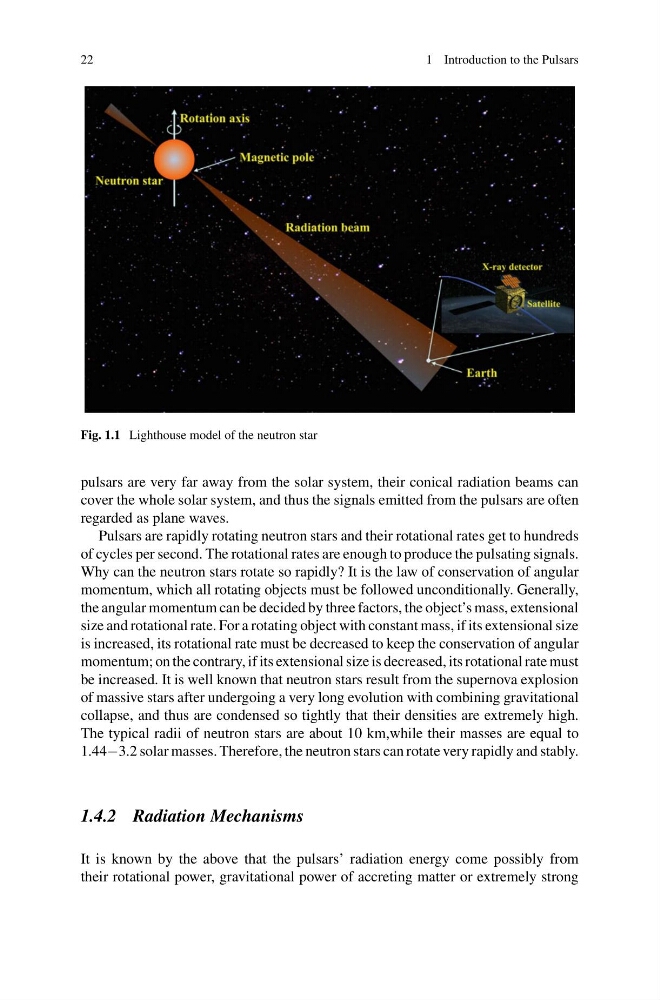
Fig. 1.1 Lighthouse model of the neutron star
pulsars are very far away from the solar system, their conical radiation beams can
cover the whole solar system, and thus the signals emitted from the pulsars are often
regarded as plane waves.
Pulsars are rapidly rotating neutron stars and their rotational rates get to hundreds
of cycles per second. The rotational rates are enough to produce the pulsating signals.
Why can the neutron stars rotate so rapidly? It is the law of conservation of angular
momentum, which all rotating objects must be followed unconditionally. Generally,
the angular momentum can be decided by three factors, the object’s mass, extensional
size and rotational rate. For a rotating object with constant mass, if its extensional size
is increased, its rotational rate must be decreased to keep the conservation of angular
momentum; on the contrary, if its extensional size is decreased, its rotational rate must
be increased. It is well known that neutron stars result from the supernova explosion
of massive stars after undergoing a very long evolution with combining gravitational
collapse, and thus are condensed so tightly that their densities are extremely high.
The typical radii of neutron stars are about 10 km,while their masses are equal to
1.44−3.2 solar masses. Therefore, the neutron stars can rotate very rapidly and stably.
1.4.2 Radiation Mechanisms
It is known by the above that the pulsars’ radiation energy come possibly from
their rotational power, gravitational power of accreting matter or extremely strong
1 Introduction to the Pulsars
Fig. 1.1 Lighthouse model of the neutron star
pulsars are very far away from the solar system, their conical radiation beams can
cover the whole solar system, and thus the signals emitted from the pulsars are often
regarded as plane waves.
Pulsars are rapidly rotating neutron stars and their rotational rates get to hundreds
of cycles per second. The rotational rates are enough to produce the pulsating signals.
Why can the neutron stars rotate so rapidly? It is the law of conservation of angular
momentum, which all rotating objects must be followed unconditionally. Generally,
the angular momentum can be decided by three factors, the object’s mass, extensional
size and rotational rate. For a rotating object with constant mass, if its extensional size
is increased, its rotational rate must be decreased to keep the conservation of angular
momentum; on the contrary, if its extensional size is decreased, its rotational rate must
be increased. It is well known that neutron stars result from the supernova explosion
of massive stars after undergoing a very long evolution with combining gravitational
collapse, and thus are condensed so tightly that their densities are extremely high.
The typical radii of neutron stars are about 10 km,while their masses are equal to
1.44−3.2 solar masses. Therefore, the neutron stars can rotate very rapidly and stably.
1.4.2 Radiation Mechanisms
It is known by the above that the pulsars’ radiation energy come possibly from
their rotational power, gravitational power of accreting matter or extremely strong