

390
5 X-ray Pulsar-Based Navigation: Theories and Experiments
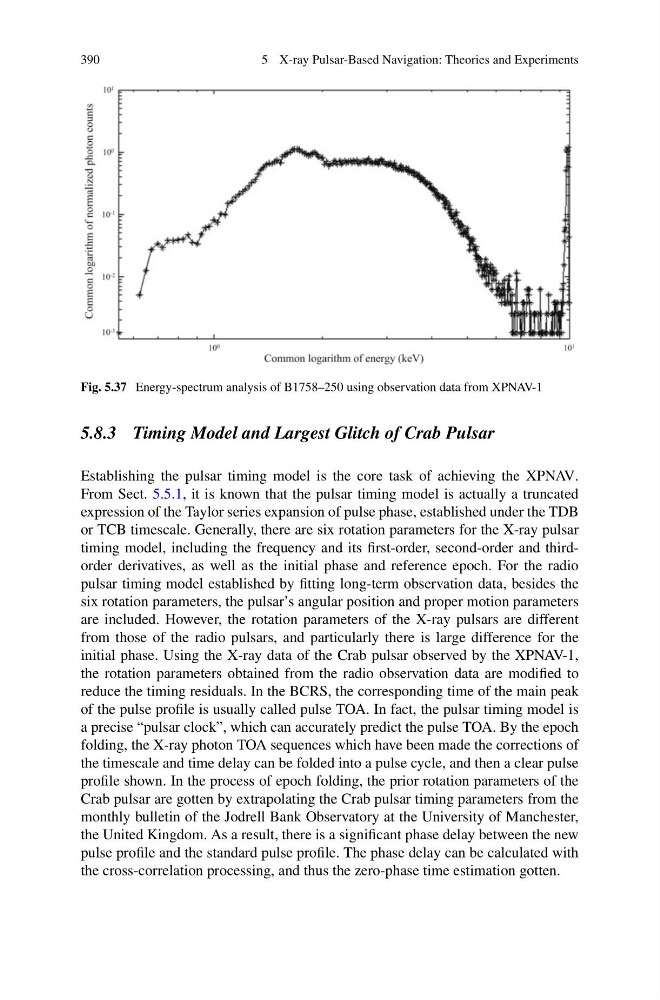
Fig. 5.37 Energy-spectrum analysis of B1758–250 using observation data from XPNAV-1
5.8.3 Timing Model and Largest Glitch of Crab Pulsar
Establishing the pulsar timing model is the core task of achieving the XPNAV.
From Sect. 5.5.1, it is known that the pulsar timing model is actually a truncated
expression of the Taylor series expansion of pulse phase, established under the TDB
or TCB timescale. Generally, there are six rotation parameters for the X-ray pulsar
timing model, including the frequency and its first-order, second-order and thirdorder derivatives, as well as the initial phase and reference epoch. For the radio
pulsar timing model established by fitting long-term observation data, besides the
six rotation parameters, the pulsar’s angular position and proper motion parameters
are included. However, the rotation parameters of the X-ray pulsars are different
from those of the radio pulsars, and particularly there is large difference for the
initial phase. Using the X-ray data of the Crab pulsar observed by the XPNAV-1,
the rotation parameters obtained from the radio observation data are modified to
reduce the timing residuals. In the BCRS, the corresponding time of the main peak
of the pulse profile is usually called pulse TOA. In fact, the pulsar timing model is
a precise “pulsar clock”, which can accurately predict the pulse TOA. By the epoch
folding, the X-ray photon TOA sequences which have been made the corrections of
the timescale and time delay can be folded into a pulse cycle, and then a clear pulse
profile shown. In the process of epoch folding, the prior rotation parameters of the
Crab pulsar are gotten by extrapolating the Crab pulsar timing parameters from the
monthly bulletin of the Jodrell Bank Observatory at the University of Manchester,
the United Kingdom. As a result, there is a significant phase delay between the new
pulse profile and the standard pulse profile. The phase delay can be calculated with
the cross-correlation processing, and thus the zero-phase time estimation gotten.
5 X-ray Pulsar-Based Navigation: Theories and Experiments
Fig. 5.37 Energy-spectrum analysis of B1758–250 using observation data from XPNAV-1
5.8.3 Timing Model and Largest Glitch of Crab Pulsar
Establishing the pulsar timing model is the core task of achieving the XPNAV.
From Sect. 5.5.1, it is known that the pulsar timing model is actually a truncated
expression of the Taylor series expansion of pulse phase, established under the TDB
or TCB timescale. Generally, there are six rotation parameters for the X-ray pulsar
timing model, including the frequency and its first-order, second-order and thirdorder derivatives, as well as the initial phase and reference epoch. For the radio
pulsar timing model established by fitting long-term observation data, besides the
six rotation parameters, the pulsar’s angular position and proper motion parameters
are included. However, the rotation parameters of the X-ray pulsars are different
from those of the radio pulsars, and particularly there is large difference for the
initial phase. Using the X-ray data of the Crab pulsar observed by the XPNAV-1,
the rotation parameters obtained from the radio observation data are modified to
reduce the timing residuals. In the BCRS, the corresponding time of the main peak
of the pulse profile is usually called pulse TOA. In fact, the pulsar timing model is
a precise “pulsar clock”, which can accurately predict the pulse TOA. By the epoch
folding, the X-ray photon TOA sequences which have been made the corrections of
the timescale and time delay can be folded into a pulse cycle, and then a clear pulse
profile shown. In the process of epoch folding, the prior rotation parameters of the
Crab pulsar are gotten by extrapolating the Crab pulsar timing parameters from the
monthly bulletin of the Jodrell Bank Observatory at the University of Manchester,
the United Kingdom. As a result, there is a significant phase delay between the new
pulse profile and the standard pulse profile. The phase delay can be calculated with
the cross-correlation processing, and thus the zero-phase time estimation gotten.