

378
5 X-ray Pulsar-Based Navigation: Theories and Experiments
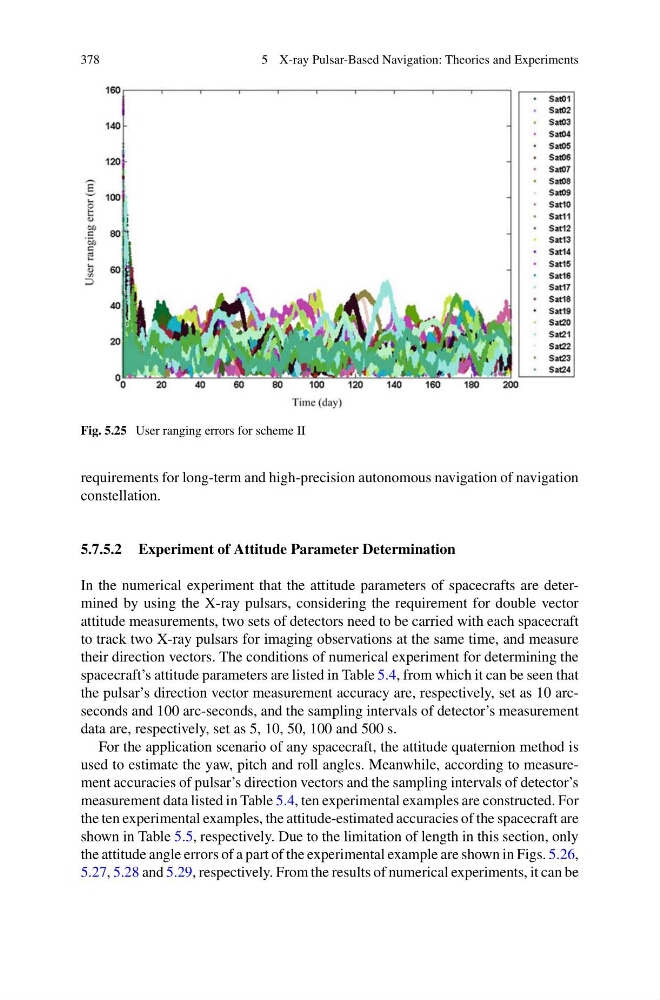
Fig. 5.25 User ranging errors for scheme II
requirements for long-term and high-precision autonomous navigation of navigation
constellation.
5.7.5.2 Experiment of Attitude Parameter Determination
In the numerical experiment that the attitude parameters of spacecrafts are determined by using the X-ray pulsars, considering the requirement for double vector
attitude measurements, two sets of detectors need to be carried with each spacecraft
to track two X-ray pulsars for imaging observations at the same time, and measure
their direction vectors. The conditions of numerical experiment for determining the
spacecraft’s attitude parameters are listed in Table 5.4, from which it can be seen that
the pulsar’s direction vector measurement accuracy are, respectively, set as 10 arcseconds and 100 arc-seconds, and the sampling intervals of detector’s measurement
data are, respectively, set as 5, 10, 50, 100 and 500 s.
For the application scenario of any spacecraft, the attitude quaternion method is
used to estimate the yaw, pitch and roll angles. Meanwhile, according to measurement accuracies of pulsar’s direction vectors and the sampling intervals of detector’s
measurement data listed in Table 5.4, ten experimental examples are constructed. For
the ten experimental examples, the attitude-estimated accuracies of the spacecraft are
shown in Table 5.5, respectively. Due to the limitation of length in this section, only
the attitude angle errors of a part of the experimental example are shown in Figs. 5.26,
5.27, 5.28 and 5.29, respectively. From the results of numerical experiments, it can be
5 X-ray Pulsar-Based Navigation: Theories and Experiments
Fig. 5.25 User ranging errors for scheme II
requirements for long-term and high-precision autonomous navigation of navigation
constellation.
5.7.5.2 Experiment of Attitude Parameter Determination
In the numerical experiment that the attitude parameters of spacecrafts are determined by using the X-ray pulsars, considering the requirement for double vector
attitude measurements, two sets of detectors need to be carried with each spacecraft
to track two X-ray pulsars for imaging observations at the same time, and measure
their direction vectors. The conditions of numerical experiment for determining the
spacecraft’s attitude parameters are listed in Table 5.4, from which it can be seen that
the pulsar’s direction vector measurement accuracy are, respectively, set as 10 arcseconds and 100 arc-seconds, and the sampling intervals of detector’s measurement
data are, respectively, set as 5, 10, 50, 100 and 500 s.
For the application scenario of any spacecraft, the attitude quaternion method is
used to estimate the yaw, pitch and roll angles. Meanwhile, according to measurement accuracies of pulsar’s direction vectors and the sampling intervals of detector’s
measurement data listed in Table 5.4, ten experimental examples are constructed. For
the ten experimental examples, the attitude-estimated accuracies of the spacecraft are
shown in Table 5.5, respectively. Due to the limitation of length in this section, only
the attitude angle errors of a part of the experimental example are shown in Figs. 5.26,
5.27, 5.28 and 5.29, respectively. From the results of numerical experiments, it can be