

m L ¼ M L ¼ 2; 1; 0; À1; À2 D term
m s ¼ M s ¼ À1=2; þ 1=2
S ¼ 1=2 doublet term
2 D
In the case of d
2 electronic system
M L ¼ 4; 3; 2; 1; 0 L ¼ 4; 3; 2; 1; 0
L ¼ 4 M L ¼ À4; À3; À2; À1; 0; 1; 2; 3; 4 G term
L ¼ 3 M k ¼ À3; À2; À1; 0; 1; 2; 3
F term
L ¼ 2 M k ¼ À2; À1; 0; 1; 2
D term
L ¼ 1 M k ¼ À1; 0; 1
P term
L ¼ 0 M k ¼ 0
S term
S ¼ 1 M s ¼ À1; 0; þ 1
3 F and
3 P terms
S ¼ 0 M s ¼ 0
1 G
1 S
1 D terms
Although the atomic vector model allows to predict the type of energy states
(Scheme 3.1) that is the orbital and spin multiplicity, the scheme does not give the
relative energies of the states. In order to calculate them, it is needed to apply the
electronic repulsion operator.
How does it work?
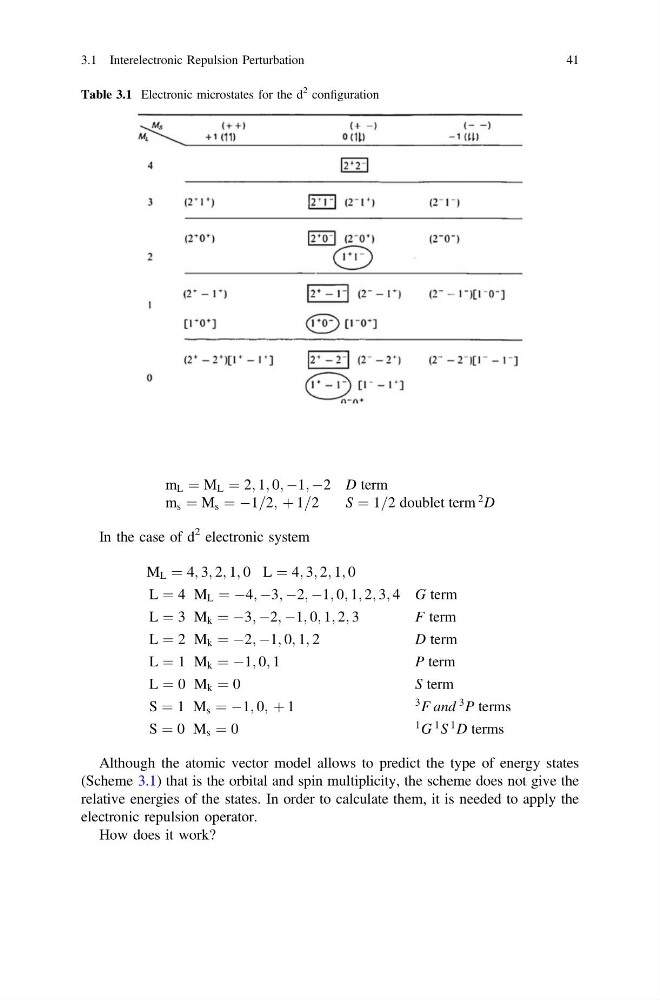
Table 3.1 Electronic microstates for the d
2 configuration
3.1 Interelectronic Repulsion Perturbation
41
m s ¼ M s ¼ À1=2; þ 1=2
S ¼ 1=2 doublet term
2 D
In the case of d
2 electronic system
M L ¼ 4; 3; 2; 1; 0 L ¼ 4; 3; 2; 1; 0
L ¼ 4 M L ¼ À4; À3; À2; À1; 0; 1; 2; 3; 4 G term
L ¼ 3 M k ¼ À3; À2; À1; 0; 1; 2; 3
F term
L ¼ 2 M k ¼ À2; À1; 0; 1; 2
D term
L ¼ 1 M k ¼ À1; 0; 1
P term
L ¼ 0 M k ¼ 0
S term
S ¼ 1 M s ¼ À1; 0; þ 1
3 F and
3 P terms
S ¼ 0 M s ¼ 0
1 G
1 S
1 D terms
Although the atomic vector model allows to predict the type of energy states
(Scheme 3.1) that is the orbital and spin multiplicity, the scheme does not give the
relative energies of the states. In order to calculate them, it is needed to apply the
electronic repulsion operator.
How does it work?
Table 3.1 Electronic microstates for the d
2 configuration
3.1 Interelectronic Repulsion Perturbation
41