

52
METHODS OF MEASURING PROPERTIES
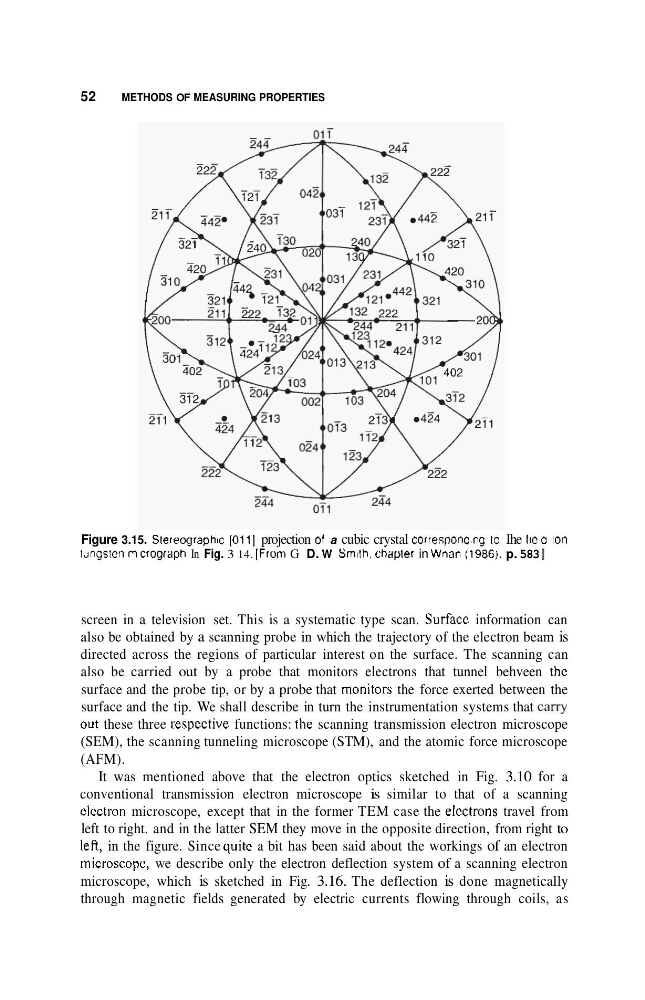
Figure 3.15. Sterecgraphc [Oil] projection 01 a cubic crystal correspona.ng Io Ihe lie0 ton
tdngsten ncrogrdph In Fig. 3 14. [From G D. W Smcth. chapler in Wnan (1986). p. 583 1
screen in a television set. This is a systematic type scan. Surface information can
also be obtained by a scanning probe in which the trajectory of the electron beam is
directed across the regions of particular interest on the surface. The scanning can
also be carried out by a probe that monitors electrons that tunnel behveen thc
surface and the probe tip, or by a probe that moniton the force exerted between the
surface and the tip. We shall describe in turn the instrumentation systems that c a m
out these three respective functions: the scanning transmission electron microscope
(SEM), the scanning tunneling microscope (STM), and the atomic force microscope
(AFM).
It was mentioned above that the electron optics sketched in Fig. 3.10 for a
conventional transmission electron microscope is similar to that of a scanning
elcctron microscope, except that in the former TEM case the elcctrons travel from
left to right. and in the latter SEM they move in the opposite direction, from right to
left, in the figure. Since quite a bit has been said about the workings of an electron
microscopc, we describe only the electron deflection system of a scanning electron
microscope, which is sketched in Fig. 3.16. The deflection is done magnetically
through magnetic fields generated by electric currents flowing through coils, as
METHODS OF MEASURING PROPERTIES
Figure 3.15. Sterecgraphc [Oil] projection 01 a cubic crystal correspona.ng Io Ihe lie0 ton
tdngsten ncrogrdph In Fig. 3 14. [From G D. W Smcth. chapler in Wnan (1986). p. 583 1
screen in a television set. This is a systematic type scan. Surface information can
also be obtained by a scanning probe in which the trajectory of the electron beam is
directed across the regions of particular interest on the surface. The scanning can
also be carried out by a probe that monitors electrons that tunnel behveen thc
surface and the probe tip, or by a probe that moniton the force exerted between the
surface and the tip. We shall describe in turn the instrumentation systems that c a m
out these three respective functions: the scanning transmission electron microscope
(SEM), the scanning tunneling microscope (STM), and the atomic force microscope
(AFM).
It was mentioned above that the electron optics sketched in Fig. 3.10 for a
conventional transmission electron microscope is similar to that of a scanning
elcctron microscope, except that in the former TEM case the elcctrons travel from
left to right. and in the latter SEM they move in the opposite direction, from right to
left, in the figure. Since quite a bit has been said about the workings of an electron
microscopc, we describe only the electron deflection system of a scanning electron
microscope, which is sketched in Fig. 3.16. The deflection is done magnetically
through magnetic fields generated by electric currents flowing through coils, as