

340
NANOMACHINES AN0 NANODEVICES
POSiTlVE
VOLTAGE
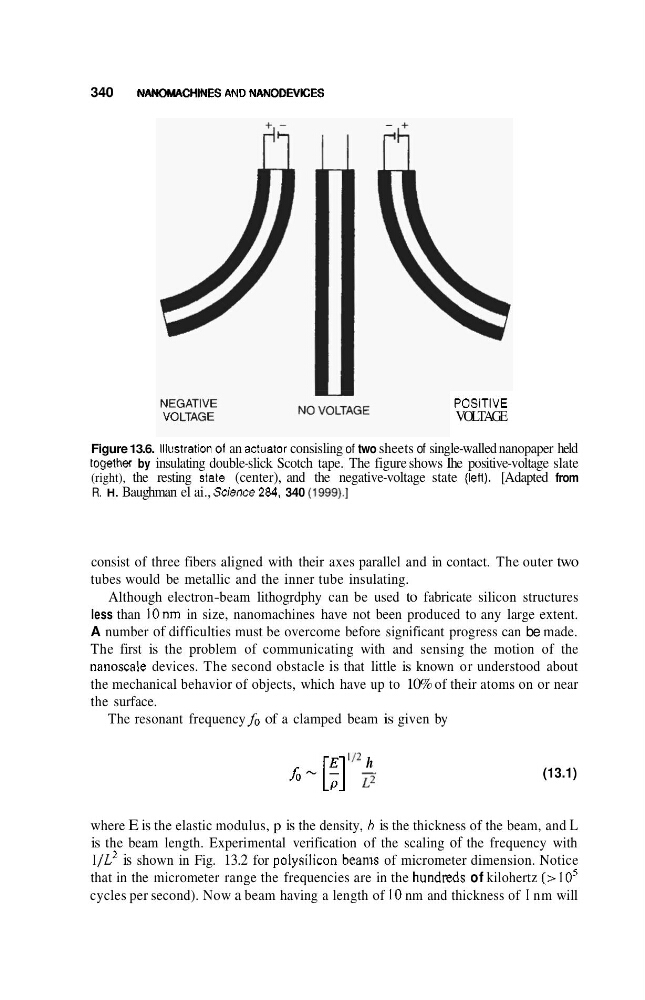
Figure 13.6. llluslralion 01 an aclualor consisling of two sheets of single-walled nanopaper held
logether by insulating double-slick Scotch tape. The figure shows Ihe positive-voltage slate
(right), the resting slate (center), and the negative-voltage state (left). [Adapted from
R. H. Baughman el ai., Science284. 340 (1999).]
consist of three fibers aligned with their axes parallel and in contact. The outer two
tubes would be metallic and the inner tube insulating.
Although electron-beam lithogrdphy can be used to fabricate silicon structures
less than IOnm in size, nanomachines have not been produced to any large extent.
A number of difficulties must be overcome before significant progress can be made.
The first is the problem of communicating with and sensing the motion of the
nanoscale devices. The second obstacle is that little is known or understood about
the mechanical behavior of objects, which have up to 10% of their atoms on or near
the surface.
The resonant frequency fo of a clamped beam is given by
E 'I2 h
. & - - [ ; I
(13.1)
where E is the elastic modulus, p is the density, h is the thickness of the beam, and L
is the beam length. Experimental verification of the scaling of the frequency with
I j L 2 is shown in Fig. 13.2 for polysilicon beams of micrometer dimension. Notice
that in the micrometer range the frequencies are in the hundreds of kilohertz (>IO5
cycles per second). Now a beam having a length of IO nm and thickness of I nm will
NANOMACHINES AN0 NANODEVICES
POSiTlVE
VOLTAGE
Figure 13.6. llluslralion 01 an aclualor consisling of two sheets of single-walled nanopaper held
logether by insulating double-slick Scotch tape. The figure shows Ihe positive-voltage slate
(right), the resting slate (center), and the negative-voltage state (left). [Adapted from
R. H. Baughman el ai., Science284. 340 (1999).]
consist of three fibers aligned with their axes parallel and in contact. The outer two
tubes would be metallic and the inner tube insulating.
Although electron-beam lithogrdphy can be used to fabricate silicon structures
less than IOnm in size, nanomachines have not been produced to any large extent.
A number of difficulties must be overcome before significant progress can be made.
The first is the problem of communicating with and sensing the motion of the
nanoscale devices. The second obstacle is that little is known or understood about
the mechanical behavior of objects, which have up to 10% of their atoms on or near
the surface.
The resonant frequency fo of a clamped beam is given by
E 'I2 h
. & - - [ ; I
(13.1)
where E is the elastic modulus, p is the density, h is the thickness of the beam, and L
is the beam length. Experimental verification of the scaling of the frequency with
I j L 2 is shown in Fig. 13.2 for polysilicon beams of micrometer dimension. Notice
that in the micrometer range the frequencies are in the hundreds of kilohertz (>IO5
cycles per second). Now a beam having a length of IO nm and thickness of I nm will