

322
BlOLMjlCAL MATERiALS
(a) DNA double helix
(b) chromatin
("beads on slring")
(c) Packed nucleosomes
(d) extended section
of chromosome
(e) condensed seclion
of chromosome
(I) metaphase
chromosnme
300 nm
f :
700 nm
I
I
t
1400 nm
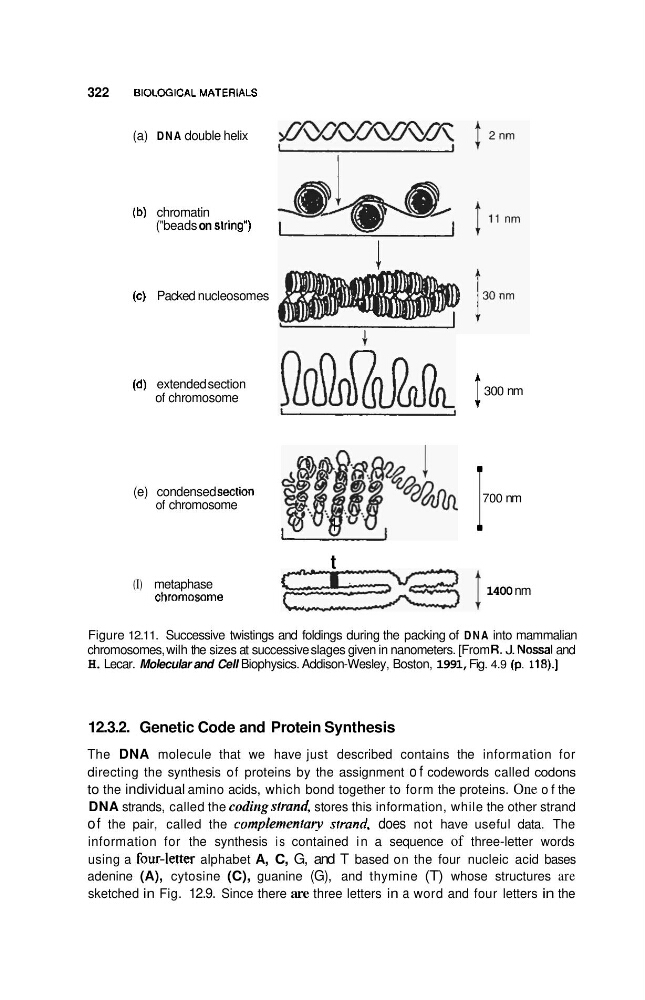
Figure 12.11. Successive twistings and foldings during the packing of DNA into mammalian
chromosomes, wilh the sizes at successive slages given in nanometers. [From R. J. Nossal and
H. Lecar. Molecular and Cell Biophysics. Addison-Wesley, Boston, 1991, Fig. 4.9 (p. 1 la).]
12.3.2. Genetic Code and Protein Synthesis
The DNA molecule that we have just described contains the information for
directing the synthesis of proteins by the assignment o f codewords called codons
to the individual amino acids, which bond together to form the proteins. One o f the
DNA strands, called the coding strand, stores this information, while the other strand
of the pair, called the complemenla~ strand does not have useful data. The
information for the synthesis is contained in a sequence of three-letter words
using a f o d e t t e r alphabet A, C, G, and T based on the four nucleic acid bases
adenine (A), cytosine (C), guanine (G), and thymine (T) whose structures are
sketched in Fig. 12.9. Since there are three letters in a word and four letters in the
BlOLMjlCAL MATERiALS
(a) DNA double helix
(b) chromatin
("beads on slring")
(c) Packed nucleosomes
(d) extended section
of chromosome
(e) condensed seclion
of chromosome
(I) metaphase
chromosnme
300 nm
f :
700 nm
I
I
t
1400 nm
Figure 12.11. Successive twistings and foldings during the packing of DNA into mammalian
chromosomes, wilh the sizes at successive slages given in nanometers. [From R. J. Nossal and
H. Lecar. Molecular and Cell Biophysics. Addison-Wesley, Boston, 1991, Fig. 4.9 (p. 1 la).]
12.3.2. Genetic Code and Protein Synthesis
The DNA molecule that we have just described contains the information for
directing the synthesis of proteins by the assignment o f codewords called codons
to the individual amino acids, which bond together to form the proteins. One o f the
DNA strands, called the coding strand, stores this information, while the other strand
of the pair, called the complemenla~ strand does not have useful data. The
information for the synthesis is contained in a sequence of three-letter words
using a f o d e t t e r alphabet A, C, G, and T based on the four nucleic acid bases
adenine (A), cytosine (C), guanine (G), and thymine (T) whose structures are
sketched in Fig. 12.9. Since there are three letters in a word and four letters in the