

11.5. SUPRAMOLECULAR STRUCTURES
301
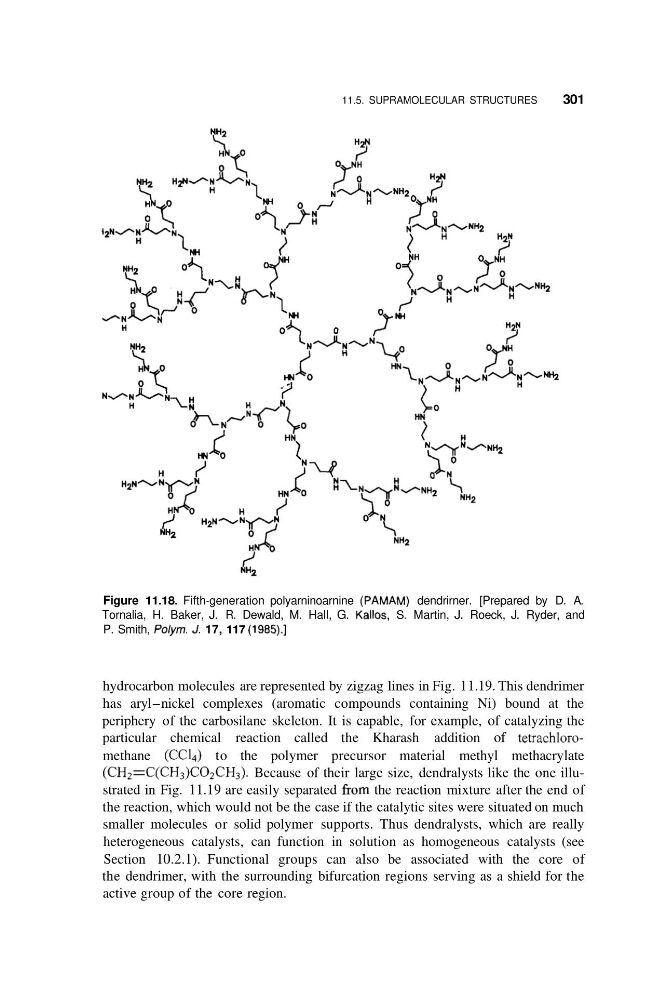
Figure 11.18. Fifth-generation polyarninoarnine (PAMAM) dendrirner. [Prepared by D. A.
Tornalia, H. Baker, J. R. Dewald, M. Hall, G. Kallos, S. Martin, J. Roeck, J. Ryder, and
P. Smith, Polym. J. 17, 117 (1985).]
hydrocarbon molecules are represented by zigzag lines in Fig. 1 1.19. This dendrimer
has aryl-nickel complexes (aromatic compounds containing Ni) bound at the
periphery of the carbosilane skeleton. It is capable, for example, of catalyzing the
particular chemical reaction called the Kharash addition of tetrachloromethane (CC14) to the polymer precursor material methyl methacrylate
(CH2=C(CH3)C02CH3). Because of their large size, dendralysts like the one illustrated in Fig. 11.19 are easily separated from the reaction mixture after the end of
the reaction, which would not be the case if the catalytic sites were situated on much
smaller molecules or solid polymer supports. Thus dendralysts, which are really
heterogeneous catalysts, can function in solution as homogeneous catalysts (see
Section 10.2.1). Functional groups can also be associated with the core of
the dendrimer, with the surrounding bifurcation regions serving as a shield for the
active group of the core region.
301
Figure 11.18. Fifth-generation polyarninoarnine (PAMAM) dendrirner. [Prepared by D. A.
Tornalia, H. Baker, J. R. Dewald, M. Hall, G. Kallos, S. Martin, J. Roeck, J. Ryder, and
P. Smith, Polym. J. 17, 117 (1985).]
hydrocarbon molecules are represented by zigzag lines in Fig. 1 1.19. This dendrimer
has aryl-nickel complexes (aromatic compounds containing Ni) bound at the
periphery of the carbosilane skeleton. It is capable, for example, of catalyzing the
particular chemical reaction called the Kharash addition of tetrachloromethane (CC14) to the polymer precursor material methyl methacrylate
(CH2=C(CH3)C02CH3). Because of their large size, dendralysts like the one illustrated in Fig. 11.19 are easily separated from the reaction mixture after the end of
the reaction, which would not be the case if the catalytic sites were situated on much
smaller molecules or solid polymer supports. Thus dendralysts, which are really
heterogeneous catalysts, can function in solution as homogeneous catalysts (see
Section 10.2.1). Functional groups can also be associated with the core of
the dendrimer, with the surrounding bifurcation regions serving as a shield for the
active group of the core region.