

298
ORGANIC COMPOUNDS AND POLYMERS
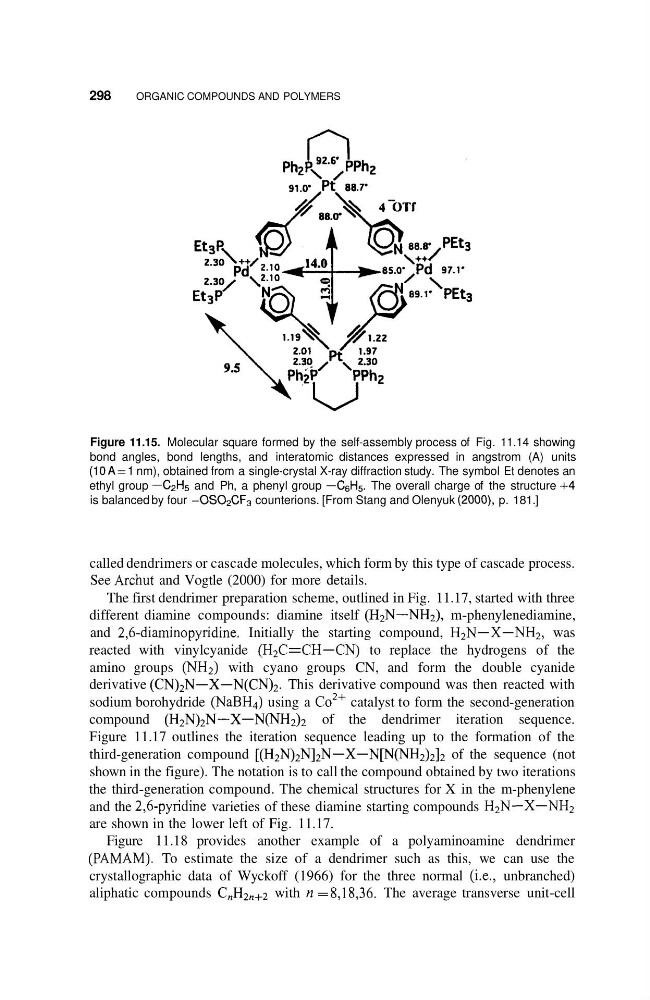
Figure 11.15. Molecular square formed by the self-assembly process of Fig. 11.14 showing
bond angles, bond lengths, and interatomic distances expressed in angstrom (A) units
(10A=1 nm), obtained from a single-crystal X-ray diffraction study. The symbol Et denotes an
ethyl group -C2H5 and Ph, a phenyl group -C6H5. The overall charge of the structure +4
is balanced by four -OS02CF3 counterions. [From Stang and Olenyuk (2000), p. 181 .]
called dendrimers or cascade molecules, which form by this type of cascade process.
See Archut and Vogtle (2000) for more details.
The first dendrimer preparation scheme, outlined in Fig. 1 1.17, started with three
different diamine compounds: diamine itself (H2N-NH2), m-phenylenediamine,
and 2,6-diaminopyridine. Initially the starting compound, H2N-X-NH2,
was
reacted with vinylcyanide (H2C=CH-CN)
to replace the hydrogens of the
amino groups @H2) with cyano groups CN, and form the double cyanide
derivative (CN)2N-X-N(CN)2. This derivative compound was then reacted with
sodium borohydride (NaBH4) using a Co2+ catalyst to form the second-generation
compound (H2N)2N-X-N@H2)2
of the dendrimer iteration sequence.
Figure 1 1.17 outlines the iteration sequence leading up to the formation of the
third-generation compound [(H2N)2N]2N-X-N[N(”2)2]2
of the sequence (not
shown in the figure). The notation is to call the compound obtained by two iterations
the third-generation compound. The chemical structures for X in the m-phenylene
and the 2,6-pyridine varieties of these diamine starting compounds H2N-X-NH2
are shown in the lower left of Fig. 1 1.17.
Figure 1 1.18 provides another example of a polyaminoamine dendrimer
(PAMAM). To estimate the size of a dendrimer such as this, we can use the
crystallographic data of Wyckoff (1966) for the three normal (i.e., unbranched)
aliphatic compounds CnH2n+2 with n = 8,18,36. The average transverse unit-cell
ORGANIC COMPOUNDS AND POLYMERS
Figure 11.15. Molecular square formed by the self-assembly process of Fig. 11.14 showing
bond angles, bond lengths, and interatomic distances expressed in angstrom (A) units
(10A=1 nm), obtained from a single-crystal X-ray diffraction study. The symbol Et denotes an
ethyl group -C2H5 and Ph, a phenyl group -C6H5. The overall charge of the structure +4
is balanced by four -OS02CF3 counterions. [From Stang and Olenyuk (2000), p. 181 .]
called dendrimers or cascade molecules, which form by this type of cascade process.
See Archut and Vogtle (2000) for more details.
The first dendrimer preparation scheme, outlined in Fig. 1 1.17, started with three
different diamine compounds: diamine itself (H2N-NH2), m-phenylenediamine,
and 2,6-diaminopyridine. Initially the starting compound, H2N-X-NH2,
was
reacted with vinylcyanide (H2C=CH-CN)
to replace the hydrogens of the
amino groups @H2) with cyano groups CN, and form the double cyanide
derivative (CN)2N-X-N(CN)2. This derivative compound was then reacted with
sodium borohydride (NaBH4) using a Co2+ catalyst to form the second-generation
compound (H2N)2N-X-N@H2)2
of the dendrimer iteration sequence.
Figure 1 1.17 outlines the iteration sequence leading up to the formation of the
third-generation compound [(H2N)2N]2N-X-N[N(”2)2]2
of the sequence (not
shown in the figure). The notation is to call the compound obtained by two iterations
the third-generation compound. The chemical structures for X in the m-phenylene
and the 2,6-pyridine varieties of these diamine starting compounds H2N-X-NH2
are shown in the lower left of Fig. 1 1.17.
Figure 1 1.18 provides another example of a polyaminoamine dendrimer
(PAMAM). To estimate the size of a dendrimer such as this, we can use the
crystallographic data of Wyckoff (1966) for the three normal (i.e., unbranched)
aliphatic compounds CnH2n+2 with n = 8,18,36. The average transverse unit-cell