

4.2. METAL NANOCLUSTERS
89
.
.
-
.
D
..
1 1 1 1 1 1 1 1 1 1 1 1 1 1 1 1 1 1 1 1 1 1 1 1 1 1 1 1 1 1 1 1 1 1 1 1 1 1 I I I I I I L
0
= 2 1
1
.
2
~
- - ' - - - LI
1300-1 I I 4 I I I I I I I I I I I I I I I I I I A : ~ T I
.--1250 >
/ /
1200 F
/
-
/
I
I
-
- 1150
Y
k 1050
I
-
I
I
g 1100 + ;
-
3
-
1000;
;
-
:::I
0.4
5 950
900
850
IO L
0
3
-
F ;
I
I
: I
-
-
8 0 0 ~ 1 " " " 1 " " " " " " ' 1 " ' -
. .
.
NUMBER OF ATOMS
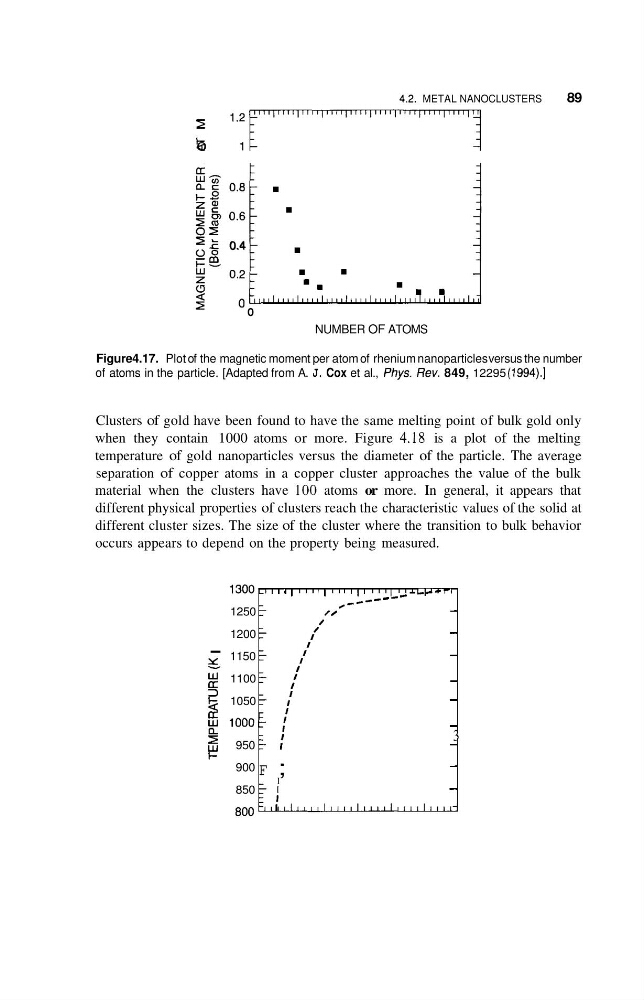
Figure4.17. Plot of the magnetic moment per atom of rhenium nanoparticles versus the number
of atoms in the particle. [Adapted from A. J. Cox et al., Phys. Rev. 849, 12295 (1994).]
Clusters of gold have been found to have the same melting point of bulk gold only
when they contain 1000 atoms or more. Figure 4.18 is a plot of the melting
temperature of gold nanoparticles versus the diameter of the particle. The average
separation of copper atoms in a copper cluster approaches the value of the bulk
material when the clusters have 100 atoms or more. In general, it appears that
different physical properties of clusters reach the characteristic values of the solid at
different cluster sizes. The size of the cluster where the transition to bulk behavior
occurs appears to depend on the property being measured.
89
.
.
-
.
D
..
1 1 1 1 1 1 1 1 1 1 1 1 1 1 1 1 1 1 1 1 1 1 1 1 1 1 1 1 1 1 1 1 1 1 1 1 1 1 I I I I I I L
0
= 2 1
1
.
2
~
- - ' - - - LI
1300-1 I I 4 I I I I I I I I I I I I I I I I I I A : ~ T I
.--1250 >
/ /
1200 F
/
-
/
I
I
-
- 1150
Y
k 1050
I
-
I
I
g 1100 + ;
-
3
-
1000;
;
-
:::I
0.4
5 950
900
850
IO L
0
3
-
F ;
I
I
: I
-
-
8 0 0 ~ 1 " " " 1 " " " " " " ' 1 " ' -
. .
.
NUMBER OF ATOMS
Figure4.17. Plot of the magnetic moment per atom of rhenium nanoparticles versus the number
of atoms in the particle. [Adapted from A. J. Cox et al., Phys. Rev. 849, 12295 (1994).]
Clusters of gold have been found to have the same melting point of bulk gold only
when they contain 1000 atoms or more. Figure 4.18 is a plot of the melting
temperature of gold nanoparticles versus the diameter of the particle. The average
separation of copper atoms in a copper cluster approaches the value of the bulk
material when the clusters have 100 atoms or more. In general, it appears that
different physical properties of clusters reach the characteristic values of the solid at
different cluster sizes. The size of the cluster where the transition to bulk behavior
occurs appears to depend on the property being measured.