

E1C02 09/14/2010
13:35:15 Page 42
we can select an appropriate measurement system. But to do this we need to develop a way to
express this idea of the magnitude and rate of change of a variable.
Upon completion of this chapter, the reader will be able to
define the range of an instrument,
classify signals as analog, discrete time, or digital,
compute the mean and rms values for time-varying signals, and
characterize signals in the frequency domain.
Generalized Behavior
Many measurement systems exhibit similar responses under a variety of conditions, which suggests
that the performance and capabilities of measuring systems may be described in a generalized way.
To examine further the generalized behavior of measurement systems, we first examine the possible
forms of the input and output signals. We will associate the term ‘‘signal’’ with the ‘‘transmission of
information.’’ A signal is the physical information about a measured variable being transmitted
between a process and the measurement system, between the stages of a measurement system, or as
the output from a measurement system.
Classification of Waveforms
Signals may be classified as analog, discrete time, or digital. Analog describes a signal that is
continuous in time. Because physical variables tend to be continuous, an analog signal provides a
ready representation of their time-dependent behavior. In addition, the magnitude of the signal is
continuous and thus can have any value within the operating range. An analog signal is shown in
Figure 2.2a; a similar continuous signal would result from a recording of the pointer rotation with
time for the output display shown in Figure 2.2b. Contrast this continuous signal with the signal
shown in Figure 2.3a. This format represents a discrete time signal, for which information about the
magnitude of the signal is available only at discrete points in time. A discrete time signal usually
results from the sampling of a continuous variable at repeated finite time intervals. Because
information in the signal shown in Figure 2.3a is available only at discrete times, some assumption
must be made about the behavior of the measured variable during the times when it is not available.
One approach is to assume the signal is constant between samples, a sample and hold method. The
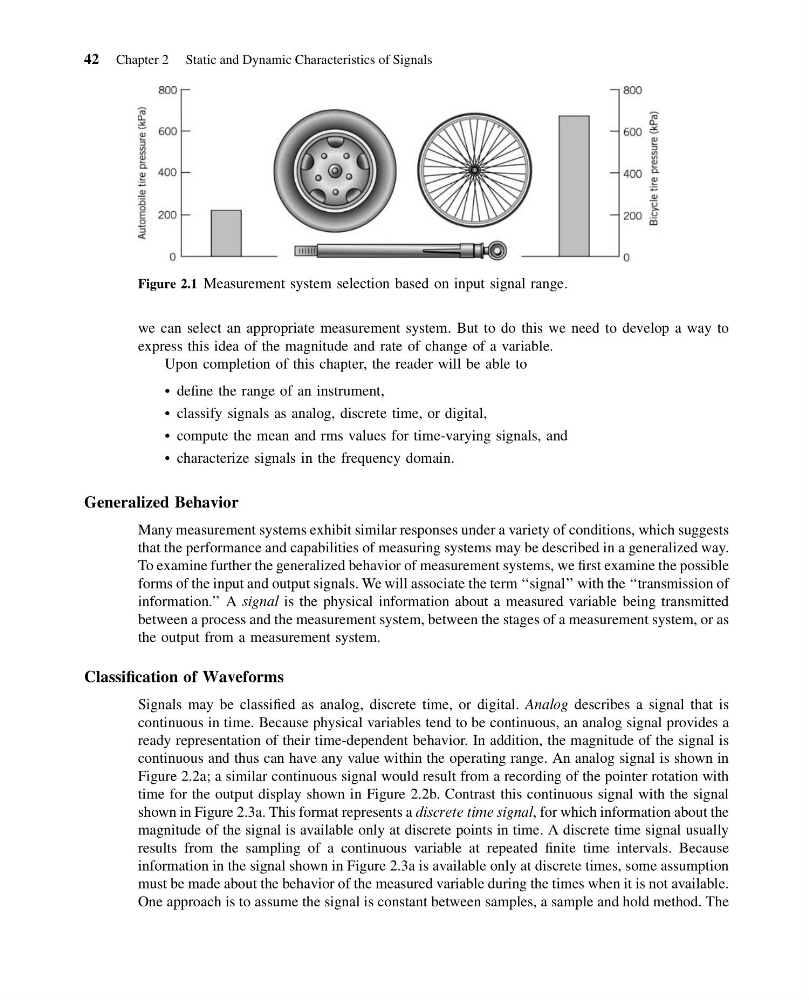
Figure 2.1 Measurement system selection based on input signal range.
42 Chapter 2 Static and Dynamic Characteristics of Signals
13:35:15 Page 42
we can select an appropriate measurement system. But to do this we need to develop a way to
express this idea of the magnitude and rate of change of a variable.
Upon completion of this chapter, the reader will be able to
define the range of an instrument,
classify signals as analog, discrete time, or digital,
compute the mean and rms values for time-varying signals, and
characterize signals in the frequency domain.
Generalized Behavior
Many measurement systems exhibit similar responses under a variety of conditions, which suggests
that the performance and capabilities of measuring systems may be described in a generalized way.
To examine further the generalized behavior of measurement systems, we first examine the possible
forms of the input and output signals. We will associate the term ‘‘signal’’ with the ‘‘transmission of
information.’’ A signal is the physical information about a measured variable being transmitted
between a process and the measurement system, between the stages of a measurement system, or as
the output from a measurement system.
Classification of Waveforms
Signals may be classified as analog, discrete time, or digital. Analog describes a signal that is
continuous in time. Because physical variables tend to be continuous, an analog signal provides a
ready representation of their time-dependent behavior. In addition, the magnitude of the signal is
continuous and thus can have any value within the operating range. An analog signal is shown in
Figure 2.2a; a similar continuous signal would result from a recording of the pointer rotation with
time for the output display shown in Figure 2.2b. Contrast this continuous signal with the signal
shown in Figure 2.3a. This format represents a discrete time signal, for which information about the
magnitude of the signal is available only at discrete points in time. A discrete time signal usually
results from the sampling of a continuous variable at repeated finite time intervals. Because
information in the signal shown in Figure 2.3a is available only at discrete times, some assumption
must be made about the behavior of the measured variable during the times when it is not available.
One approach is to assume the signal is constant between samples, a sample and hold method. The
Figure 2.1 Measurement system selection based on input signal range.
42 Chapter 2 Static and Dynamic Characteristics of Signals