

E1C10 09/14/2010
13:4:40 Page 449
A typical design is shown in Figure 10.18. The shedder spans the pipe, so its length l % d 1 , and
d=l % 0:3, so as to provide for strong, stable vortex strength. Although the Strouhal number is a
function of the Reynolds number, various geometrical shapes, known as shedders, can produce a
stable vortex flow that has a constant Strouhal number over a broad range of flow Reynolds numbers
(for Re d > 10
4 ). The oscillation stability, quality, and strength of the shedding is improved over
common circular cylinders by using abrupt edges on the rear end of the shape and by providing a
slightly concave upstream body face that traps the stagnation streamline at a point. Examples are
given in Table 10.1.
For a fixed body and constant Strouhal number, the flow rate for a pipe of inside diameter
d 1 is
Q ¼ UA ¼ c
pd
2
1
4St
f d ¼ K 1 f
ð10:24Þ
where the constant c accounts for shedder blockage effects that tend to increase the average velocity
sensed. The value of K 1 , known as the K-factor, is the meter static sensitivity and remains
essentially constant for 10
4
< Re d < 10
7
. Shedding frequency can be measured in many ways. The
shedder strut can be instrumented to detect the force oscillation by using strut-mounted strain
gauges or capacitance sensor, for example, or a piezoelectric crystal wall sensor can be used to
detect the pressure oscillations in the flow.
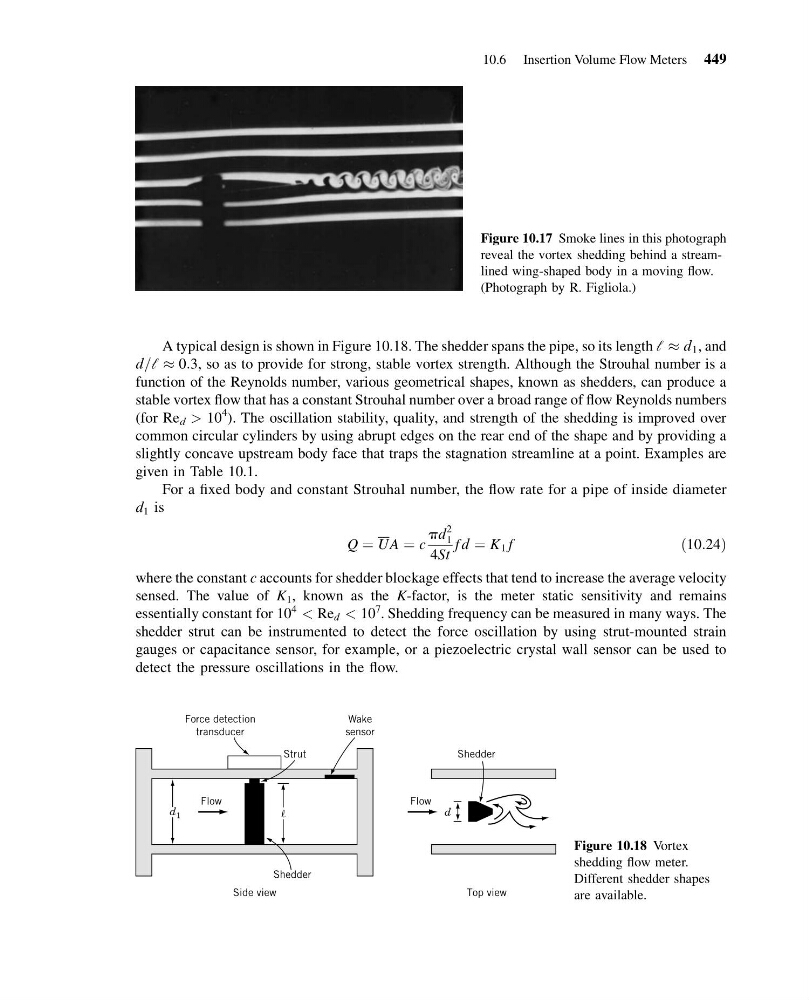
Figure 10.17 Smoke lines in this photograph
reveal the vortex shedding behind a streamlined wing-shaped body in a moving flow.
(Photograph by R. Figliola.)
d 1
d
w
o
l
F
w
o
l
F
Force detection
transducer
Wake
sensor
Strut
Shedder
Top view
Side view
Shedder
Figure 10.18 Vortex
shedding flow meter.
Different shedder shapes
are available.
10.6 Insertion Volume Flow Meters 449
13:4:40 Page 449
A typical design is shown in Figure 10.18. The shedder spans the pipe, so its length l % d 1 , and
d=l % 0:3, so as to provide for strong, stable vortex strength. Although the Strouhal number is a
function of the Reynolds number, various geometrical shapes, known as shedders, can produce a
stable vortex flow that has a constant Strouhal number over a broad range of flow Reynolds numbers
(for Re d > 10
4 ). The oscillation stability, quality, and strength of the shedding is improved over
common circular cylinders by using abrupt edges on the rear end of the shape and by providing a
slightly concave upstream body face that traps the stagnation streamline at a point. Examples are
given in Table 10.1.
For a fixed body and constant Strouhal number, the flow rate for a pipe of inside diameter
d 1 is
Q ¼ UA ¼ c
pd
2
1
4St
f d ¼ K 1 f
ð10:24Þ
where the constant c accounts for shedder blockage effects that tend to increase the average velocity
sensed. The value of K 1 , known as the K-factor, is the meter static sensitivity and remains
essentially constant for 10
4
< Re d < 10
7
. Shedding frequency can be measured in many ways. The
shedder strut can be instrumented to detect the force oscillation by using strut-mounted strain
gauges or capacitance sensor, for example, or a piezoelectric crystal wall sensor can be used to
detect the pressure oscillations in the flow.
Figure 10.17 Smoke lines in this photograph
reveal the vortex shedding behind a streamlined wing-shaped body in a moving flow.
(Photograph by R. Figliola.)
d 1
d
w
o
l
F
w
o
l
F
Force detection
transducer
Wake
sensor
Strut
Shedder
Top view
Side view
Shedder
Figure 10.18 Vortex
shedding flow meter.
Different shedder shapes
are available.
10.6 Insertion Volume Flow Meters 449