

E1C08 09/14/2010
14:54:2 Page 365
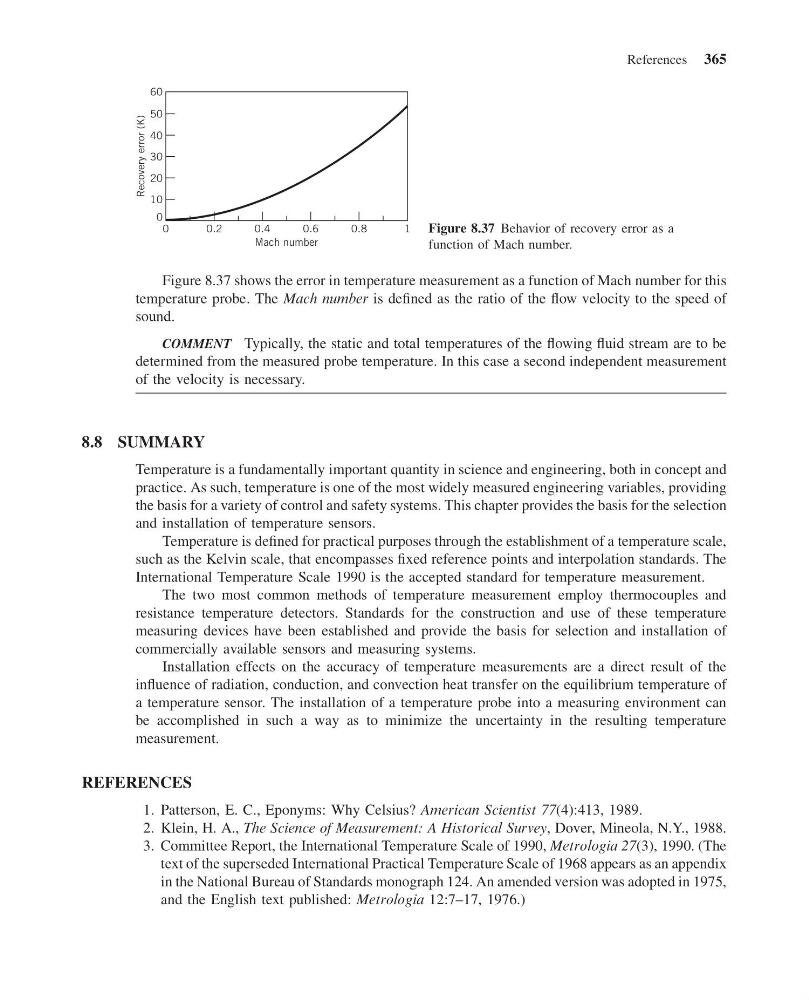
Figure 8.37 shows the error in temperature measurement as a function of Mach number for this
temperature probe. The Mach number is defined as the ratio of the flow velocity to the speed of
sound.
COMMENT Typically, the static and total temperatures of the flowing fluid stream are to be
determined from the measured probe temperature. In this case a second independent measurement
of the velocity is necessary.
8.8 SUMMARY
Temperature is a fundamentally important quantity in science and engineering, both in concept and
practice. As such, temperature is one of the most widely measured engineering variables, providing
the basis for a variety of control and safety systems. This chapter provides the basis for the selection
and installation of temperature sensors.
Temperature is defined for practical purposes through the establishment of a temperature scale,
such as the Kelvin scale, that encompasses fixed reference points and interpolation standards. The
International Temperature Scale 1990 is the accepted standard for temperature measurement.
The two most common methods of temperature measurement employ thermocouples and
resistance temperature detectors. Standards for the construction and use of these temperature
measuring devices have been established and provide the basis for selection and installation of
commercially available sensors and measuring systems.
Installation effects on the accuracy of temperature measurements are a direct result of the
influence of radiation, conduction, and convection heat transfer on the equilibrium temperature of
a temperature sensor. The installation of a temperature probe into a measuring environment can
be accomplished in such a way as to minimize the uncertainty in the resulting temperature
measurement.
REFERENCES
1. Patterson, E. C., Eponyms: Why Celsius? American Scientist 77(4):413, 1989.
2. Klein, H. A., The Science of Measurement: A Historical Survey, Dover, Mineola, N.Y., 1988.
3. Committee Report, the International Temperature Scale of 1990, Metrologia 27(3), 1990. (The
text of the superseded International Practical Temperature Scale of 1968 appears as an appendix
in the National Bureau of Standards monograph 124. An amended version was adopted in 1975,
and the English text published: Metrologia 12:7–17, 1976.)
0
0.2
0.4
0.6
0.8
1
Mach number
Recovery error (K)
0
10
20
30
40
50
60
Figure 8.37 Behavior of recovery error as a
function of Mach number.
References 365
14:54:2 Page 365
Figure 8.37 shows the error in temperature measurement as a function of Mach number for this
temperature probe. The Mach number is defined as the ratio of the flow velocity to the speed of
sound.
COMMENT Typically, the static and total temperatures of the flowing fluid stream are to be
determined from the measured probe temperature. In this case a second independent measurement
of the velocity is necessary.
8.8 SUMMARY
Temperature is a fundamentally important quantity in science and engineering, both in concept and
practice. As such, temperature is one of the most widely measured engineering variables, providing
the basis for a variety of control and safety systems. This chapter provides the basis for the selection
and installation of temperature sensors.
Temperature is defined for practical purposes through the establishment of a temperature scale,
such as the Kelvin scale, that encompasses fixed reference points and interpolation standards. The
International Temperature Scale 1990 is the accepted standard for temperature measurement.
The two most common methods of temperature measurement employ thermocouples and
resistance temperature detectors. Standards for the construction and use of these temperature
measuring devices have been established and provide the basis for selection and installation of
commercially available sensors and measuring systems.
Installation effects on the accuracy of temperature measurements are a direct result of the
influence of radiation, conduction, and convection heat transfer on the equilibrium temperature of
a temperature sensor. The installation of a temperature probe into a measuring environment can
be accomplished in such a way as to minimize the uncertainty in the resulting temperature
measurement.
REFERENCES
1. Patterson, E. C., Eponyms: Why Celsius? American Scientist 77(4):413, 1989.
2. Klein, H. A., The Science of Measurement: A Historical Survey, Dover, Mineola, N.Y., 1988.
3. Committee Report, the International Temperature Scale of 1990, Metrologia 27(3), 1990. (The
text of the superseded International Practical Temperature Scale of 1968 appears as an appendix
in the National Bureau of Standards monograph 124. An amended version was adopted in 1975,
and the English text published: Metrologia 12:7–17, 1976.)
0
0.2
0.4
0.6
0.8
1
Mach number
Recovery error (K)
0
10
20
30
40
50
60
Figure 8.37 Behavior of recovery error as a
function of Mach number.
References 365