

4.3 Interfacial Electrode Kinetics on Microporous Electrodes
83
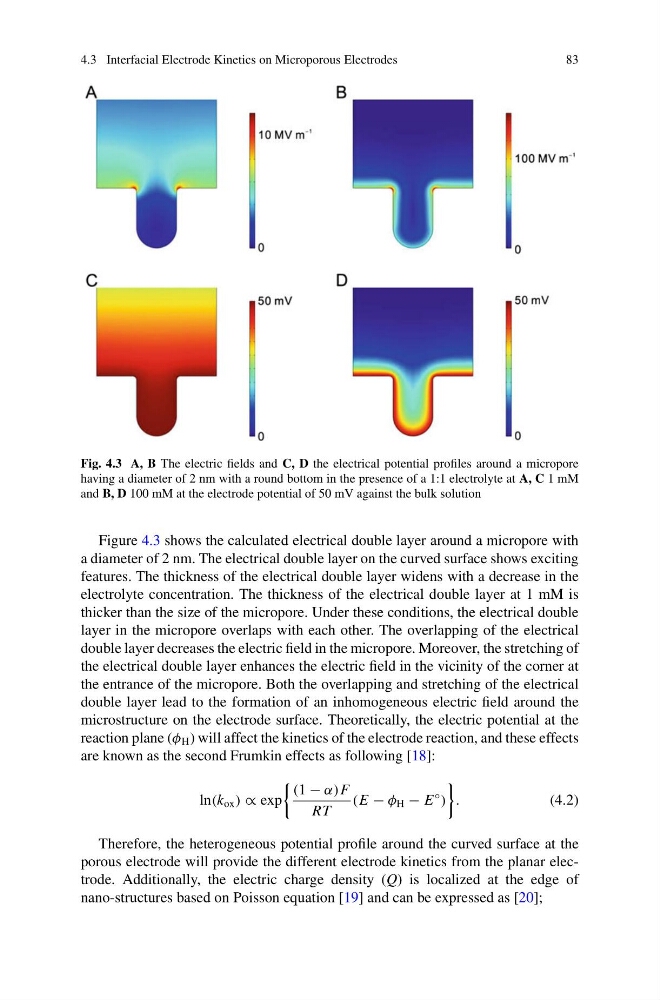
Fig. 4.3 A, B The electric fields and C, D the electrical potential profiles around a micropore
having a diameter of 2 nm with a round bottom in the presence of a 1:1 electrolyte at A, C 1 mM
and B, D 100 mM at the electrode potential of 50 mV against the bulk solution
Figure 4.3 shows the calculated electrical double layer around a micropore with
a diameter of 2 nm. The electrical double layer on the curved surface shows exciting
features. The thickness of the electrical double layer widens with a decrease in the
electrolyte concentration. The thickness of the electrical double layer at 1 mM is
thicker than the size of the micropore. Under these conditions, the electrical double
layer in the micropore overlaps with each other. The overlapping of the electrical
double layer decreases the electric field in the micropore. Moreover, the stretching of
the electrical double layer enhances the electric field in the vicinity of the corner at
the entrance of the micropore. Both the overlapping and stretching of the electrical
double layer lead to the formation of an inhomogeneous electric field around the
microstructure on the electrode surface. Theoretically, the electric potential at the
reaction plane (φ H ) will affect the kinetics of the electrode reaction, and these effects
are known as the second Frumkin effects as following [18]:
ln(k ox ) ∝ exp
(1 − α)F
RT
(E − φ H − E
◦
)
.
(4.2)
Therefore, the heterogeneous potential profile around the curved surface at the
porous electrode will provide the different electrode kinetics from the planar electrode. Additionally, the electric charge density (Q) is localized at the edge of
nano-structures based on Poisson equation [19] and can be expressed as [20];
83
Fig. 4.3 A, B The electric fields and C, D the electrical potential profiles around a micropore
having a diameter of 2 nm with a round bottom in the presence of a 1:1 electrolyte at A, C 1 mM
and B, D 100 mM at the electrode potential of 50 mV against the bulk solution
Figure 4.3 shows the calculated electrical double layer around a micropore with
a diameter of 2 nm. The electrical double layer on the curved surface shows exciting
features. The thickness of the electrical double layer widens with a decrease in the
electrolyte concentration. The thickness of the electrical double layer at 1 mM is
thicker than the size of the micropore. Under these conditions, the electrical double
layer in the micropore overlaps with each other. The overlapping of the electrical
double layer decreases the electric field in the micropore. Moreover, the stretching of
the electrical double layer enhances the electric field in the vicinity of the corner at
the entrance of the micropore. Both the overlapping and stretching of the electrical
double layer lead to the formation of an inhomogeneous electric field around the
microstructure on the electrode surface. Theoretically, the electric potential at the
reaction plane (φ H ) will affect the kinetics of the electrode reaction, and these effects
are known as the second Frumkin effects as following [18]:
ln(k ox ) ∝ exp
(1 − α)F
RT
(E − φ H − E
◦
)
.
(4.2)
Therefore, the heterogeneous potential profile around the curved surface at the
porous electrode will provide the different electrode kinetics from the planar electrode. Additionally, the electric charge density (Q) is localized at the edge of
nano-structures based on Poisson equation [19] and can be expressed as [20];