

48
2 MET-Type Bioelectrocatalysis
n
m
*
*
N
N
N
N
Os
N
N
N
N
N
*
*
N
N
Os
N
N
N
N
Cl
n
m
n
m
*
*
N
N
N
N
Os
N
N
N
N
Cl
Cl
Cl
Cl
Cl
m
n
l
*
N
N +
N +
N
N
Os
N
N
N
N
O
O
n
m
*
*
N
N
N
N
M
NC
NC
CN
CN
NC
O
O
O
NH
NH 2
NH 2
NH 2 NH 2
n
1a)
1b)
1c)
1d)
2)
3)
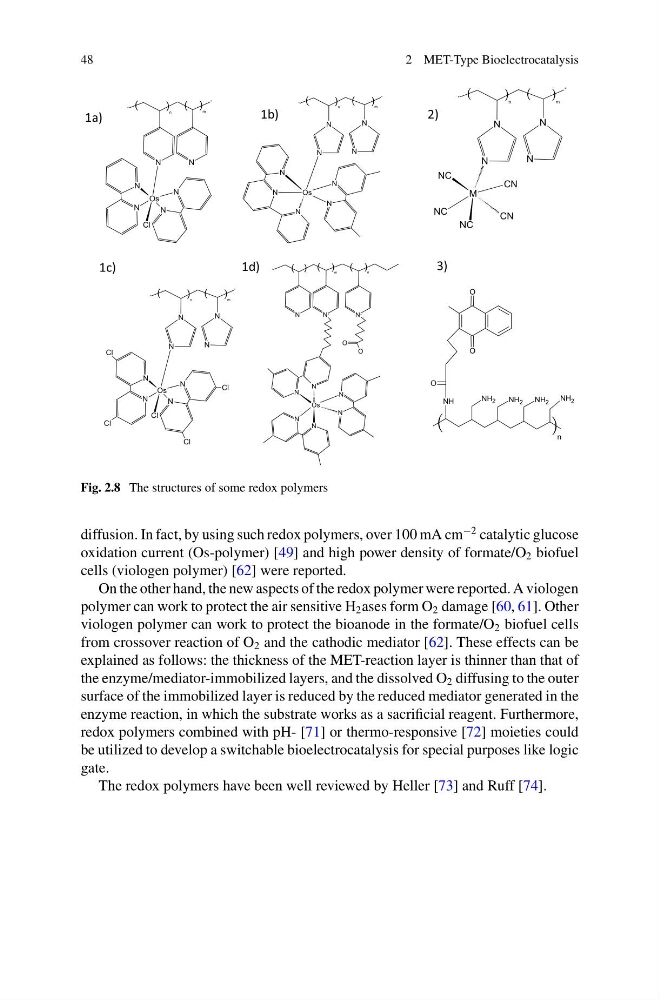
Fig. 2.8 The structures of some redox polymers
diffusion. In fact, by using such redox polymers, over 100 mA cm
−2 catalytic glucose
oxidation current (Os-polymer) [49] and high power density of formate/O 2 biofuel
cells (viologen polymer) [62] were reported.
On the other hand, the new aspects of the redox polymer were reported. A viologen
polymer can work to protect the air sensitive H 2 ases form O 2 damage [60, 61]. Other
viologen polymer can work to protect the bioanode in the formate/O 2 biofuel cells
from crossover reaction of O 2 and the cathodic mediator [62]. These effects can be
explained as follows: the thickness of the MET-reaction layer is thinner than that of
the enzyme/mediator-immobilized layers, and the dissolved O 2 diffusing to the outer
surface of the immobilized layer is reduced by the reduced mediator generated in the
enzyme reaction, in which the substrate works as a sacrificial reagent. Furthermore,
redox polymers combined with pH- [71] or thermo-responsive [72] moieties could
be utilized to develop a switchable bioelectrocatalysis for special purposes like logic
gate.
The redox polymers have been well reviewed by Heller [73] and Ruff [74].
2 MET-Type Bioelectrocatalysis
n
m
*
*
N
N
N
N
Os
N
N
N
N
N
*
*
N
N
Os
N
N
N
N
Cl
n
m
n
m
*
*
N
N
N
N
Os
N
N
N
N
Cl
Cl
Cl
Cl
Cl
m
n
l
*
N
N +
N +
N
N
Os
N
N
N
N
O
O
n
m
*
*
N
N
N
N
M
NC
NC
CN
CN
NC
O
O
O
NH
NH 2
NH 2
NH 2 NH 2
n
1a)
1b)
1c)
1d)
2)
3)
Fig. 2.8 The structures of some redox polymers
diffusion. In fact, by using such redox polymers, over 100 mA cm
−2 catalytic glucose
oxidation current (Os-polymer) [49] and high power density of formate/O 2 biofuel
cells (viologen polymer) [62] were reported.
On the other hand, the new aspects of the redox polymer were reported. A viologen
polymer can work to protect the air sensitive H 2 ases form O 2 damage [60, 61]. Other
viologen polymer can work to protect the bioanode in the formate/O 2 biofuel cells
from crossover reaction of O 2 and the cathodic mediator [62]. These effects can be
explained as follows: the thickness of the MET-reaction layer is thinner than that of
the enzyme/mediator-immobilized layers, and the dissolved O 2 diffusing to the outer
surface of the immobilized layer is reduced by the reduced mediator generated in the
enzyme reaction, in which the substrate works as a sacrificial reagent. Furthermore,
redox polymers combined with pH- [71] or thermo-responsive [72] moieties could
be utilized to develop a switchable bioelectrocatalysis for special purposes like logic
gate.
The redox polymers have been well reviewed by Heller [73] and Ruff [74].