

2.12 Field- and Heat-Driven Spintronics Effect
67
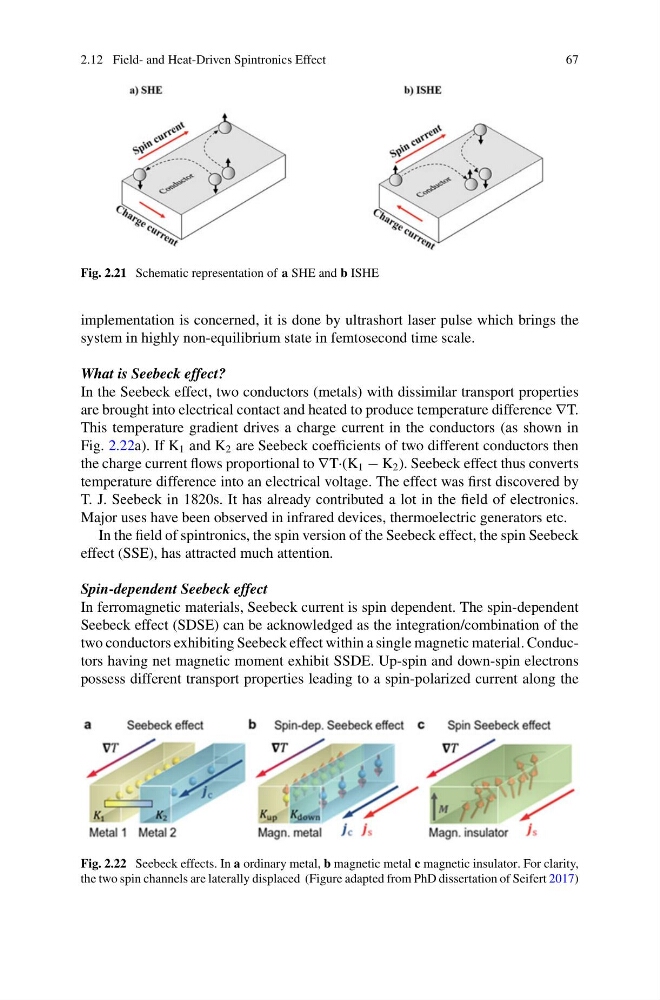
Fig. 2.21 Schematic representation of a SHE and b ISHE
implementation is concerned, it is done by ultrashort laser pulse which brings the
system in highly non-equilibrium state in femtosecond time scale.
What is Seebeck effect?
In the Seebeck effect, two conductors (metals) with dissimilar transport properties
are brought into electrical contact and heated to produce temperature difference ∇T.
This temperature gradient drives a charge current in the conductors (as shown in
Fig. 2.22a). If K 1 and K 2 are Seebeck coefficients of two different conductors then
the charge current flows proportional to ∇T·(K 1 − K 2 ). Seebeck effect thus converts
temperature difference into an electrical voltage. The effect was first discovered by
T. J. Seebeck in 1820s. It has already contributed a lot in the field of electronics.
Major uses have been observed in infrared devices, thermoelectric generators etc.
In the field of spintronics, the spin version of the Seebeck effect, the spin Seebeck
effect (SSE), has attracted much attention.
Spin-dependent Seebeck effect
In ferromagnetic materials, Seebeck current is spin dependent. The spin-dependent
Seebeck effect (SDSE) can be acknowledged as the integration/combination of the
two conductors exhibiting Seebeck effect within a single magnetic material. Conductors having net magnetic moment exhibit SSDE. Up-spin and down-spin electrons
possess different transport properties leading to a spin-polarized current along the
Fig. 2.22 Seebeck effects. In a ordinary metal, b magnetic metal c magnetic insulator. For clarity,
the two spin channels are laterally displaced (Figure adapted from PhD dissertation of Seifert 2017)
67
Fig. 2.21 Schematic representation of a SHE and b ISHE
implementation is concerned, it is done by ultrashort laser pulse which brings the
system in highly non-equilibrium state in femtosecond time scale.
What is Seebeck effect?
In the Seebeck effect, two conductors (metals) with dissimilar transport properties
are brought into electrical contact and heated to produce temperature difference ∇T.
This temperature gradient drives a charge current in the conductors (as shown in
Fig. 2.22a). If K 1 and K 2 are Seebeck coefficients of two different conductors then
the charge current flows proportional to ∇T·(K 1 − K 2 ). Seebeck effect thus converts
temperature difference into an electrical voltage. The effect was first discovered by
T. J. Seebeck in 1820s. It has already contributed a lot in the field of electronics.
Major uses have been observed in infrared devices, thermoelectric generators etc.
In the field of spintronics, the spin version of the Seebeck effect, the spin Seebeck
effect (SSE), has attracted much attention.
Spin-dependent Seebeck effect
In ferromagnetic materials, Seebeck current is spin dependent. The spin-dependent
Seebeck effect (SDSE) can be acknowledged as the integration/combination of the
two conductors exhibiting Seebeck effect within a single magnetic material. Conductors having net magnetic moment exhibit SSDE. Up-spin and down-spin electrons
possess different transport properties leading to a spin-polarized current along the
Fig. 2.22 Seebeck effects. In a ordinary metal, b magnetic metal c magnetic insulator. For clarity,
the two spin channels are laterally displaced (Figure adapted from PhD dissertation of Seifert 2017)