

58
2 Basic Elements of Spintronics
e -
e
Spin Injector
Spin Detector
Ferromagnet
Paramagnet
-
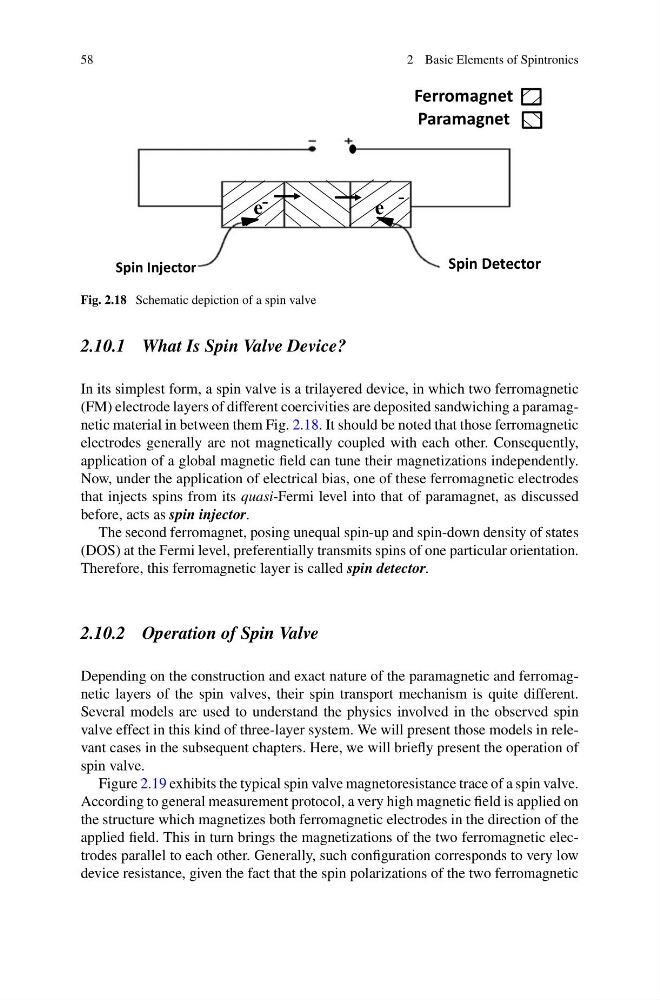
Fig. 2.18 Schematic depiction of a spin valve
2.10.1 What Is Spin Valve Device?
In its simplest form, a spin valve is a trilayered device, in which two ferromagnetic
(FM) electrode layers of different coercivities are deposited sandwiching a paramagnetic material in between them Fig. 2.18. It should be noted that those ferromagnetic
electrodes generally are not magnetically coupled with each other. Consequently,
application of a global magnetic field can tune their magnetizations independently.
Now, under the application of electrical bias, one of these ferromagnetic electrodes
that injects spins from its quasi-Fermi level into that of paramagnet, as discussed
before, acts as spin injector.
The second ferromagnet, posing unequal spin-up and spin-down density of states
(DOS) at the Fermi level, preferentially transmits spins of one particular orientation.
Therefore, this ferromagnetic layer is called spin detector.
2.10.2 Operation of Spin Valve
Depending on the construction and exact nature of the paramagnetic and ferromagnetic layers of the spin valves, their spin transport mechanism is quite different.
Several models are used to understand the physics involved in the observed spin
valve effect in this kind of three-layer system. We will present those models in relevant cases in the subsequent chapters. Here, we will briefly present the operation of
spin valve.
Figure 2.19 exhibits the typical spin valve magnetoresistance trace of a spin valve.
According to general measurement protocol, a very high magnetic field is applied on
the structure which magnetizes both ferromagnetic electrodes in the direction of the
applied field. This in turn brings the magnetizations of the two ferromagnetic electrodes parallel to each other. Generally, such configuration corresponds to very low
device resistance, given the fact that the spin polarizations of the two ferromagnetic
2 Basic Elements of Spintronics
e -
e
Spin Injector
Spin Detector
Ferromagnet
Paramagnet
-
Fig. 2.18 Schematic depiction of a spin valve
2.10.1 What Is Spin Valve Device?
In its simplest form, a spin valve is a trilayered device, in which two ferromagnetic
(FM) electrode layers of different coercivities are deposited sandwiching a paramagnetic material in between them Fig. 2.18. It should be noted that those ferromagnetic
electrodes generally are not magnetically coupled with each other. Consequently,
application of a global magnetic field can tune their magnetizations independently.
Now, under the application of electrical bias, one of these ferromagnetic electrodes
that injects spins from its quasi-Fermi level into that of paramagnet, as discussed
before, acts as spin injector.
The second ferromagnet, posing unequal spin-up and spin-down density of states
(DOS) at the Fermi level, preferentially transmits spins of one particular orientation.
Therefore, this ferromagnetic layer is called spin detector.
2.10.2 Operation of Spin Valve
Depending on the construction and exact nature of the paramagnetic and ferromagnetic layers of the spin valves, their spin transport mechanism is quite different.
Several models are used to understand the physics involved in the observed spin
valve effect in this kind of three-layer system. We will present those models in relevant cases in the subsequent chapters. Here, we will briefly present the operation of
spin valve.
Figure 2.19 exhibits the typical spin valve magnetoresistance trace of a spin valve.
According to general measurement protocol, a very high magnetic field is applied on
the structure which magnetizes both ferromagnetic electrodes in the direction of the
applied field. This in turn brings the magnetizations of the two ferromagnetic electrodes parallel to each other. Generally, such configuration corresponds to very low
device resistance, given the fact that the spin polarizations of the two ferromagnetic