

9.4 Spin-Polarized Semiconductor Devices
213
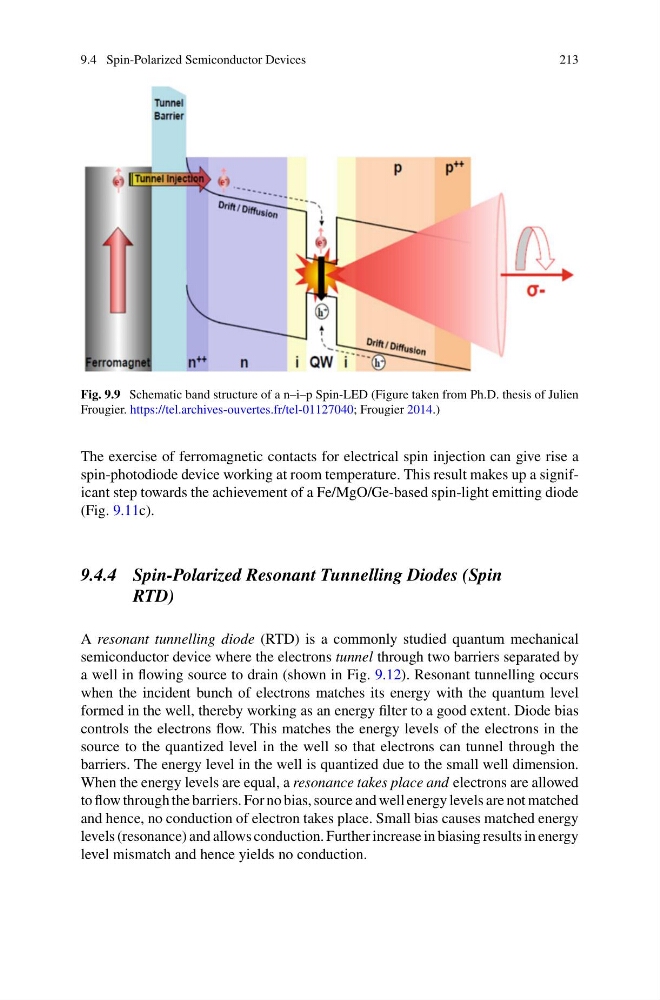
Fig. 9.9 Schematic band structure of a n–i–p Spin-LED (Figure taken from Ph.D. thesis of Julien
Frougier. https://tel.archives-ouvertes.fr/tel-01127040; Frougier 2014.)
The exercise of ferromagnetic contacts for electrical spin injection can give rise a
spin-photodiode device working at room temperature. This result makes up a significant step towards the achievement of a Fe/MgO/Ge-based spin-light emitting diode
(Fig. 9.11c).
9.4.4 Spin-Polarized Resonant Tunnelling Diodes (Spin
RTD)
A resonant tunnelling diode (RTD) is a commonly studied quantum mechanical
semiconductor device where the electrons tunnel through two barriers separated by
a well in flowing source to drain (shown in Fig. 9.12). Resonant tunnelling occurs
when the incident bunch of electrons matches its energy with the quantum level
formed in the well, thereby working as an energy filter to a good extent. Diode bias
controls the electrons flow. This matches the energy levels of the electrons in the
source to the quantized level in the well so that electrons can tunnel through the
barriers. The energy level in the well is quantized due to the small well dimension.
When the energy levels are equal, a resonance takes place and electrons are allowed
to flow through the barriers. For no bias, source and well energy levels are not matched
and hence, no conduction of electron takes place. Small bias causes matched energy
levels (resonance) and allows conduction. Further increase in biasing results in energy
level mismatch and hence yields no conduction.
213
Fig. 9.9 Schematic band structure of a n–i–p Spin-LED (Figure taken from Ph.D. thesis of Julien
Frougier. https://tel.archives-ouvertes.fr/tel-01127040; Frougier 2014.)
The exercise of ferromagnetic contacts for electrical spin injection can give rise a
spin-photodiode device working at room temperature. This result makes up a significant step towards the achievement of a Fe/MgO/Ge-based spin-light emitting diode
(Fig. 9.11c).
9.4.4 Spin-Polarized Resonant Tunnelling Diodes (Spin
RTD)
A resonant tunnelling diode (RTD) is a commonly studied quantum mechanical
semiconductor device where the electrons tunnel through two barriers separated by
a well in flowing source to drain (shown in Fig. 9.12). Resonant tunnelling occurs
when the incident bunch of electrons matches its energy with the quantum level
formed in the well, thereby working as an energy filter to a good extent. Diode bias
controls the electrons flow. This matches the energy levels of the electrons in the
source to the quantized level in the well so that electrons can tunnel through the
barriers. The energy level in the well is quantized due to the small well dimension.
When the energy levels are equal, a resonance takes place and electrons are allowed
to flow through the barriers. For no bias, source and well energy levels are not matched
and hence, no conduction of electron takes place. Small bias causes matched energy
levels (resonance) and allows conduction. Further increase in biasing results in energy
level mismatch and hence yields no conduction.