

204
9 Semiconductor Spintronics
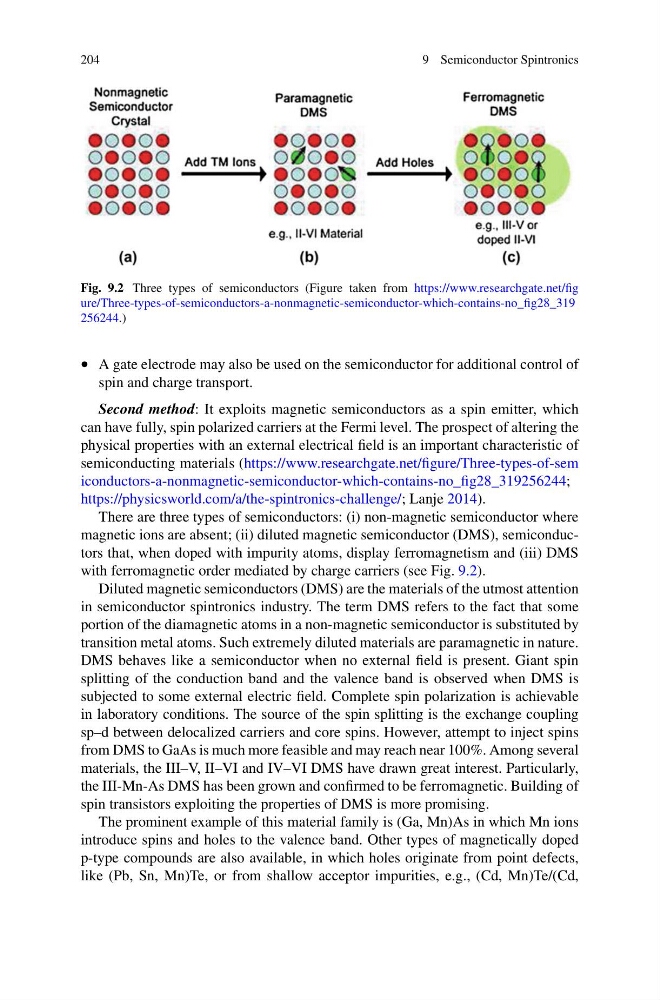
Fig. 9.2 Three types of semiconductors (Figure taken from https://www.researchgate.net/fig
ure/Three-types-of-semiconductors-a-nonmagnetic-semiconductor-which-contains-no_fig28_319
256244.)
• A gate electrode may also be used on the semiconductor for additional control of
spin and charge transport.
Second method: It exploits magnetic semiconductors as a spin emitter, which
can have fully, spin polarized carriers at the Fermi level. The prospect of altering the
physical properties with an external electrical field is an important characteristic of
semiconducting materials (https://www.researchgate.net/figure/Three-types-of-sem
iconductors-a-nonmagnetic-semiconductor-which-contains-no_fig28_319256244;
https://physicsworld.com/a/the-spintronics-challenge/; Lanje 2014).
There are three types of semiconductors: (i) non-magnetic semiconductor where
magnetic ions are absent; (ii) diluted magnetic semiconductor (DMS), semiconductors that, when doped with impurity atoms, display ferromagnetism and (iii) DMS
with ferromagnetic order mediated by charge carriers (see Fig. 9.2).
Diluted magnetic semiconductors (DMS) are the materials of the utmost attention
in semiconductor spintronics industry. The term DMS refers to the fact that some
portion of the diamagnetic atoms in a non-magnetic semiconductor is substituted by
transition metal atoms. Such extremely diluted materials are paramagnetic in nature.
DMS behaves like a semiconductor when no external field is present. Giant spin
splitting of the conduction band and the valence band is observed when DMS is
subjected to some external electric field. Complete spin polarization is achievable
in laboratory conditions. The source of the spin splitting is the exchange coupling
sp–d between delocalized carriers and core spins. However, attempt to inject spins
from DMS to GaAs is much more feasible and may reach near 100%. Among several
materials, the III–V, II–VI and IV–VI DMS have drawn great interest. Particularly,
the III-Mn-As DMS has been grown and confirmed to be ferromagnetic. Building of
spin transistors exploiting the properties of DMS is more promising.
The prominent example of this material family is (Ga, Mn)As in which Mn ions
introduce spins and holes to the valence band. Other types of magnetically doped
p-type compounds are also available, in which holes originate from point defects,
like (Pb, Sn, Mn)Te, or from shallow acceptor impurities, e.g., (Cd, Mn)Te/(Cd,
9 Semiconductor Spintronics
Fig. 9.2 Three types of semiconductors (Figure taken from https://www.researchgate.net/fig
ure/Three-types-of-semiconductors-a-nonmagnetic-semiconductor-which-contains-no_fig28_319
256244.)
• A gate electrode may also be used on the semiconductor for additional control of
spin and charge transport.
Second method: It exploits magnetic semiconductors as a spin emitter, which
can have fully, spin polarized carriers at the Fermi level. The prospect of altering the
physical properties with an external electrical field is an important characteristic of
semiconducting materials (https://www.researchgate.net/figure/Three-types-of-sem
iconductors-a-nonmagnetic-semiconductor-which-contains-no_fig28_319256244;
https://physicsworld.com/a/the-spintronics-challenge/; Lanje 2014).
There are three types of semiconductors: (i) non-magnetic semiconductor where
magnetic ions are absent; (ii) diluted magnetic semiconductor (DMS), semiconductors that, when doped with impurity atoms, display ferromagnetism and (iii) DMS
with ferromagnetic order mediated by charge carriers (see Fig. 9.2).
Diluted magnetic semiconductors (DMS) are the materials of the utmost attention
in semiconductor spintronics industry. The term DMS refers to the fact that some
portion of the diamagnetic atoms in a non-magnetic semiconductor is substituted by
transition metal atoms. Such extremely diluted materials are paramagnetic in nature.
DMS behaves like a semiconductor when no external field is present. Giant spin
splitting of the conduction band and the valence band is observed when DMS is
subjected to some external electric field. Complete spin polarization is achievable
in laboratory conditions. The source of the spin splitting is the exchange coupling
sp–d between delocalized carriers and core spins. However, attempt to inject spins
from DMS to GaAs is much more feasible and may reach near 100%. Among several
materials, the III–V, II–VI and IV–VI DMS have drawn great interest. Particularly,
the III-Mn-As DMS has been grown and confirmed to be ferromagnetic. Building of
spin transistors exploiting the properties of DMS is more promising.
The prominent example of this material family is (Ga, Mn)As in which Mn ions
introduce spins and holes to the valence band. Other types of magnetically doped
p-type compounds are also available, in which holes originate from point defects,
like (Pb, Sn, Mn)Te, or from shallow acceptor impurities, e.g., (Cd, Mn)Te/(Cd,