

172
7 Opto-spintronics
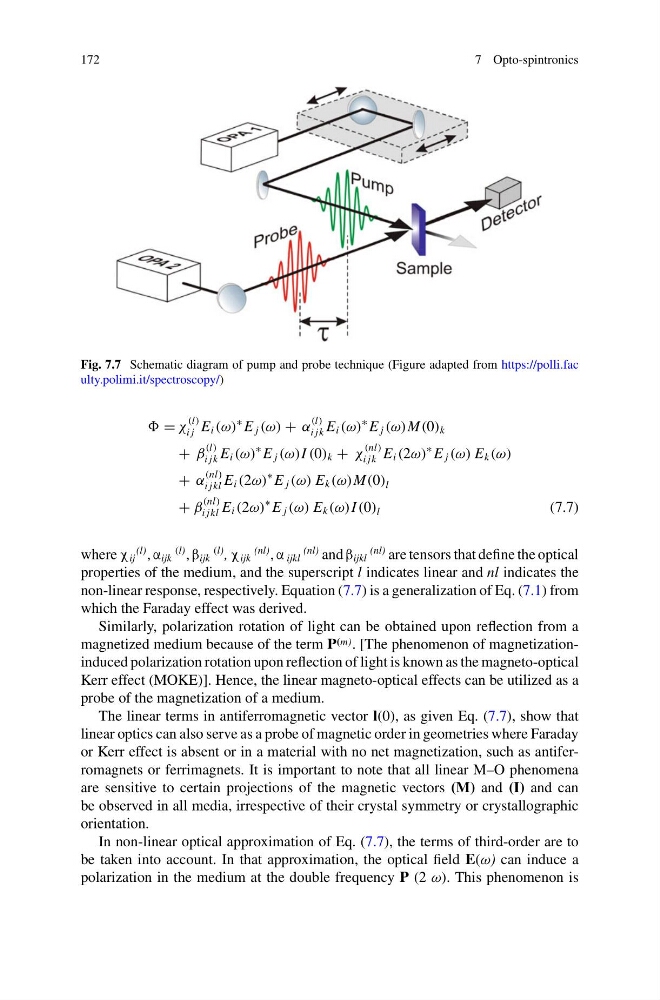
Fig. 7.7 Schematic diagram of pump and probe technique (Figure adapted from https://polli.fac
ulty.polimi.it/spectroscopy/)
= χ
(l)
i j E i (ω)
∗ E j (ω) + α
(l)
i jk E i (ω)
∗ E j (ω)M(0) k
+ β
(l)
i jk E i (ω)
∗ E j (ω)I (0) k + χ
(nl)
i jk E i (2ω)
∗ E j (ω) E k (ω)
+ α
(nl)
i jkl E i (2ω)
∗ E j (ω) E k (ω)M(0) l
+ β
(nl)
i jkl E i (2ω)
∗ E j (ω) E k (ω)I (0) l
(7.7)
where χ ij
(l) , α ijk
(l) , β ijk
(l) , χ ijk
(nl) , α ijkl
(nl) and β ijkl
(nl) are tensors that define the optical
properties of the medium, and the superscript l indicates linear and nl indicates the
non-linear response, respectively. Equation (7.7) is a generalization of Eq. (7.1) from
which the Faraday effect was derived.
Similarly, polarization rotation of light can be obtained upon reflection from a
magnetized medium because of the term P (m) . [The phenomenon of magnetizationinduced polarization rotation upon reflection of light is known as the magneto-optical
Kerr effect (MOKE)]. Hence, the linear magneto-optical effects can be utilized as a
probe of the magnetization of a medium.
The linear terms in antiferromagnetic vector l(0), as given Eq. (7.7), show that
linear optics can also serve as a probe of magnetic order in geometries where Faraday
or Kerr effect is absent or in a material with no net magnetization, such as antiferromagnets or ferrimagnets. It is important to note that all linear M–O phenomena
are sensitive to certain projections of the magnetic vectors (M) and (I) and can
be observed in all media, irrespective of their crystal symmetry or crystallographic
orientation.
In non-linear optical approximation of Eq. (7.7), the terms of third-order are to
be taken into account. In that approximation, the optical field E(ω) can induce a
polarization in the medium at the double frequency P (2 ω). This phenomenon is
7 Opto-spintronics
Fig. 7.7 Schematic diagram of pump and probe technique (Figure adapted from https://polli.fac
ulty.polimi.it/spectroscopy/)
= χ
(l)
i j E i (ω)
∗ E j (ω) + α
(l)
i jk E i (ω)
∗ E j (ω)M(0) k
+ β
(l)
i jk E i (ω)
∗ E j (ω)I (0) k + χ
(nl)
i jk E i (2ω)
∗ E j (ω) E k (ω)
+ α
(nl)
i jkl E i (2ω)
∗ E j (ω) E k (ω)M(0) l
+ β
(nl)
i jkl E i (2ω)
∗ E j (ω) E k (ω)I (0) l
(7.7)
where χ ij
(l) , α ijk
(l) , β ijk
(l) , χ ijk
(nl) , α ijkl
(nl) and β ijkl
(nl) are tensors that define the optical
properties of the medium, and the superscript l indicates linear and nl indicates the
non-linear response, respectively. Equation (7.7) is a generalization of Eq. (7.1) from
which the Faraday effect was derived.
Similarly, polarization rotation of light can be obtained upon reflection from a
magnetized medium because of the term P (m) . [The phenomenon of magnetizationinduced polarization rotation upon reflection of light is known as the magneto-optical
Kerr effect (MOKE)]. Hence, the linear magneto-optical effects can be utilized as a
probe of the magnetization of a medium.
The linear terms in antiferromagnetic vector l(0), as given Eq. (7.7), show that
linear optics can also serve as a probe of magnetic order in geometries where Faraday
or Kerr effect is absent or in a material with no net magnetization, such as antiferromagnets or ferrimagnets. It is important to note that all linear M–O phenomena
are sensitive to certain projections of the magnetic vectors (M) and (I) and can
be observed in all media, irrespective of their crystal symmetry or crystallographic
orientation.
In non-linear optical approximation of Eq. (7.7), the terms of third-order are to
be taken into account. In that approximation, the optical field E(ω) can induce a
polarization in the medium at the double frequency P (2 ω). This phenomenon is