

1.3 String Field Theory
17
(a)
(b)
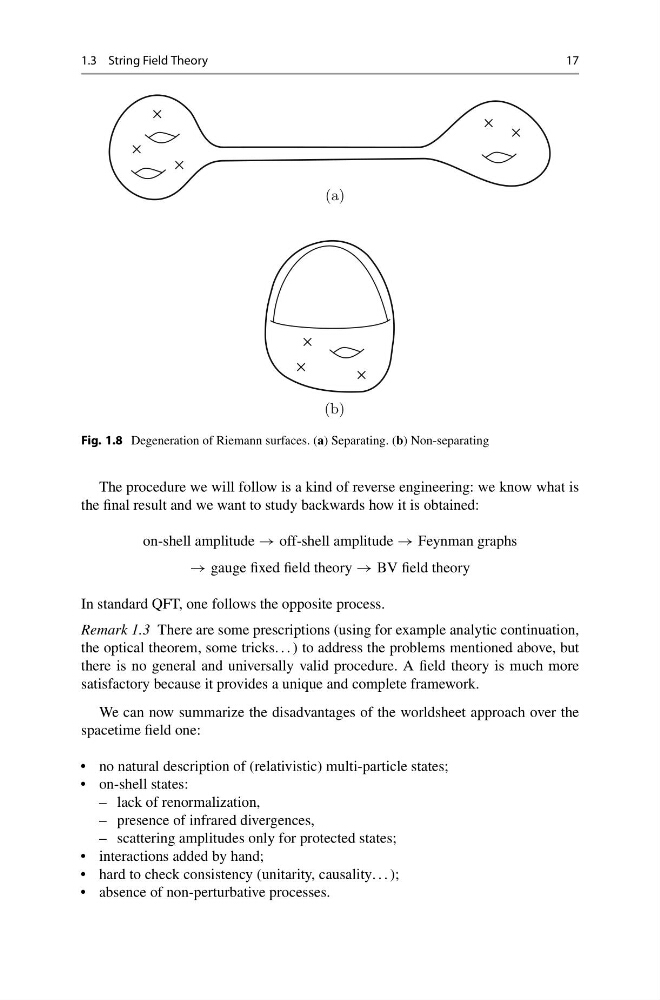
Fig. 1.8 Degeneration of Riemann surfaces. (a) Separating. (b) Non-separating
The procedure we will follow is a kind of reverse engineering: we know what is
the final result and we want to study backwards how it is obtained:
on-shell amplitude → off-shell amplitude → Feynman graphs
→ gauge fixed field theory → BV field theory
In standard QFT, one follows the opposite process.
Remark 1.3 There are some prescriptions (using for example analytic continuation,
the optical theorem, some tricks. . . ) to address the problems mentioned above, but
there is no general and universally valid procedure. A field theory is much more
satisfactory because it provides a unique and complete framework.
We can now summarize the disadvantages of the worldsheet approach over the
spacetime field one:
• no natural description of (relativistic) multi-particle states;
• on-shell states:
– lack of renormalization,
– presence of infrared divergences,
– scattering amplitudes only for protected states;
• interactions added by hand;
• hard to check consistency (unitarity, causality. . . );
• absence of non-perturbative processes.
17
(a)
(b)
Fig. 1.8 Degeneration of Riemann surfaces. (a) Separating. (b) Non-separating
The procedure we will follow is a kind of reverse engineering: we know what is
the final result and we want to study backwards how it is obtained:
on-shell amplitude → off-shell amplitude → Feynman graphs
→ gauge fixed field theory → BV field theory
In standard QFT, one follows the opposite process.
Remark 1.3 There are some prescriptions (using for example analytic continuation,
the optical theorem, some tricks. . . ) to address the problems mentioned above, but
there is no general and universally valid procedure. A field theory is much more
satisfactory because it provides a unique and complete framework.
We can now summarize the disadvantages of the worldsheet approach over the
spacetime field one:
• no natural description of (relativistic) multi-particle states;
• on-shell states:
– lack of renormalization,
– presence of infrared divergences,
– scattering amplitudes only for protected states;
• interactions added by hand;
• hard to check consistency (unitarity, causality. . . );
• absence of non-perturbative processes.