

3. This step is done to remove residual detergents in the tissue.
Residual detergents may inhibit regrowth of cells in vivo.
4. It takes less than 4 h to load porcine heart valve tissue with
sucrose [5].
5. Incubation in 80% sucrose solution is particularly done to
partially dehydrate the tissue to avoid ice crystal formation
during subsequent cooling. The solution should be replaced
with fresh solution two times because the sucrose solution will
be diluted with water coming from the tissue.
6. Trehalose can likely be used as alternative for sucrose, but the
highly concentrated solutions that are needed for processing
would make the procedure more expensive.
7. Secondary drying is done to remove unfrozen water from the
sample. The water content of the sample depends on the end
temperature of the shelves that is selected in the secondary
drying cycle.
8. Most freeze-drying systems have a stoppering device allowing
sealing the sample under vacuum. There are no suitable commercial containers (vial plus stopper) available for freeze-drying
of heart valves. Such containers, however, can be constructed,
which would allow to seal the samples under vacuum. Alternatively, a vacuum sealer can be used to seal the freeze-dried
samples. Samples can be stored at room temperature, in a
standard refrigerator, or in a À20
C freezer. In any case,
0
5
10
15
*
*
*
*
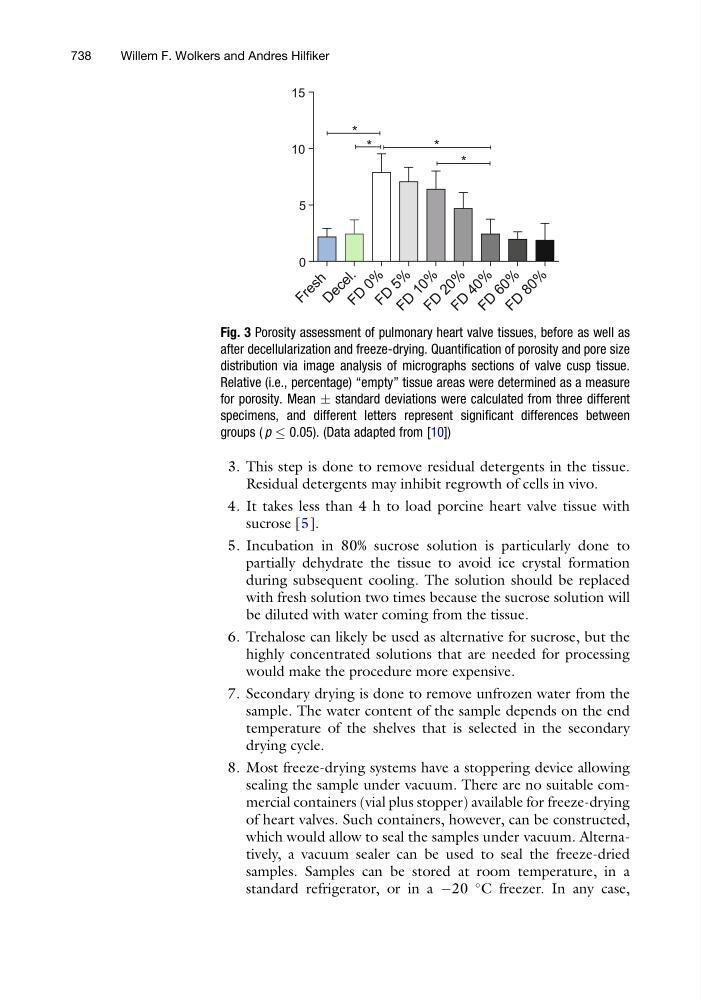
Fig. 3 Porosity assessment of pulmonary heart valve tissues, before as well as
after decellularization and freeze-drying. Quantification of porosity and pore size
distribution via image analysis of micrographs sections of valve cusp tissue.
Relative (i.e., percentage) “empty” tissue areas were determined as a measure
for porosity. Mean Æ standard deviations were calculated from three different
specimens, and different letters represent significant differences between
groups ( p 0.05). (Data adapted from [10])
738
Willem F. Wolkers and Andres Hilfiker