

2.7 Cooling
and Cryopreservation
of Recalcitrant Seeds
1. Vacuum pump to generate nitrogen slush (see Note 8).
2. Polystyrene foam cup to make nitrogen slush.
3. Aluminum foil strips (15 Â 35 mm).
4. 2 mL cryovials (e.g., L-Brady) and boxes (e.g., Nalgene
® Cryobox 81 Â 2 mL Vials, Scientific Laboratory Supplies Ltd, UK)
or canes, depending on the cryo-dewar used.
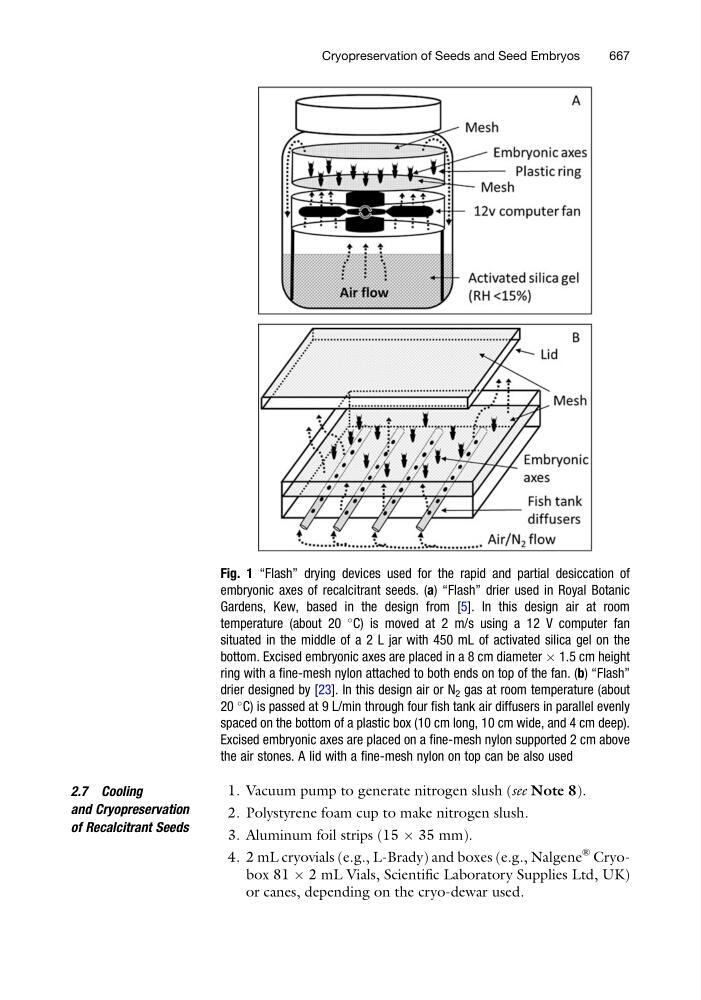
Fig. 1 “Flash” drying devices used for the rapid and partial desiccation of
embryonic axes of recalcitrant seeds. (a) “Flash” drier used in Royal Botanic
Gardens, Kew, based in the design from [5]. In this design air at room
temperature (about 20
C) is moved at 2 m/s using a 12 V computer fan
situated in the middle of a 2 L jar with 450 mL of activated silica gel on the
bottom. Excised embryonic axes are placed in a 8 cm diameter  1.5 cm height
ring with a fine-mesh nylon attached to both ends on top of the fan. (b) “Flash”
drier designed by [23]. In this design air or N 2 gas at room temperature (about
20
C) is passed at 9 L/min through four fish tank air diffusers in parallel evenly
spaced on the bottom of a plastic box (10 cm long, 10 cm wide, and 4 cm deep).
Excised embryonic axes are placed on a fine-mesh nylon supported 2 cm above
the air stones. A lid with a fine-mesh nylon on top can be also used
Cryopreservation of Seeds and Seed Embryos
667