

this process continues until the melting point of the freezeconcentrated solution is lowered all the way down to its glass
transition temperature, the glass transition temperature of that
concentrate is called T G
0 [27, 28] (Fig. 2). Such extreme freeze
concentration is rarely if ever achieved in practice in aqueous solutions of the low molecular weight glass-forming solutes typically
used for cryopreservation by vitrification [29] because ice cannot
continue to grow at a measurable rate as viscosities are approached
that characterize the glass transition: instead, freeze-concentration
halts at some point, and further cooling occurs at a constant concentration (Fig. 2). Most literature depictions of T G
0 as determined
during warming most likely actually represent the temperature of
“incipient melting” (T IM ), which is the temperature of onset of
melting well above T G (at the extreme limit of the accessible T M
curve in Fig. 2) [30–35].
“Freezing” is the reorganization of water molecules into ice
crystals [36]. Although “freezing” is often used to mean arresting
motion or change, use of this term in the context of vitrification, in
which the object is to avoid ice crystallization, is misleading and
inappropriate.
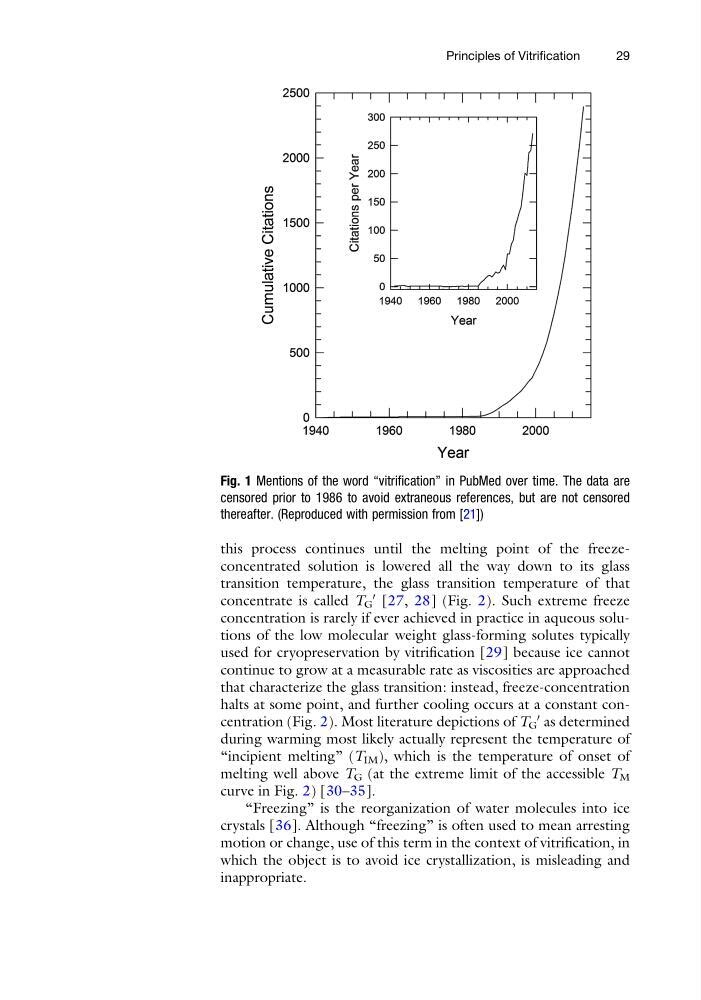
Fig. 1 Mentions of the word “vitrification” in PubMed over time. The data are
censored prior to 1986 to avoid extraneous references, but are not censored
thereafter. (Reproduced with permission from [21])
Principles of Vitrification
29
transition temperature, the glass transition temperature of that
concentrate is called T G
0 [27, 28] (Fig. 2). Such extreme freeze
concentration is rarely if ever achieved in practice in aqueous solutions of the low molecular weight glass-forming solutes typically
used for cryopreservation by vitrification [29] because ice cannot
continue to grow at a measurable rate as viscosities are approached
that characterize the glass transition: instead, freeze-concentration
halts at some point, and further cooling occurs at a constant concentration (Fig. 2). Most literature depictions of T G
0 as determined
during warming most likely actually represent the temperature of
“incipient melting” (T IM ), which is the temperature of onset of
melting well above T G (at the extreme limit of the accessible T M
curve in Fig. 2) [30–35].
“Freezing” is the reorganization of water molecules into ice
crystals [36]. Although “freezing” is often used to mean arresting
motion or change, use of this term in the context of vitrification, in
which the object is to avoid ice crystallization, is misleading and
inappropriate.
Fig. 1 Mentions of the word “vitrification” in PubMed over time. The data are
censored prior to 1986 to avoid extraneous references, but are not censored
thereafter. (Reproduced with permission from [21])
Principles of Vitrification
29