

3.1.2 MicrowaveAssisted Drying, Storage,
and Rehydration
Drying methods are described for oocytes and sperm. Prior to
drying, cells need to be loaded with trehalose.
1. (a) Loading trehalose into oocytes: Permeabilize the cytoplasmic membrane of denuded oocytes by exposure to 10 μg/mL
hemolysin for 15 min at 38
C. After rinsing with HEPESbuffered minimum essential medium (H-MEM; see Note 5)
thrice, immerse oocytes in 1.1 M trehalose/Tris-EDTA buffer
(Sigma-Aldrich) for 10 min at room temperature and then
dehydrate immediately.
(b) Loading trehalose into sperm: Permeate the membranes of spermatozoa by exposure to 0.5 mg/mL
α-hemolysin for 15 min at 38.5
C. After centrifugation at
300 Â g for 8 min, resuspend the pellet in 100 μL of 0.3 M
trehalose in Tris-EDTA for 30 min at room temperature.
2. (a) Microwave-assisted drying of oocytes: Deposit a volume of
40 μL trehalose solution containing 5–7 oocytes on glass fiber
filters (diameter ¼ 13 mm), and dry at 20% microwave power in
a controlled RH of 11.0 Æ 0.6%. Within each batch, six filter
samples with oocytes can be randomly placed on the eightMicrowave
Karl Fisher
titrator
40 µl
sample
11%
RH
RH logger
Dry chamber
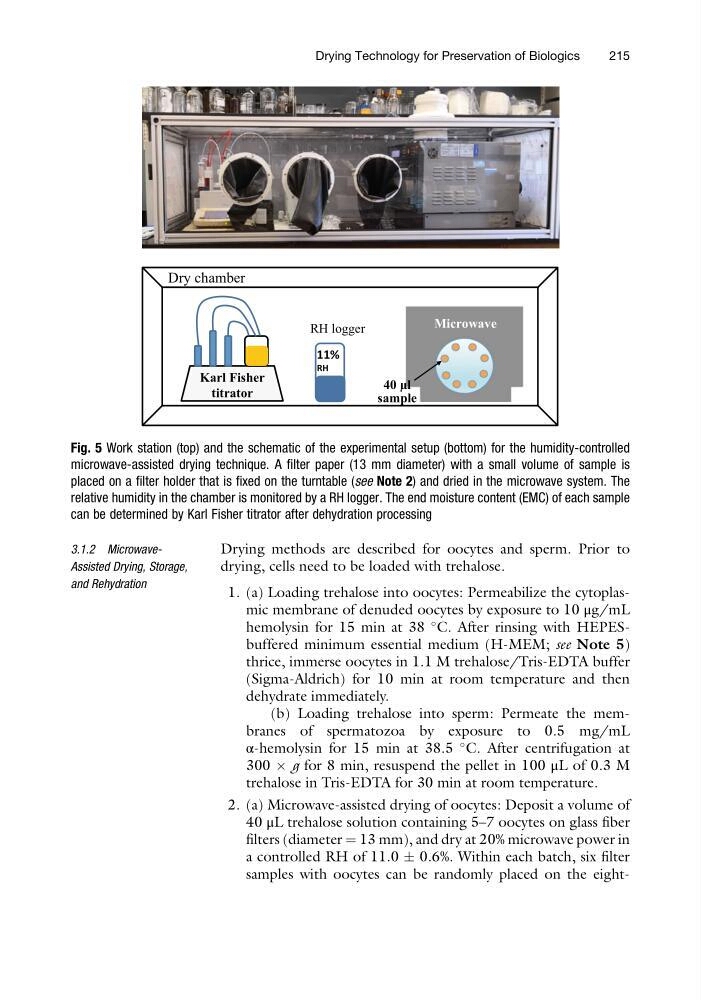
Fig. 5 Work station (top) and the schematic of the experimental setup (bottom) for the humidity-controlled
microwave-assisted drying technique. A filter paper (13 mm diameter) with a small volume of sample is
placed on a filter holder that is fixed on the turntable (see Note 2) and dried in the microwave system. The
relative humidity in the chamber is monitored by a RH logger. The end moisture content (EMC) of each sample
can be determined by Karl Fisher titrator after dehydration processing
Drying Technology for Preservation of Biologics
215
and Rehydration
Drying methods are described for oocytes and sperm. Prior to
drying, cells need to be loaded with trehalose.
1. (a) Loading trehalose into oocytes: Permeabilize the cytoplasmic membrane of denuded oocytes by exposure to 10 μg/mL
hemolysin for 15 min at 38
C. After rinsing with HEPESbuffered minimum essential medium (H-MEM; see Note 5)
thrice, immerse oocytes in 1.1 M trehalose/Tris-EDTA buffer
(Sigma-Aldrich) for 10 min at room temperature and then
dehydrate immediately.
(b) Loading trehalose into sperm: Permeate the membranes of spermatozoa by exposure to 0.5 mg/mL
α-hemolysin for 15 min at 38.5
C. After centrifugation at
300 Â g for 8 min, resuspend the pellet in 100 μL of 0.3 M
trehalose in Tris-EDTA for 30 min at room temperature.
2. (a) Microwave-assisted drying of oocytes: Deposit a volume of
40 μL trehalose solution containing 5–7 oocytes on glass fiber
filters (diameter ¼ 13 mm), and dry at 20% microwave power in
a controlled RH of 11.0 Æ 0.6%. Within each batch, six filter
samples with oocytes can be randomly placed on the eightMicrowave
Karl Fisher
titrator
40 µl
sample
11%
RH
RH logger
Dry chamber
Fig. 5 Work station (top) and the schematic of the experimental setup (bottom) for the humidity-controlled
microwave-assisted drying technique. A filter paper (13 mm diameter) with a small volume of sample is
placed on a filter holder that is fixed on the turntable (see Note 2) and dried in the microwave system. The
relative humidity in the chamber is monitored by a RH logger. The end moisture content (EMC) of each sample
can be determined by Karl Fisher titrator after dehydration processing
Drying Technology for Preservation of Biologics
215