

208
5 Electrodynamics of Aqueous Media
In the general case of a cell consisting of two metals A and B immersed in the
solution of electrolytes AX and BX, the resulting electromotive force E is [81]:
eE AB = (ζ B − ζ B X ) − (ζ A − ζ AX ),
(5.30)
where ζ A , ζ B , ζ AX , and ζ B X are the chemical potentials of the metals A and B, and
the corresponding electrolytes, respectively.
Although the Leiden jar and the Voltaic pile are not in high demand in modern
engineering systems, they played an important role in the development of modern
electrochemical energy systems. Being the simplest accumulator of electricity and
generator, they served as prototypes of many modern devices, such as electrolytic
capacitors, alkaline and acid batteries, flow batteries, supercapacitors, electrolyzers,
hydrogen fuel cells, and metal hydride hydrogen storage materials, which are widely
used for energy storage and conversion [29].
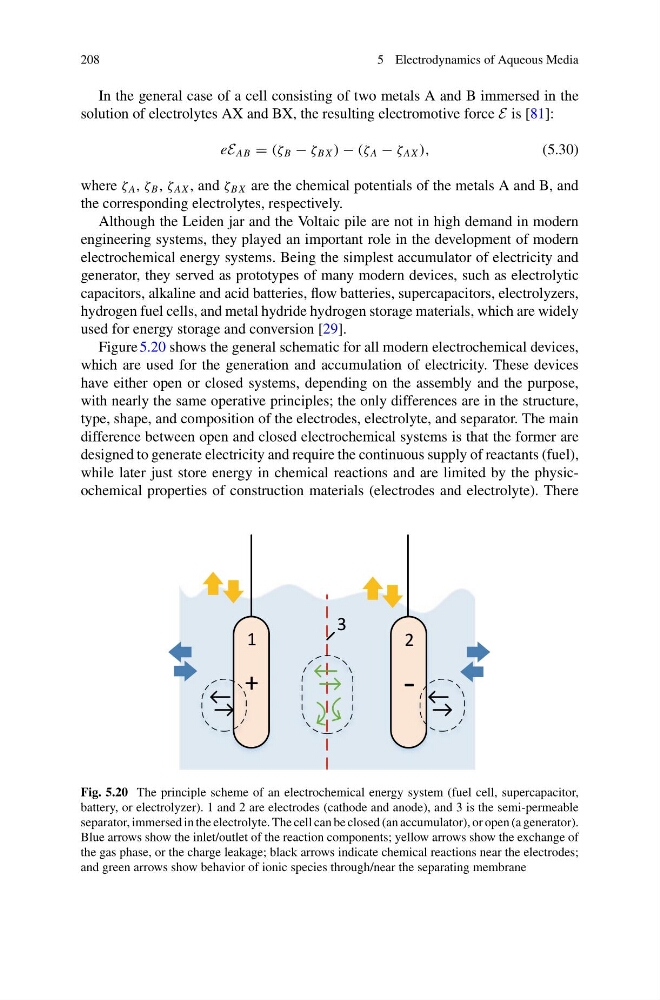
Figure 5.20 shows the general schematic for all modern electrochemical devices,
which are used for the generation and accumulation of electricity. These devices
have either open or closed systems, depending on the assembly and the purpose,
with nearly the same operative principles; the only differences are in the structure,
type, shape, and composition of the electrodes, electrolyte, and separator. The main
difference between open and closed electrochemical systems is that the former are
designed to generate electricity and require the continuous supply of reactants (fuel),
while later just store energy in chemical reactions and are limited by the physicochemical properties of construction materials (electrodes and electrolyte). There
+
-
1
2
3
Fig. 5.20 The principle scheme of an electrochemical energy system (fuel cell, supercapacitor,
battery, or electrolyzer). 1 and 2 are electrodes (cathode and anode), and 3 is the semi-permeable
separator, immersed in the electrolyte. The cell can be closed (an accumulator), or open (a generator).
Blue arrows show the inlet/outlet of the reaction components; yellow arrows show the exchange of
the gas phase, or the charge leakage; black arrows indicate chemical reactions near the electrodes;
and green arrows show behavior of ionic species through/near the separating membrane
5 Electrodynamics of Aqueous Media
In the general case of a cell consisting of two metals A and B immersed in the
solution of electrolytes AX and BX, the resulting electromotive force E is [81]:
eE AB = (ζ B − ζ B X ) − (ζ A − ζ AX ),
(5.30)
where ζ A , ζ B , ζ AX , and ζ B X are the chemical potentials of the metals A and B, and
the corresponding electrolytes, respectively.
Although the Leiden jar and the Voltaic pile are not in high demand in modern
engineering systems, they played an important role in the development of modern
electrochemical energy systems. Being the simplest accumulator of electricity and
generator, they served as prototypes of many modern devices, such as electrolytic
capacitors, alkaline and acid batteries, flow batteries, supercapacitors, electrolyzers,
hydrogen fuel cells, and metal hydride hydrogen storage materials, which are widely
used for energy storage and conversion [29].
Figure 5.20 shows the general schematic for all modern electrochemical devices,
which are used for the generation and accumulation of electricity. These devices
have either open or closed systems, depending on the assembly and the purpose,
with nearly the same operative principles; the only differences are in the structure,
type, shape, and composition of the electrodes, electrolyte, and separator. The main
difference between open and closed electrochemical systems is that the former are
designed to generate electricity and require the continuous supply of reactants (fuel),
while later just store energy in chemical reactions and are limited by the physicochemical properties of construction materials (electrodes and electrolyte). There
+
-
1
2
3
Fig. 5.20 The principle scheme of an electrochemical energy system (fuel cell, supercapacitor,
battery, or electrolyzer). 1 and 2 are electrodes (cathode and anode), and 3 is the semi-permeable
separator, immersed in the electrolyte. The cell can be closed (an accumulator), or open (a generator).
Blue arrows show the inlet/outlet of the reaction components; yellow arrows show the exchange of
the gas phase, or the charge leakage; black arrows indicate chemical reactions near the electrodes;
and green arrows show behavior of ionic species through/near the separating membrane