

105
104
103
102
101
100
99
98
97
500 1000 1500 2000 2500 3000
Body temperature (°F)
3500 4000 4500 5000 5500 6000
Time (s)
7
Signals and Biomedical Signal Processing
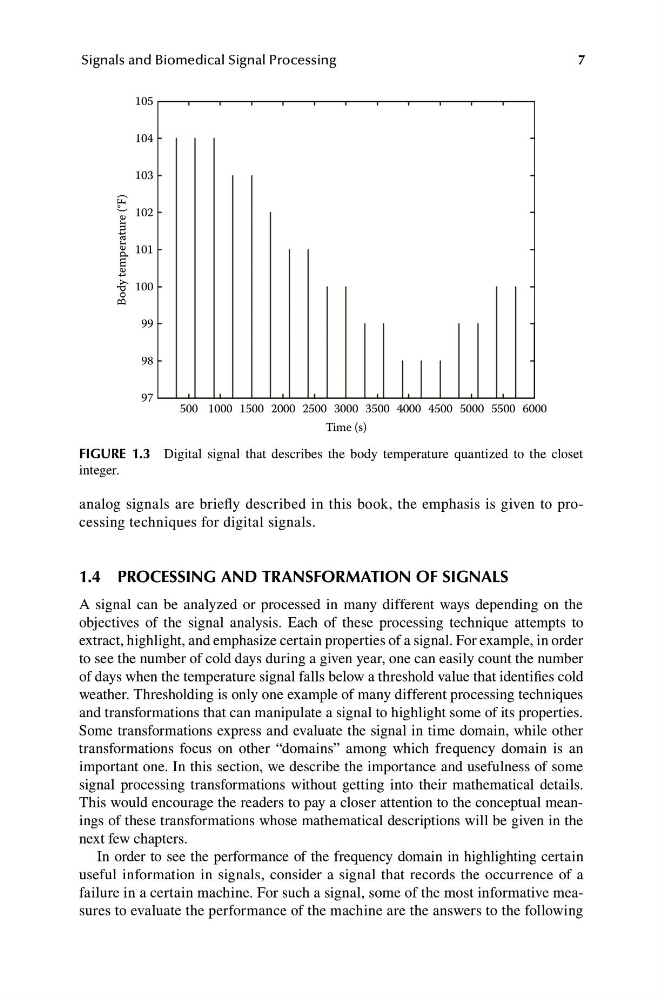
FIGURE 1.3 Digital signal that describes the body temperature quantized to the closet
integer.
analog signals are briefly described in this book, the emphasis is given to processing techniques for digital signals.
1.4 PROCESSING AND TRANSFORMATION OF SIGNALS
A signal can be analyzed or processed in many different ways depending on the
objectives of the signal analysis. Each of these processing technique attempts to
extract, highlight, and emphasize certain properties of a signal. For example, in order
to see the number of cold days during a given year, one can easily count the number
of days when the temperature signal falls below a threshold value that identifies cold
weather. Thresholding is only one example of many different processing techniques
and transformations that can manipulate a signal to highlight some of its properties.
Some transformations express and evaluate the signal in time domain, while other
transformations focus on other “domains” among which frequency domain is an
important one. In this section, we describe the importance and usefulness of some
signal processing transformations without getting into their mathematical details.
This would encourage the readers to pay a closer attention to the conceptual meanings of these transformations whose mathematical descriptions will be given in the
next few chapters.
In order to see the performance of the frequency domain in highlighting certain
useful information in signals, consider a signal that records the occurrence of a
failure in a certain machine. For such a signal, some of the most informative measures to evaluate the performance of the machine are the answers to the following
104
103
102
101
100
99
98
97
500 1000 1500 2000 2500 3000
Body temperature (°F)
3500 4000 4500 5000 5500 6000
Time (s)
7
Signals and Biomedical Signal Processing
FIGURE 1.3 Digital signal that describes the body temperature quantized to the closet
integer.
analog signals are briefly described in this book, the emphasis is given to processing techniques for digital signals.
1.4 PROCESSING AND TRANSFORMATION OF SIGNALS
A signal can be analyzed or processed in many different ways depending on the
objectives of the signal analysis. Each of these processing technique attempts to
extract, highlight, and emphasize certain properties of a signal. For example, in order
to see the number of cold days during a given year, one can easily count the number
of days when the temperature signal falls below a threshold value that identifies cold
weather. Thresholding is only one example of many different processing techniques
and transformations that can manipulate a signal to highlight some of its properties.
Some transformations express and evaluate the signal in time domain, while other
transformations focus on other “domains” among which frequency domain is an
important one. In this section, we describe the importance and usefulness of some
signal processing transformations without getting into their mathematical details.
This would encourage the readers to pay a closer attention to the conceptual meanings of these transformations whose mathematical descriptions will be given in the
next few chapters.
In order to see the performance of the frequency domain in highlighting certain
useful information in signals, consider a signal that records the occurrence of a
failure in a certain machine. For such a signal, some of the most informative measures to evaluate the performance of the machine are the answers to the following