

ω
z
m
y
x
m z
Proton
m xy
287
Magnetic Resonance Imaging
m
m
m
m
m
m
FIGURE 15.4 Precession of proton in attempt to align with external magnetic field.
(Courtesy of Siemens AG, Medical Solutions, Magnetic resonance; brochure: Magnets, flows
and artifacts.)
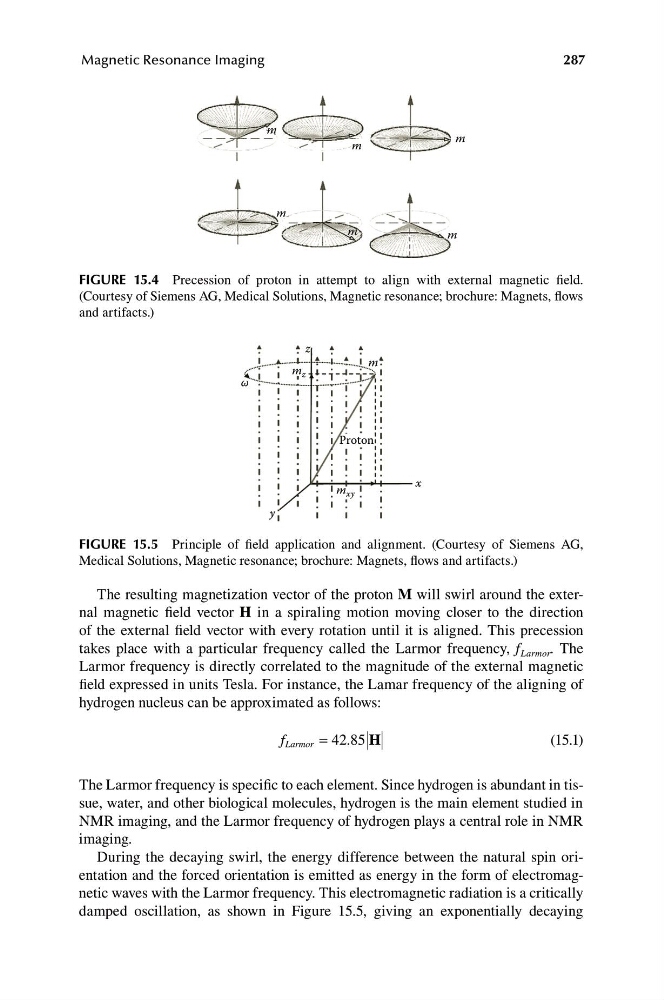
FIGURE 15.5 Principle of field application and alignment. (Courtesy of Siemens AG,
Medical Solutions, Magnetic resonance; brochure: Magnets, flows and artifacts.)
The resulting magnetization vector of the proton M will swirl around the external magnetic field vector H in a spiraling motion moving closer to the direction
of the external field vector with every rotation until it is aligned. This precession
takes place with a particular frequency called the Larmor frequency, f Larmor . The
Larmor frequency is directly correlated to the magnitude of the external magnetic
field expressed in units Tesla. For instance, the Lamar frequency of the aligning of
hydrogen nucleus can be approximated as follows:
f Larmor = 42 85
. H
(15.1)
The Larmor frequency is specific to each element. Since hydrogen is abundant in tissue, water, and other biological molecules, hydrogen is the main element studied in
NMR imaging, and the Larmor frequency of hydrogen plays a central role in NMR
imaging.
During the decaying swirl, the energy difference between the natural spin orientation and the forced orientation is emitted as energy in the form of electromagnetic waves with the Larmor frequency. This electromagnetic radiation is a critically
damped oscillation, as shown in Figure 15.5, giving an exponentially decaying
z
m
y
x
m z
Proton
m xy
287
Magnetic Resonance Imaging
m
m
m
m
m
m
FIGURE 15.4 Precession of proton in attempt to align with external magnetic field.
(Courtesy of Siemens AG, Medical Solutions, Magnetic resonance; brochure: Magnets, flows
and artifacts.)
FIGURE 15.5 Principle of field application and alignment. (Courtesy of Siemens AG,
Medical Solutions, Magnetic resonance; brochure: Magnets, flows and artifacts.)
The resulting magnetization vector of the proton M will swirl around the external magnetic field vector H in a spiraling motion moving closer to the direction
of the external field vector with every rotation until it is aligned. This precession
takes place with a particular frequency called the Larmor frequency, f Larmor . The
Larmor frequency is directly correlated to the magnitude of the external magnetic
field expressed in units Tesla. For instance, the Lamar frequency of the aligning of
hydrogen nucleus can be approximated as follows:
f Larmor = 42 85
. H
(15.1)
The Larmor frequency is specific to each element. Since hydrogen is abundant in tissue, water, and other biological molecules, hydrogen is the main element studied in
NMR imaging, and the Larmor frequency of hydrogen plays a central role in NMR
imaging.
During the decaying swirl, the energy difference between the natural spin orientation and the forced orientation is emitted as energy in the form of electromagnetic waves with the Larmor frequency. This electromagnetic radiation is a critically
damped oscillation, as shown in Figure 15.5, giving an exponentially decaying